
Catalogue Search | MBRL


Are you sure you want to remove the book from the shelf?

{{itemTitle}}
47,220
result(s) for
"Employee rules."
Sort by:

Creating effective rules in public sector organizations
Rules in public sector organizations are both indispensable and disliked. Rules direct an array of critical tasks such as managing employees, controlling public finances, and structuring interactions with citizens. Yet scholars and practitioners alike tend to focus on the consequences of bad rules, such as inefficiency, rigidity, or unintended consequences. This focus on bad rules overlooks the need to craft the right rules. This book provides a comprehensive portrait of rules in public organizations, and it explains the characteristics of beneficial rules that help public organizations function effectively, what the author calls \"green-tape.\" Drawing on a decade of original research and interdisciplinary scholarship, DeHart-Davis builds a framework of three perspectives. The organizational perspective, which sees rules as a tool for achieving managerial goals and organizational functions; the individual perspective, which examines how rule design and implementation impact employees; and the behavioral perspective, which explores human responses to the intersection of the first two perspectives. The author uses this framework to analyze a local-government case study of non-union employee grievance policy. The book concludes with summarizing key findings for practitioners as well as suggesting directions for future research.
Book

The Warehouse
‘Work hard, have fun, make history’ proclaims the slogan on the walls of Amazon’s warehouses. This cheerful message hides a reality of digital surveillance, aggressive anti-union tactics and disciplinary layoffs. Reminiscent of the tumult of early industrial capitalism, the hundreds of thousands of workers who help Amazon fulfil consumers’ desire are part of an experiment in changing the way we all work.
In this book, Alessandro Delfanti takes readers inside Amazon’s warehouses to show how technological advancements and managerial techniques subdue the workers rather than empower them, as seen in the sensors that track workers’ every movement around the floor and algorithmic systems that re-route orders to circumvent worker sabotage. He looks at new technologies including robotic arms trained by humans and augmented reality goggles, showing that their aim is to standardise, measure and discipline human work rather than replace it.
Despite its innovation, Amazon will always need living labour’s flexibility and low cost. And as the warehouse is increasingly automated, worker discontent increases. Striking under the banner ‘we are not robots’, employees have shown that they are acutely aware of such contradictions. The only question remains: how long will it be until Amazon’s empire collapses?
eBook
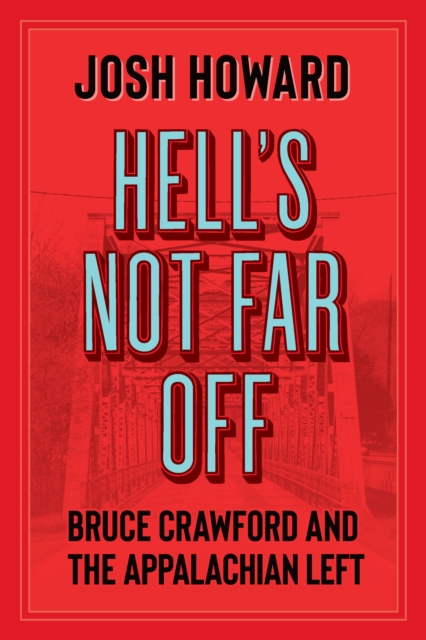
Hell's Not Far Off
A biography of Bruce Crawford, a southwest Virginia journalist-writer of the radical tradition and one of the first to interpret Appalachian labor history.Hell's Not Far Off is a grounded, politically engaged study of the Appalachian journalist and political critic Bruce Crawford, a scourge of coal and railway interests.
eBook

Refusal of work
Paid work is absolutely central to the culture and politics of capitalist societies, yet today's work centered world is becoming increasingly hostile to the human need for autonomy, spontaneity and community. The grim reality of a society in which some are overworked, whilst others are condemned to intermittent work and unemployment, is progressively more difficult to tolerate. In this thought provoking book, David Frayne questions the central place of work in mainstream political visions of the future, laying bare the ways in which economic demands colonise our lives and priorities. Drawing on his original research into the lives of people who are actively resisting nine-to-five employment, Frayne asks what motivates these people to disconnect from work, whether or not their resistance is futile, and whether they might have the capaciity to inspire an alternative form of development, based on a reduction and social redistribution of work. A crucial dissection of the work-centred nature of modern society and emerging resistance to it, 'The Refusal of Work' is a bold call for a more humane and sustainable vision of social progress. (Page four of cover)
eBook

Conflicting Commitments
InConflicting Commitments, Shannon Gleeson goes beyond the debate over federal immigration policy to examine the complicated terrain of immigrant worker rights. Federal law requires that basic labor standards apply to all workers, yet this principle clashes with increasingly restrictive immigration laws and creates a confusing bureaucratic terrain for local policymakers and labor advocates. Gleeson examines this issue in two of the largest immigrant gateways in the country: San Jose, California, and Houston, Texas.
Conflicting Commitmentsreveals two cities with very different approaches to addressing the exploitation of immigrant workers-both involving the strategic coordination of a range of bureaucratic brokers, but in strikingly different ways. Drawing on the real life accounts of ordinary workers, federal, state, and local government officials, community organizers, and consular staff, Gleeson argues that local political contexts matter for protecting undocumented workers in particular. Providing a rich description of the bureaucratic minefields of labor law, and the explosive politics of immigrant rights, Gleeson shows how the lessons learned from San Jose and Houston can inform models for upholding labor and human rights in the United States.
eBook

The Future We Need
In The Future We Need
, Erica Smiley and Sarita Gupta bring a novel perspective
to building worker power and what labor organizing could look like
in the future, suggesting ways to evolve collective bargaining to
match the needs of modern people-not only changing their wages and
working conditions, but being able to govern over more aspects of
their lives.
Weaving together stories of real working people, Smiley and
Gupta position the struggle to build collective bargaining power as
a central element in the effort to build a healthy democracy and
explore both existing levers of power and new ones we must build
for workers to have the ability to negotiate in today and
tomorrow's contexts. The Future We Need illustrates the
necessity of centralizing the fight against white supremacy and
gender discrimination, while offering paths forward to harness the
power of collective bargaining in every area for a new era.
eBook

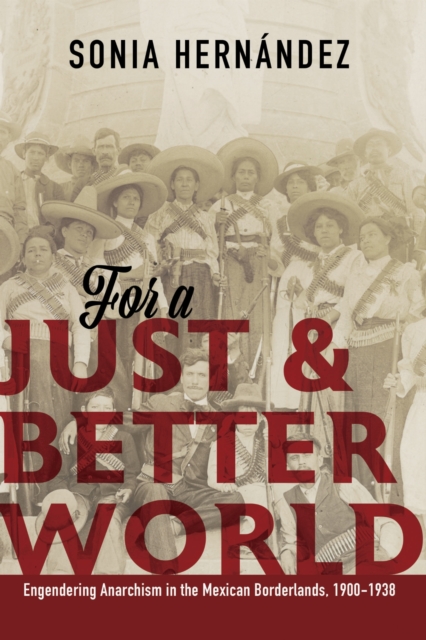
For a Just and Better World
Caritina Piña Montalvo personified the vital role played by Mexican
women in the anarcho-syndicalist movement. Sonia Hernández tells
the story of how Piña and other Mexicanas in the Gulf of Mexico
region fought for labor rights both locally and abroad in service
to the anarchist ideal of a worldwide community of workers. An
international labor broker, Piña never left her native Tamaulipas.
Yet she excelled in connecting groups in the United States and
Mexico. Her story explains the conditions that led to
anarcho-syndicalism's rise as a tool to achieve labor and gender
equity. It also reveals how women's ideas and expressions of
feminist beliefs informed their experiences as leaders in and
members of the labor movement.
A vivid look at a radical activist and her times, For a Just
and Better World illuminates the lives and work of Mexican
women battling for labor rights and gender equality in the early
twentieth century.
eBook

When mandates work
Starting in the 1990s, San Francisco launched a series of bold but relatively unknown public policy experiments to improve wages and benefits for thousands of local workers. Since then, scholars have documented the effects of those policies on compensation, productivity, job creation, and health coverage. Opponents predicted a range of negative impacts, but the evidence tells a decidedly different tale. This book brings together that evidence for the first time, reviews it as a whole, and considers its lessons for local, state, and federal policymakers.
eBook
Trade in the Service of Sustainable Development
In the Bretton Woods era, trade liberalization, the improvement of labour rights and working conditions, and the strengthening of environmental policies, were seen as mutually supportive. But is this always true? Can we continue to pretend to protect the rights of workers and to improve environmental protection, particularly through climate change mitigation strategies, within an agenda focused on trade liberalization? Is it credible to pursue trade policies that aim to expand the volumes of trade, without linking such policies to labour and environmental standards, seen as 'non-trade' concerns? This book asks these questions, offering a detailed analysis of whether linkage is desirable and legally acceptable under the disciplines of the World Trade Organization (WTO). It concludes that trade can work for sustainable development, but only if we see it as a means for social and environmental progress, including climate change mitigation, and if we avoid fetichizing it as an end to be pursued for its own sake.
eBook