
Catalogue Search | MBRL


Are you sure you want to remove the book from the shelf?

{{itemTitle}}
2,565
result(s) for
"Empresses"
Sort by:

Automatic Eve
\"A mighty shogunate ruling the land from Tempu Castle. An imperial line of strict female succession. Caught between these two immense powers, the sprawling city of Tempu is home to many wonders--not least a superhuman technological achievement in the form of a beautiful automaton known as Eve. When a secret that threatens to shake the imperial line intersects with the mystery of Eve's creation, events are set in motion that soon race toward a shocking conclusion. A new, astonishingly inventive science fantasy masterpiece of historic proportions\"-- Provided by publisher.
Book

Das groe Muster seltner Frauen: Die russischen Kaiserinnen Katharina I., Anna, Elisabeth und Katharina die Groe
Wahrend in Westeuropa weibliche Herrscherinnen stets eine Ausnahmeerscheinung geblieben sind, fuhrten im 18. Jahrhundert vier russische Kaiserinnen die Reformen Peters des Groen fort. Eva Daniela Seibel legt mit diesem Buch die erste zusammenhangende Studie vor, die den zeitgenossischen Meinungsspiegel im Alten Reich zur russischen Frauenherrschaft im 18. Jahrhundert untersucht. Vor dem Hintergrund der zeitgenossischen Diskurse zu Herrschaft, dem Russischen Reich und den Geschlechterkonzepten analysiert die Autorin, wie die russischen Kaiserinnen zu einer Projektionsflache der eigenen Vorstellungen, Hoffnungen und Angste wurden. Die Entwicklung von der Euphorie und dem Eurozentrismus der Aufklarung, die Russland als gelehrigen Schuler des Westens betrachtete, uber die mehrdeutige Rolle Russlands einerseits als Feind, andererseits als Bundnispartner deutscher Reichsterritorien im Siebenjahrigen Krieg bis zur gefurchteten europaischen Gromacht unter Katharina der Groen dauerte nur wenige Jahrzehnte. Die zahlreichen im Buch prasentierten pointierten Quellenzitate zeigen eindrucklich, dass sich Russland- sowie weibliche Geschlechterstereotypen wechselseitig verstarkten und ebenso unreflektiert wie widerspruchlich verwendet wurden. Seibels Studie leistet einen wichtigen Beitrag zum besseren Verstndnis darber, wie sich das ambivalente deutsche Russlandbild in seinen Polarisierungen entwickelt hat und warum dominierende Diskurse mchtigen Frauen bis in die Gegenwart immer wieder mit Abwehr, Geringschtzung und Spott begegnen.
eBook


The Celebrity Monarch
Empress Elisabeth of Austria (1837-1898), wife of Habsburg Emperor Francis Joseph I, was celebrated as the most beautiful woman in Europe. Glamorous painted portraits by Franz Xaver Winterhalter and widely collected photographs spread news of her beauty, and the twentieth-century German-language film trilogy Sissi (1955-57) cemented this legacy. Despite the enduring fascination with the empress, art historians have never considered Elisabeth’s role in producing her public portraiture or the influence of her creation. The Celebrity Monarch reveals how portraits of Elisabeth transformed monarchs from divinely appointed sovereigns to public personalities whose daily lives were consumed by spectators. With resources ranging from the paintings of Gustav Klimt and Elisabeth’s private collection of celebrity photography to twenty-first century collages and films by T. J. Wilcox, this book positions Elisabeth herself as the primary engineer of her public image and argues for the widespread influence of her construction on both modern art and the emerging phenomenon of celebrity.
eBook

Down among the dead
\"Gunrunner empress Hail Bristol must navigate alien politics and deadly plots to prevent an interspecies war, in this second novel in the Farian War space opera trilogy. In a surprise attack that killed many of her dearest subjects, Hail Bristol, empress of Indrana, has been captured by the Shen -- the most ruthless and fearsome aliens humanity has ever encountered. As she plots her escape, the centuries-long war between her captors and the Farians, their mortal enemies and Indrana's oldest allies, finally comes to a head. When her captors reveal a shocking vision of the future, Hail must make the unexpectedly difficult decision she's been avoiding: whether to back the Shen or the Farians. Staying neutral is no longer an option. Will Hail fight? Or will she fall?\"-- Provided by publisher.
Book

Marie-Antoinette's Legacy
Challenging the established historiography that frames the French picturesque garden movement as an international style, this book contends that the French picturesque gardens from 1775 until 1867 functioned as liminal zones at the epicenter of court patronage systems.
eBook

Empresses of late Byzantium : foreign brides, mediators and pious women
\"With the exception of the wife of Andronikos III Palaiologos, Anna of Savoy, who acted as regent of Byzantium from 1341 to 1347, the lives of the late Byzantine empresses have so far received little scholarly attention. This study presents the biographies of all fifteen empresses of the Palaiologan dynasty and, based on their experiences, follows the development of the role and position of an empress in the last centuries of the empire. The final analysis considers the selection process for imperial brides and the rituals accompanying their arrival in Constantinople. The author also inquires into their role in public, ritual, and ecclesiastical life and their most important social roles at various stages of life.\"-- Publisher's webite.
Book

The Imperial Script of Catherine the Great
Empress Catherine II produced a body of written material so vast and diverse that it seems impossible to provide a general characterization of the works contained in the authoritative twelve-volume collection assembled by A. N. Pypin from handwritten source material. This book does not attempt an all-embracing review of Catherine’s entire literary output, which consists of works in multiple genres and languages. The Russian empress’s writings have been the repeated subject of serious analysis for nineteenth- and twentieth-century researchers; all of these in one way or another demonstrate that across a variety of genres and formats, with a greater or lesser degree of independence and originality, the literary works of Catherine II always express her politics and ideology. These texts were carefully prepared, their publications and stage productions executed magnificently. As a rule, the most significant works were translated into French, German, and, in some cases, English. European readers, as well as the Russian public, were expected to be attentive witnesses to, and happy consumers of, the monarch’s compositions. Amongst rulers, the literary productivity of the Russian empress has no analogue in history. This volume is the first study in English of the vast literary output of Catherine the Great.
eBook
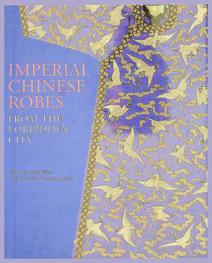
Imperial Chinese robes : from the forbidden city
Focusing on the dress and accessories of the Qing dynasty (1644-1911), this exquisite book captures the grandeur of the garments worn by emperors and empresses for defined formal engagements. In Qing dynasty China, there were clear rules on what to wear on different occasions. Official dress was worn when the emperor performed sacrifices at the 'Temple of Heaven' and at other important rituals. Auspicious dress was for New Year, birthdays and weddings. Military dress for troop inspection; travelling dress for hunting and royal visits to provinces, and ordinary dress for events of a non-celebrative nature, such as mourning. When not performing public duties, however, the imperial family could freely choose which garments to wear - and this book also illustrates these more casual clothes with colourful and stunning fashion dresses made for the court ladies.
Book
Rebel girls. Episode 23, Catherine the Great
This Rebel Girl overthrew her emperor husband to become Russia’s longest-reigning female ruler. And put her country on the map as one of the greatest nations in Europe. We explore who Catherine the Great was. Based on the best-selling book series 'Goodnight Stories for Rebel Girls'.
Streaming Video