
Catalogue Search | MBRL


Are you sure you want to remove the book from the shelf?

{{itemTitle}}
10
result(s) for
"Empresses Rome Biography."
Sort by:


Rome's Christian empress : Galla Placidia rules at the twilight of the empire
The page-turning account of Galla Placidia, a remarkable ruler at the twilight of the Roman Empire.
In Rome's Christian Empress, Joyce E. Salisbury brings the captivating story of Rome's Christian empress to life. The daughter of Roman emperor Theodosius I, Galla Placidia lived at the center of imperial Roman power during the first half of the fifth century. Taken hostage after the fall of Rome to the Goths, she was married to the king and, upon his death, to a Roman general. The rare woman who traveled throughout Italy, Gaul, and Spain, she eventually returned to Rome, where her young son was crowned as the emperor of the western Roman provinces. Placidia served as his regent, ruling the Roman Empire and the provinces for twenty years.
Salisbury restores this influential, too-often forgotten woman to the center stage of this crucial period. Describing Galla Placidia's life from childhood to death while detailing the political and military developments that influenced her—and that she influenced in turn—the book relies on religious and political sources to weave together a narrative that combines social, cultural, political, and theological history.
The Roman world changed dramatically during Placidia's rule: the Empire became Christian, barbarian tribes settled throughout the West, and Rome began its unmistakable decline. But during her long reign, Placidia wielded formidable power. She fended off violent invaders and usurpers who challenged her Theodosian dynasty; presided over the dawn of the Catholic Church as theological controversies split the faithful and church practices and holidays were established; and spent fortunes building churches and mosaics that incorporated prominent images of herself and her family. Compulsively readable, Rome's Christian Empress is the first full-length work to give this fascinating and complex ruler her due.
eBook

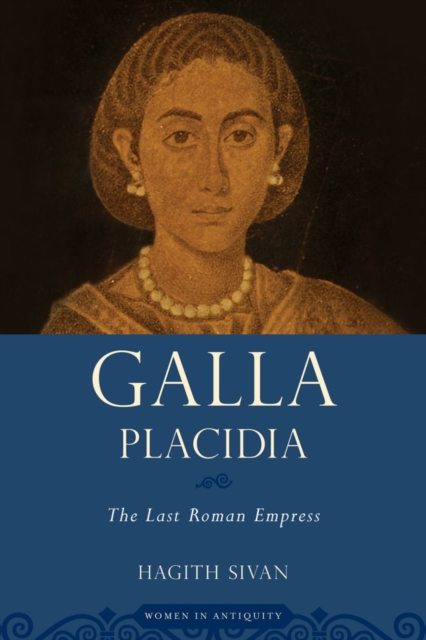
Galla Placidia : the last Roman empress
Even by the standards of royalty in antiquity the life of Galla Placidia (c. 390-450 CE) seems an aberration. Daughter, granddaughter, and sister of Roman emperors, wife of a Gothic chieftain and of a Roman general, and mother of a Roman emperor and of Attila's would be bride, Galla's adventures reflect the vicissitudes of the late Roman Empire itself. This new biography incorporates and advances current approaches to the study of late antiquity in general and of women in particular.
eBook


Representing Agrippina
Agrippina the Younger, wife of the emperor Claudius and mother of his successor Nero, wielded power and authority at the center of the Roman empire in ways unmatched by almost any other woman in Roman history. Such, at least, is the portrait of Agrippina delivered by our sources and perpetuated in modern scholarship. In this posthumous work, Judith Ginsburg provides a fresh look at both the literary and material representations of Agrippina. Unlike previous treatments, she seeks neither to condemn nor to rehabilitate Agrippina. Nor does she endeavor to exhume the \"real Agrippina\" from the embellished or fabricated portraits found among the ancients. Ginsburg trains her focus on the representations themselves. Her painstaking dissection of the portrayals by historians exposes the rhetorical tropes, the recurrent motifs, and the craft that shaped the literary image of Agrippina. The designs, as Ginsburg shows, were more than literary flourishes. They aimed to blur the boundaries between the domestic and the imperial realms, deploying the image of Agrippina as domineering wife and mother to suggest the flaws and instability of the regime, a dysfunctional family entailing a dysfunctional system of governance. Gender inversions at home played themselves out on the public scene as imperial rule compromised by female ascendancy. Distorted stereotypes of the \"wicked stepmother,\" the domineering woman, and the sexual transgessor were applied to underscore the violations of status and disruption of gender relations that characterized the imperial administration. Ginsburg has as keen an eye for visual (mis)representations as for literary ones. The depictions of Agrippina on coinage and statuary provide a stark contrast with the written evidence. She appears as matron and priestess, emblematic of domestic rectitude and public piety, and a central figure in the continuity of the dynasty. Ginsburg incisively demonstrates the means whereby Agrippina's imagery was molded both to serve the interests of the Julio-Claudian regime and to advance the ends of its critics.
eBook
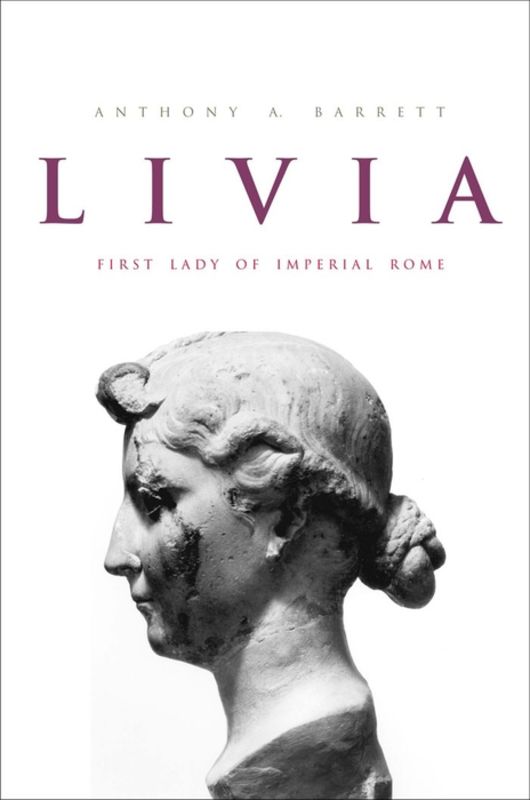
Livia
Livia (58 B.C.-A.D. 29)-the wife of the first Roman emperor, Caesar Augustus, and mother of the second, Tiberius-wielded power at the center of Roman politics for most of her long life. Livia has been portrayed as a cunning and sinister schemer, but in this biography (the first in English devoted to her) Livia emerges as a much more complex individual. Achieving influence unprecedented for a woman, she won support and even affection from her contemporaries and was widely revered after her death.Anthony A. Barrett, author of acclaimed biographies of Caligula and Agrippina, here examines Livia's life and her role in Roman politics. He recounts the events of her life, from her early days as a member of the wealthy and powerful Claudian family through her final conflicts with the new Emperor Tiberius. Barrett also considers how Livia helped shape the pattern of Roman government that prevailed for the next four centuries.
eBook
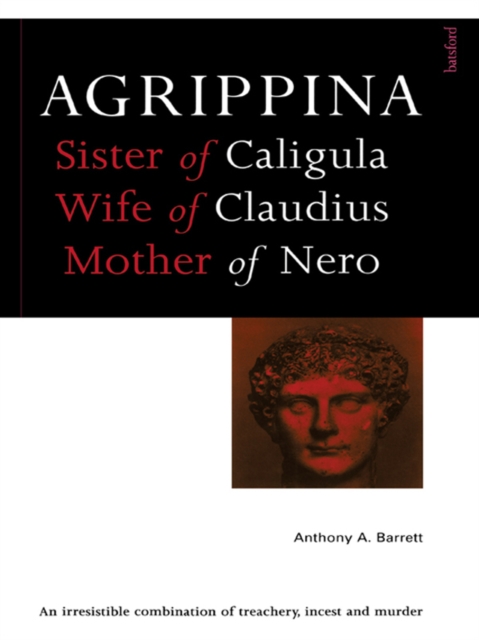
Agrippina
In this dynamic new biography - the first on Agrippina in English - Professor Barrett uses the latest archaeological, numismatic and historical evidence to provide a close and detailed study of her life and career. He shows how Agrippina's political contribution to her time seems in fact to have been positive, and that when she is judged by her achievements she demands admiration. Revealing the true figure behind the propaganda and the political machinations of which she was capable, he assesses the impact of her marriage to the emperor Claudius, on the country and her family. Finally, he exposed her one real failing - her relationship with her son, the monster of her own making to whom, in horrific and violent circumstances, she would eventually fall victim.
eBook

The empress was innocent
The legend of Livia Augusta connects her, in her relentless quest to put her son Tiberius on the Roman throne, \"with the deaths of Marcellus, Marcus Agrippa, Gaius and Lucius Caesar, Agrippa Postumus, Germanicus,\" even Augustus himself, though there is little or nothing that actually establishes those connections beyond accusations made by Tacitus in his \"Annals of Imperial Rome,\" written nearly a century after Livia's death and based on sources of uncertain accuracy.
Newspaper Article

Empress Zenobia : Palmyra's rebel queen
The ancient sources for the life and times of Zenobia are sparse, and the surviving literary works are biased towards the Roman point of view, much as are the sources for two other famous women who challenged Rome, Cleopatra and Boudica.
eBook