
Catalogue Search | MBRL


Are you sure you want to remove the book from the shelf?

{{itemTitle}}
193
result(s) for
"Endangered plants Climatic factors."
Sort by:


Species distribution models predict rare species occurrences despite significant effects of landscape context
1. The true status of many endangered plants is uncertain because the locations of all extant populations are not known. Species distribution models (SDMs) can direct searches for additional populations, but habitat fragmentation may influence the distribution of rare species more than climatic or edaphic factors in human-dominated landscapes. In this study, I test the ability of SDMs to predict rare plant occurrences in a fragmented landscape and the importance of predicted habitat suitability versus landscape context. 2. I built SDMs for eight rare woodland plants and assessed them using an independent data set including plant community surveys of 51 sites. I used community data to determine whether SDMs predict the right habitat type even when the target rare species was absent. I then modelled rare species presence based on predicted habitat suitability, distance to the nearest known population and the amount of forest habitat within 500 m of the site. 3. SDMs were effective for seven of the eight species, with the degree of predicted habitat suitability positively related to species' occurrence. I found new populations of four of the eight species. However, the amount of forest habitat available in the vicinity of a plot was also a positive predictor of rare plant occurrences. Among sites predicted to be suitable, the distance to the nearest known population was the strongest predictor of rare plant occurrence. 4. Synthesis and applications. Species distribution models (SDMs) can effectively target searches for populations of rare species even in human-dominated landscapes. Surveying the plant community at sites predicted to be suitable can help to improve the SDM. SDMs used in conjunction with data on landscape context can maximize the efficiency of searches for rare species and show which species are restricted by dispersal limitation and habitat fragmentation in addition to edaphic and climatic factors.
Journal Article

Potential geographic distribution of relict plant Pteroceltis tatarinowii in China under climate change scenarios
Pteroceltis tatarinowii (Pteroceltis: Ulmaceae) is a deciduous tree that has a cultivation history of more than 2000 years in China. As an excellent afforestation tree species and rare and endangered tertiary relic plant, P . tatarinowii has high ecological protection value. Due to the forest destruction caused by predatory logging and natural environmental factors, the population of P . tatarinowii in China has decreased significantly. In this study, the potential geographical distribution of P . tatarinowii in China under climate change was predicted using MaxEnt model and ArcGIS based on 223 effective distribution points of P . tatarinowii and 11 environmental variables. The results showed that: (1) the prediction accuracy of MaxEnt model was extremely high, and the areas under curve (AUC) value of the training data was 0.936; The area of the potential suitable habitat area of P . tatarinowii under current climate condition was 180.84×10 4 km 2 , and mainly located in the central and southeast regions of China. (2) The domain environmental variables affecting the potential geographical distribution of P . tatarinowii were min temperature of coldest month (12.1~22.7°C), isothermality (26.6~35.8), mean diurnal range 6.9~9.3°C and precipitation of wettest month (189.5 ~955.5 mm). (3) In 2050s and 2070s, compared with current (4.19×10 4 km 2 ), the area of highly suitable habitat will increase by 0.2%-0.3% (RCP2.6) and 1.22%-3.84% (RCP8.5) respectively. while the poorly, moderately and total suitable habitats will decrease. The gravity center of P . tatarinowii showed a trend of migration to higher latitudes and northern regions in the future. These results will provide theoretical basis for cultivation management and resource protection of P . tatarinowii .
Journal Article
Plant-pollinator interactions along the altitudinal gradient in Berberis lycium royle: An endangered medicinal plant of the Himalayan region
The terrestrial ecosystem, particularly mountain regions, influences species distribution by providing diverse climatic conditions that vary with rising altitude. These climatic factors play a significant role in determining species phenology and niche width. However, the environmental factors influencing pollination dynamics of specific plant species across altitudes remain unexplored. Considering the gaps, we assess how the composition and abundance of pollinator fauna associated with the important medicinal plant Berberis lycium Royle (Berberidaceae) vary across five distinct altitudinal gradients (800–2200 m) in the Pir-Panjal mountain range in the northwestern part of the Indian Himalayan region. Pollinators, including bees, butterflies, wasps, and flies were monitored over two consecutive flowering seasons (2022–2023). A total of 39 insect species representing five orders and 17 families, were recorded visiting B. lycium during its flowering period across the altitudinal range. The linear regression model indicated that all four pollination indices exhibited a declining trend with increasing altitude when data were pooled together. However, only foraging speed (FS) and index of visiting rate (IVR) were showed significant declines. Among individual pollinator groups, only Lepidoptera displayed a significant relationship with altitude, while other groups exhibited asynchrony along the altitudinal gradient. Furthermore, reproductive output (fruit and seed production) declined significantly with increasing altitude. Our findings suggest that while altitude influences species distribution but also differentially shapes plant-pollinator interactions, pollinator foraging behaviour, and reproductive success. This study highlights the importance of monitoring plant-pollinator interactions in fragile Himalayan ecosystem, where environmental changes could have cascading effects on ecological stability.
Journal Article

Biological Flora of the British Isles: Robinia pseudoacacia
1. This account presents information on all aspects of the biology of Robinia pseudoacacia L. that are relevant to understanding its ecological characteristics and behaviour. The main topics are presented within the standard framework of the Biological Flora of the British Isles: distribution, habitat, communities, responses to biotic factors, responses to environment, structure and physiology, phenology, floral and seed characters, herbivores and disease, and history and conservation. 2. Robinia pseudoacacia, false acacia or black locust, is a deciduous, broad-leaved tree native to North America. The medium-sized, fast-growing tree is armed with spines, and extensively suckering. It has become naturalized in grassland, semi-natural woodlands and urban habitats. The tree is common in the south of the British Isles and in many other regions of Europe. 3. Robinia pseudoacacia is a light-demanding pioneer species, which occurs primarily in disturbed sites on fertile to poor soils. The tree does not tolerate wet or compacted soils. In contrast to its native range, where it rapidly colonizes forest gaps and is replaced after 15-30 years by more competitive tree species, populations in the secondary range can persist for a longer time, probably due to release from natural enemies. 4. Robinia pseudoacacia reproduces sexually, and asexually by underground runners. Disturbance favours clonal growth and leads to an increase in the number of ramets. Mechanical stem damage and fires also lead to increased clonal recruitment. 5. The tree benefits from di-nitrogen fixation associated with symbiotic rhizobia in root nodules. Estimated symbiotic nitrogen fixation rates range widely from 23 to 300 kg ha⁻¹ year⁻¹. The nitrogen becomes available to other plants mainly by the rapid decay of nitrogen-rich leaves. 6. Robinia pseudoacacia is host to a wide range of fungi both in the native and introduced ranges. Megaherbivores are of minor significance in Europe but browsing by ungulates occurs in the native range. Among insects, the North American black locust gall midge (Obolodiplosis robiniae) is specific to Robinia and is spreading rapidly throughout Europe. 7. In parts of Europe, Robinia pseudoacacia is considered an invasive non-indigenous plant and the tree is controlled. Negative impacts include shading and changes of soil conditions as a result of nitrogen fixation.
Journal Article
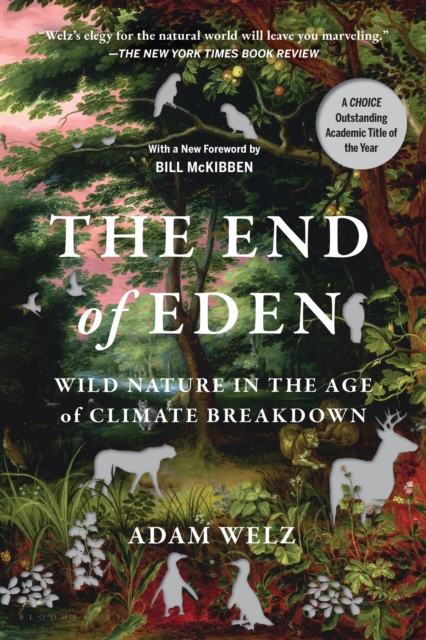
The End of Eden
A New Yorker Best Book of the Year A New York Times Book Review Editors' Choice A CHOICE Outstanding Academic Title of the Year \"Exquisite.\" – DAVID WALLACE-WELLS \"At once an elegy and an exhortation.\" – ELIZABETH KOLBERT \"A book that goes deeper than any before into the meaning of the climate breakdown for all the rest of creation.\" – BILL McKIBBEN \"Celebratory and heartbreaking.\" – DAVID GEORGE HASKELL A revelatory exploration of climate change from the perspective of wild species and natural ecosystems, with a new foreword by Bill McKibben. The stories we usually tell ourselves about climate change tend to focus on the damage inflicted on human societies by big storms, severe droughts, and rising sea levels. But the most powerful impacts are being and will be felt by the natural world and its myriad species, which are already in the midst of the sixth great extinction. Rising temperatures are fracturing ecosystems that took millions of years to evolve, disrupting the life forms they sustain--and in many cases driving them towards extinction. The natural Eden that humanity inherited is quickly slipping away. The End of Eden invites the reader to meet wild species on their own terms in a range of ecosystems that span the globe. Combining classic natural history, firsthand reportage, and insights from cutting-edge research, Adam Welz brings us close to creatures like moose in northern Maine, parrots in Puerto Rico, cheetahs in Namibia, and rare fish in Australia as they struggle to survive. The stories are intimate yet expansive and always dramatic. The End of Eden offers a radical new kind of environmental journalism that connects humans to nature in a more empathetic way than ever before and galvanizes us to act in defense of the natural world before it's too late.
eBook

Combining geodiversity with climate and topography to account for threatened species richness
Understanding threatened species diversity is important for long-term conservation planning. Geodiversity—the diversity of Earth surface materials, forms, and processes—may be a useful biodiversity surrogate for conservation and have conservation value itself. Geodiversity and species richness relationships have been demonstrated; establishing whether geodiversity relates to threatened species' diversity and distribution pattern is a logical next step for conservation. We used 4 geodiversity variables (rock-type and soil-type richness, geomorphological diversity, and hydrological feature diversity) and 4 climatic and topographic variables to model threatened species diversity across 31 of Finland's national parks. We also analyzed rarityweighted richness (a measure of site complementarity) of threatened vascular plants, fungi, bryophytes, and all species combined. Our 1-km² resolution data set included 271 threatened species from 16 major taxa. We modeled threatened species richness (raw and rarity weighted) with boosted regression trees. Climatic variables, especially the annual temperature sum above 5 °C, dominated our models, which is consistent with the critical role of temperature in this boreal environment. Geodiversity added significant explanatory power. High geodiversity values were consistently associated with high threatened species richness across taxa. The combined effect of geodiversity variables was even more pronounced in the rarity-weighted richness analyses (except for fungi) than in those for species richness. Geodiversity measures correlated most strongly with species richness (raw and rarity weighted) of threatened vascular plants and bryophytes and were weakest for molluscs, lichens, and mammals. Although simple measures of topography improve biodiversity modeling, our results suggest that geodiversity data relating to geology, landforms, and hydrology are also worth including. This reinforces recent arguments that conserving nature's stage is an important principle in conservation. Entender la diversidad de especies amenazadas es importante para la planeación de la conservación a largo plazo. La geodiversidad - la diversidad de materiales, formas y procesos en la superficie terrestre - puede ser un sustituto útil de la biodiversidad para la conservación y puede tener un valor de conservación propio. Las relaciones entre la geodiversidad y la riqueza de especies han sido demostradas; el siguiente paso lógico para la conservación es establecer si la geodiversidad se relaciona con la diversidad de especies amenazadas y los patrones de distribución. Usamos cuatro variables de la geodiversidad (riqueza de tipo de roca y de tipo de suelo, diversidad geomorfológica, características de la diversidad hidrológica) y cuatro variables climáticas y topográficas para modelar la diversidad de especies amenazadas en 31 de los parques nacionales de Finlandia. También analizamos la riqueza ponderada con la rareza (una medida de la complementariedad de sitio) de las plantas vasculares, hongos y briofitas amenazadas y todas las especies combinadas. Nuestro conjunto de datos de resolución de 1-km² incluía 217 especies amenazadas de 16 taxones mayores. Modelamos la riqueza de especies amenazadas (cruda y ponderada con la rareza) con árboles de regresión estimulados. Las variables climáticas, especialmente la suma de la temperatura anual sobre los 5 °C, dominaron nuestros modelos, lo que es consistente con el papel critico de la temperatura en este ambiente boreal. La geodiversidad añadió un poder explicativo. Los altos valores de geodiversidad estuvieron asociados constantemente con la alta riqueza de especies amenazadas en los taxones. El efecto combinado de las variables de la geodiversidad estuvo más pronunciado en los análisis de riqueza sopesados con la rareza (excepto por los hongos) que en aquellos para la riqueza de especies. Las medidas de geodiversidad se correlacionaron más fuertemente con la riqueza de especies (sopesada con la rareza y la crudeza) de las plantas vasculares y las briofitas y fueron más débiles para los moluscos, los liqúenes y los mamíferos. Aunque las medidas simples de la topografía mejoran el modelado de la biodiversidad, nuestros resultados sugieren que los datos de geodiversidad relacionados con la geología, las formaciones terrestres y la hidrología también deben ser incluidos. Esto refuerza los argumentos recientes que dicen que conservar el estado de la naturaleza es un principio importante en la conservación.
Journal Article

A global synthesis reveals biodiversity loss as a major driver of ecosystem change
Although loss of biodiversity is known to cause reduction in ecosystem function, it is not known how this threat compares to other environmental alterations such as climate change; this analysis of the data from over 100 published studies shows that biodiversity loss is as significant as other major drivers of change in ecosystem function.
Biodiversity loss drives change
It is well established that loss of biodiversity causes a reduction in ecosystem function, but it is not clear how big a threat this poses to function compared with the more direct influences from changes in climate, atmospheric chemistry and nutrient pollution. This analysis of data from 192 published studies shows that the impact of biodiversity loss on ecosystem processes is equal to, or larger than, the effects of most other drivers of environmental change.
Evidence is mounting that extinctions are altering key processes important to the productivity and sustainability of Earth’s ecosystems
1
,
2
,
3
,
4
. Further species loss will accelerate change in ecosystem processes
5
,
6
,
7
,
8
, but it is unclear how these effects compare to the direct effects of other forms of environmental change that are both driving diversity loss and altering ecosystem function. Here we use a suite of meta-analyses of published data to show that the effects of species loss on productivity and decomposition—two processes important in all ecosystems—are of comparable magnitude to the effects of many other global environmental changes. In experiments, intermediate levels of species loss (21–40%) reduced plant production by 5–10%, comparable to previously documented effects of ultraviolet radiation and climate warming. Higher levels of extinction (41–60%) had effects rivalling those of ozone, acidification, elevated CO
2
and nutrient pollution. At intermediate levels, species loss generally had equal or greater effects on decomposition than did elevated CO
2
and nitrogen addition. The identity of species lost also had a large effect on changes in productivity and decomposition, generating a wide range of plausible outcomes for extinction. Despite the need for more studies on interactive effects of diversity loss and environmental changes, our analyses clearly show that the ecosystem consequences of local species loss are as quantitatively significant as the direct effects of several global change stressors that have mobilized major international concern and remediation efforts
9
.
Journal Article

Recovery of an Isolated Coral Reef System Following Severe Disturbance
Coral reef recovery from major disturbance is hypothesized to depend on the arrival of propagules from nearby undisturbed reefs. Therefore, reefs isolated by distance or current patterns are thought to be highly vulnerable to catastrophic disturbance. We found that on an isolated reef system in north Western Australia, coral cover increased from 9% to 44% within 12 years of a coral bleaching event, despite a 94% reduction in larval supply for 6 years after the bleaching. The initial increase in coral cover was the result of high rates of growth and survival of remnant colonies, followed by a rapid increase in juvenile recruitment as colonies matured. We show that isolated reefs can recover from major disturbance, and that the benefits of their isolation from chronic anthropogenic pressures can outweigh the costs of limited connectivity.
Journal Article

Demographic processes and fire regimes interact to influence plant population persistence under changing climates
Individual and interactive effects of changing climate and shifting fire regimes are influencing many plant species across the globe. Climate change will likely have significant impacts on plant population viability over time by altering environmental conditions and wildfire regimes as well as influencing species demographic traits. However, the outcomes of these complex interactions for different plant functional types under future climate conditions have been rarely examined. We used a proof‐of‐concept case‐study approach to model multiple plant species across two functional plant types, obligate seeder and facultative resprouter, to examine the interactive effects of demographic shifts and fire regime change on population persistence across two landscapes of over 7000 km2 in temperate southeastern Australia. Our approach involves a novel combination of a fire regime simulation tool with a spatially explicit population viability analysis model. We simulated fire regimes under six different future climates representing different temperature and precipitation shifts and combined them with 16 hypothetical plant demographic change scenarios, characterised by changes to individual or multiple plant demographic processes. Plant populations were more likely to decline or become extinct due to changes in demographic processes than in the fire regime alone. Although both functional types were vulnerable to climate‐induced changes in demography, obligate seeder persistence was also negatively influenced by future fire regimes characterised by shorter fire intervals. Integrating fire regime simulations with spatially explicit population viability analyses increased our capacity to identify those plant functional types most at risk of extinction, and why, as fire regimes change with climate change. This flexible framework is a first step in exploring the complex interactions that will determine plant viability under changing climates and will improve research and fire management prioritisation for species into the future.
Journal Article