
Catalogue Search | MBRL


Are you sure you want to remove the book from the shelf?

{{itemTitle}}
6,760
result(s) for
"Endemic animals"
Sort by:

The herds shot round the world : native breeds and the British empire, 1800-1900
\"As Britain industrialized in the early nineteenth century, animal breeders faced the need to convert livestock into products while maintaining the distinctive character of their breeds. Thus they transformed cattle and sheep adapted to regional environments into bulky, quick-fattening beasts. Exploring the environmental and economic ramifications of imperial expansion on colonial environments and production practices, Rebecca J. H. Woods traces how global physiological and ecological diversity eroded under the technological, economic, and cultural system that grew up around the production of livestock by the British Empire. Attending to the relationship between type and place and what it means to call a particular breed of livestock 'native,' Woods highlights the inherent tension between consumer expectations in the metropole and the ecological reality at the periphery.\"-- Provided by publisher.
Book
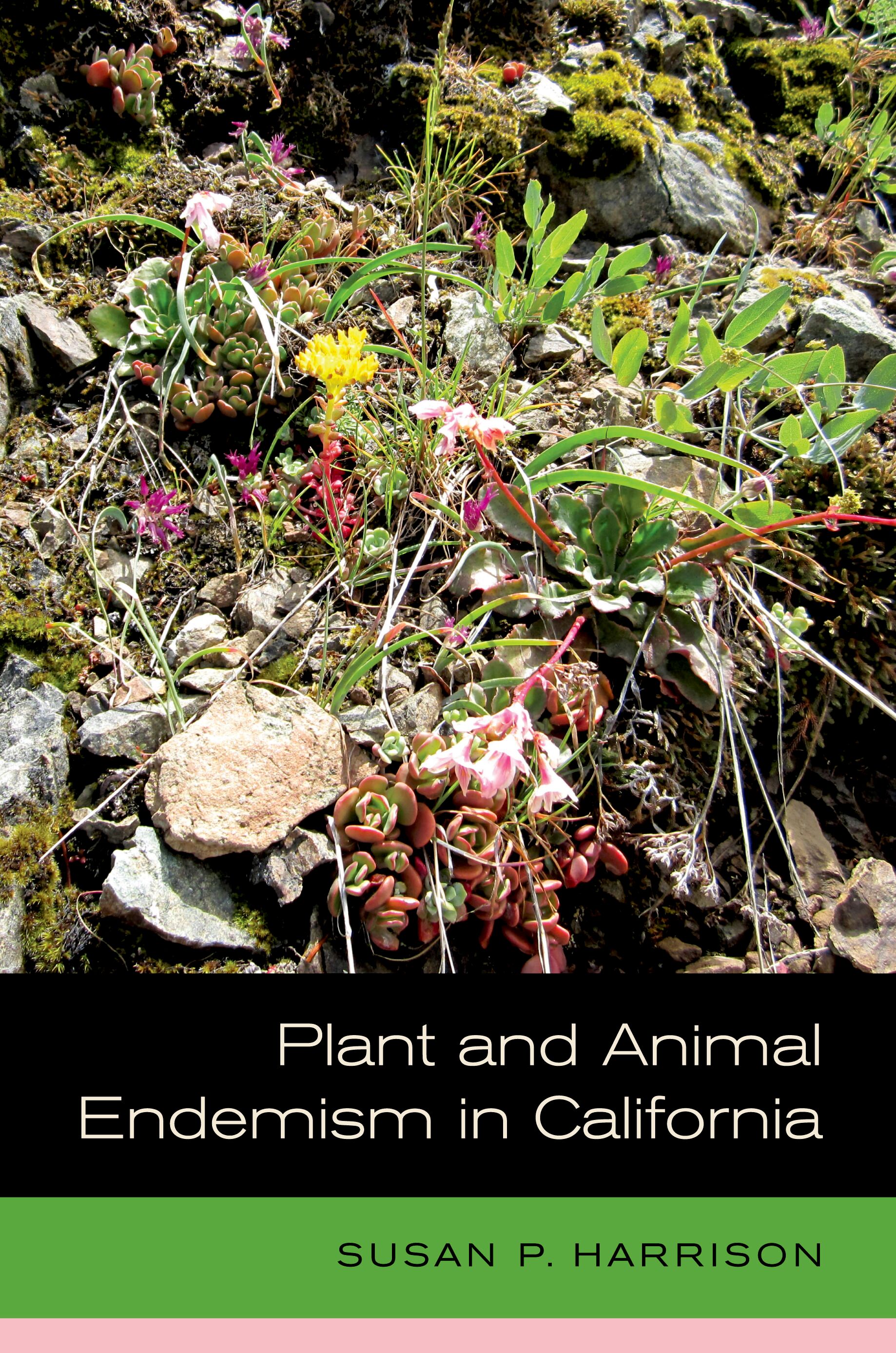
Plant and animal endemism in California
California is globally renowned for its biological diversity, including its wealth of unique, or endemic, species. Many reasons have been cited to explain this abundance: the complex geology and topography of its landscape, the special powers of its Mediterranean-type climate, and the historic and modern barriers to the wider dispersal of its flora and fauna. Plant and Animal Endemism in California compiles and synthesizes a wealth of data on this singular subject, providing new and updated lists of native species, comparing patterns and causes of both plant and animal endemism, and interrogating the classic explanations proposed for the state’s special significance in light of new molecular evidence. Susan Harrison also offers a summary of the innovative tools that have been developed and used in California to conserve and protect this stunning and imperiled diversity.
eBook

Production Losses From an Endemic Animal Disease: Porcine Reproductive and Respiratory Syndrome (PRRS) in Selected Midwest US Sow Farms
Porcine reproductive and respiratory syndrome (PRRS) is an endemic disease causing important economic losses to the US swine industry. The complex epidemiology of the disease, along with the diverse clinical outputs observed in different types of infected farms, have hampered efforts to quantify PRRS' impact on production over time. We measured the impact of PRRS on the production of weaned pigs using a log-linear fixed effects model to evaluate longitudinal data collected from 16 sow farms belonging to a specific firm. We measured seven additional indicators of farm performance to gain insight into disease dynamics. We used pre-outbreak longitudinal data to establish a baseline that was then used to estimate the decrease in production. A significant rise of abortions in the week before the outbreak was reported was the strongest signal of PRRSV activity. In addition, production declined slightly one week before the outbreak and then fell markedly until weeks 5 and 6 post-outbreak. Recovery was not monotonic, cycling gently around a rising trend. At the end of the study period (35 weeks post-outbreak), neither the production of weaned pigs nor any of the performance indicators had fully recovered to baseline levels. This result suggests PRSS outbreaks may last longer than has been found in most other studies. We assessed PRRS' effect on farm efficiency as measured by changes in sow production of weaned pigs per year. We translated production losses into revenue losses assuming an average market price of $45.2/weaned pig. We estimate that the average PRSS outbreak reduced production by approximately 7.4%, relative to annual output in the absence of an outbreak. PRRS reduced production by 1.92 weaned pigs per sow when adjusted to an annual basis. This decrease is substantially larger than the 1.44 decrease of weaned pigs per sow/year reported elsewhere.
Journal Article

review of contemporary patterns of endemism for shallow water reef fauna in the Red Sea
AIM: The Red Sea is characterised by a unique fauna and historical periods of desiccation, hypersalinity and intermittent isolation. The origin and contemporary composition of reef‐associated taxa in this region can illuminate biogeographical principles about vicariance and the establishment (or local extirpation) of existing species. Here we aim to: (1) outline the distribution of shallow water fauna between the Red Sea and adjacent regions, (2) explore mechanisms for maintaining these distributions and (3) propose hypotheses to test these mechanisms. LOCATION: Red Sea, Gulf of Aden, Arabian Sea, Arabian Gulf and Indian Ocean. METHODS: Updated checklists for scleractinian corals, fishes and non‐coral invertebrates were used to determine species richness in the Red Sea and the rest of the Arabian Peninsula and assess levels of endemism. Fine‐scale diversity and abundance of reef fishes within the Red Sea were explored using ecological survey data. RESULTS: Within the Red Sea, we recorded 346 zooxanthellate and azooxanthellate scleractinian coral species of which 19 are endemic (5.5%). Currently 635 species of polychaetes, 211 echinoderms and 79 ascidians have been documented, with endemism rates of 12.6%, 8.1% and 16.5% respectively. A preliminary compilation of 231 species of crustaceans and 137 species of molluscs include 10.0% and 6.6% endemism respectively. We documented 1071 shallow fish species, with 12.9% endemic in the entire Red Sea and 14.1% endemic in the Red Sea and Gulf of Aden. Based on ecological survey data of endemic fishes, there were no major changes in species richness or abundance across 1100 km of Saudi Arabian coastline. MAIN CONCLUSIONS: The Red Sea biota appears resilient to major environmental fluctuations and is characterized by high rates of endemism with variable degrees of incursion into the Gulf of Aden. The nearby Omani and Arabian Gulfs also have variable environments and high levels of endemism, but these are not consistently distinct across taxa. The presence of physical barriers does not appear to explain species distributions, which are more likely determined by ecological plasticity and genetic diversity.
Journal Article

The Role of Introgression During the Radiation of Endemic Fishes Adapted to Living at Extreme Altitudes in the Tibetan Plateau
Abstract
Recent genomic analyses of evolutionary radiations suggest that ancient introgression may facilitate rapid diversification and adaptive radiation. The loach genus Triplophysa, a genus with most species endemic to Tibetan Plateau, shows ecological diversity and rapid evolution and represents a potential example of adaptive radiation linked to the uplift of the Tibetan Plateau. Here, we interrogate the complex evolutionary history of Triplophysa fishes through the analysis of whole-genome sequences. By reconstructing the phylogeny of Triplophysa, quantifying introgression across this clade, and simulating speciation and migration processes, we confirm that extensive gene flow events occurred across disparate Triplophysa species. Our results suggest that introgression plays a more substantial role than incomplete lineage sorting in underpinning phylogenetic discordance in Triplophysa. The results also indicate that genomic regions affected by ancient gene flow exhibit characteristics of lower recombination rates and nucleotide diversity and may associate with selection. Simulation analysis of Triplophysa tibetana suggests that the species may have been affected by the Gonghe Movement in the third uplift of the Tibetan Plateau, resulting in founder effects and a subsequent reduction in Ne.
Journal Article

Climate change poised to threaten hydrologic connectivity and endemic fishes in dryland streams
Significance We provide the first demonstration to our knowledge that projected changes in regional climate regimes will have significant consequences for patterns of intermittence and hydrologic connectivity in dryland streams of the American Southwest. By simulating fine-resolution streamflow responses to forecasted climate change, we simultaneously evaluate alterations in local flow continuity over time and network flow connectivity over space and relate how these changes may challenge the persistence of a globally endemic fish fauna. Given that human population growth in arid regions will only further increase surface and groundwater extraction during droughts, we expect even greater likelihood of flow intermittence and loss of habitat connectivity in the future.
Protecting hydrologic connectivity of freshwater ecosystems is fundamental to ensuring species persistence, ecosystem integrity, and human well-being. More frequent and severe droughts associated with climate change are poised to significantly alter flow intermittence patterns and hydrologic connectivity in dryland streams of the American Southwest, with deleterious effects on highly endangered fishes. By integrating local-scale hydrologic modeling with emerging approaches in landscape ecology, we quantify fine-resolution, watershed-scale changes in habitat size, spacing, and connectance under forecasted climate change in the Verde River Basin, United States. Model simulations project annual zero-flow day frequency to increase by 27% by midcentury, with differential seasonal consequences on continuity (temporal continuity at discrete locations) and connectivity (spatial continuity within the network). A 17% increase in the frequency of stream drying events is expected throughout the network with associated increases in the duration of these events. Flowing portions of the river network will diminish between 8% and 20% in spring and early summer and become increasingly isolated by more frequent and longer stretches of dry channel fragments, thus limiting the opportunity for native fishes to access spawning habitats and seasonally available refuges. Model predictions suggest that midcentury and late century climate will reduce network-wide hydrologic connectivity for native fishes by 6–9% over the course of a year and up to 12–18% during spring spawning months. Our work quantifies climate-induced shifts in stream drying and connectivity across a large river network and demonstrates their implications for the persistence of a globally endemic fish fauna.
Journal Article

The future of Arctic sea-ice biogeochemistry and ice-associated ecosystems
The Arctic sea-ice-scape is rapidly transforming. Increasing light penetration will initiate earlier seasonal primary production. This earlier growing season may be accompanied by an increase in ice algae and phytoplankton biomass, augmenting the emission of dimethylsulfide and capture of carbon dioxide. Secondary production may also increase on the shelves, although the loss of sea ice exacerbates the demise of sea-ice fauna, endemic fish and megafauna. Sea-ice loss may also deliver more methane to the atmosphere, but warmer ice may release fewer halogens, resulting in fewer ozone depletion events. The net changes in carbon drawdown are still highly uncertain. Despite large uncertainties in these assessments, we expect disruptive changes that warrant intensified long-term observations and modelling efforts.The Arctic is warming and undergoing rapid ice loss. This Perspective considers how changes in sea ice will impact the biogeochemistry and associated ecosystems of the region while calling for more observations to improve our understanding of this complex system.
Journal Article

Genomic insights into population structure and adaptive variation of Pimelodus yuma and Pimelodus grosskopfii in the Magdalena-Cauca Basin
The biodiversity of the Magdalena-Cauca Basin, Colombia's main fluvial system, is under severe threat from anthropogenic activities, imperiling endemic fish species such as Pimelodus yuma and Pimelodus grosskopfii. Using a population genomic approach based on single nucleotide polymorphisms (SNPs), we analyzed 64 individuals of P. grosskopfii and 57 individuals of P. yuma collected across ~1,600 km of the Magdalena-Cauca Basin. We identified two coexisting genetic stocks in both species, maintained by restricted gene flow that is associated with adaptive divergence rather than geographic distribution. Selection pressures, likely linked to the basin's bimodal hydrological regime, were detected as major drivers of genetic structure. Historical demographic reconstruction analyses indicate that stock 1 in both P. grosskopfii and P. yuma was established in the basin during the Late Miocene-Pliocene (~4.5-5.5 MYA), with P. grosskopfii exhibiting an early expansion followed by long-term stability up to the present, while P. yuma maintained a stable population size until a recent decline. Stock 2 in both species was established during the Early Pleistocene (~1.7-2.5 MYA), followed by expansion and stability in P. grosskopfii, and a stable population size followed by a contraction-recovery-expansion dynamic in P. yuma, suggesting long-term persistence of neutral/adaptive processes shaping these stocks. Each stock should be considered a Management and Adaptive Unit, highlighting the need for targeted conservation actions and broader strategies to ensure their persistence under ongoing environmental and anthropogenic pressures in the Magdalena-Cauca Basin.
Journal Article

Structural characteristics of gut microbiota in Pseudogastromyzon fasciatus and their ecological implications
Understanding the gut microbiota composition of endemic fish species is crucial for evaluating their ecological adaptations. In this study, we investigated the gut microbiota structure of
Pseudogastromyzon fasciatus
, an endemic fish species in southeastern coastal China, using 16 S rRNA high-throughput sequencing across seven locations in the Wuyi Mountains-Xianxialing region. A total of 525,058 valid sequences were analyzed, resulting in 3,432 operational taxonomic units (OTUs). To better characterize the host-associated gut microbiota, cyanobacterial sequences—likely derived from dietary sources rather than resident taxa—were excluded from the main community analysis and examined separately due to their potential ecological relevance to feeding. After removing cyanobacterial sequences, the dominant bacterial phyla were Proteobacteria (52.73%), Firmicutes (18.56%), and Bacteroidetes (12.73%). Within the gut cyanobacterial community, 34 genera and 44 species were identified, with the most abundant being an unclassified genus within the family Leptolyngbyaceae (58.62%).Significant differences in alpha diversity were observed across sites, with agricultural areas exhibiting higher diversity (Shannon index: 5.26) compared to urbanized regions (Shannon index: 2.03). Samples from areas with high human activity showed reduced microbial diversity and an increased abundance of potentially harmful bacteria (e.g.,
Tychonema
). These findings provide insights into host-microbe interactions in
P. fasciatus
and suggest that gut microbiota composition could serve as a sensitive bioindicator for monitoring aquatic ecosystem health.
Journal Article
Multi-method survey rediscovers critically endangered species and strengthens Madagascar's freshwater fish conservation
Freshwater ecosystems are crucial for global biodiversity through supporting plant and animal species and providing essential resources. These ecosystems are under significant threat, particularly in island environments such as Madagascar. Our study focuses on the Amboaboa River basin, home to the rare and endemic fish species
Rheocles derhami
, last recorded in 2013. To assess the status of this and other threatened fish species including
Ptychochromis insolitus
and
Paretroplus gymnopreopercularis
, and to understand freshwater fish population dynamics in this biodiversity hotspot, we conducted a comprehensive survey using both environmental DNA (eDNA) and traditional fishing methods. While traditional methods effectively captured a diverse range of species, including several invasive aliens and the critically endangered endemic species that were the focus of this study, the eDNA approach detected only a fraction of these introduced species and struggled to identify some critically endangered endemics at the species level. This highlights the value of combining methods to enhance species detection. We also investigated the trade-offs associated with multi-primer assessments in eDNA analysis, focusing on three different primer combinations targeting the 12S mitochondrial gene: MiFish, Tele02, and Riaz. Additionally, we provided 12S reference barcodes for 10 species across 9 genera of fishes from the region to increase the coverage of the public reference databases. Overall, our study elucidates the current state of freshwater biodiversity in the Amboaboa River basin and underscores the value of employing multiple methods for effective conservation strategies.
Journal Article