
Catalogue Search | MBRL


Are you sure you want to remove the book from the shelf?

{{itemTitle}}
1,136
result(s) for
"Endosulfan"
Sort by:
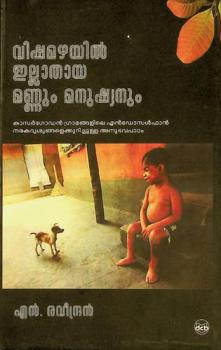
Viṣamal̲ayil illātāya maṇṇuṃ manuṣyanuṃ
On health and environmental effects of endosulfan (pesticide) use in Kasaragod District, Kerala, India.

Mercury and Organochlorines in the Terrestrial Environment of Schirmacher Hills, Antarctica
We report the levels of mercury (Hg) and nine organochlorine pesticides [OCPs: α-hexachlorocyclohexane (HCH), β-HCH, γ-HCH, δ-HCH, α-Endosulfan, β-Endosulfan, Endosulfan sulfate, p,p′-dichlorodiphenyldichloroethylene (DDE) and p,p′-dichlorodiphenyldichloroethane (DDD)] in the terrestrial environment (moss and soil) and water (OCPs only) of Schirmacher Hills, Antarctica. This area has never been studied for mercury and not for OCPs since 1988. Mercury levels in moss, 66 ± 37 ng/g dry weight (dw), are comparable to other Antarctic locations. Levels of α-HCH, below detection to 4.48 ng/g dw, and p,p′-DDE, below detection to 31 ng/g dw, in mosses are lower or marginally higher than other Antarctic locations. No other OCPs were detected in moss. None of the OCPs were detected in soil. This suggests that Schirmacher Hills may be considered as a background site with respect to mercury and analyzed OCPs, despite the operation of two old research stations (Maitri, est. 1989, and Novolazarevskaya, est. 1961) in the region.
Journal Article

Adsorption of Pesticides Using Wood-Derived Biochar and Granular Activated Carbon in a Fixed-Bed Column System
Pesticides have great potential to contaminate resources of drinking water by percolating and leaching, when applied in the agriculture sector as well as in domestic region. Activated carbon (AC) and Biochar (BCH) were used for adsorption in a fixed-bed column system. Both of the adsorbent-packed columns indicated an increase in the breakthrough time for atrazine from 3350 to 5800 min and 3200 to 5700 min, chlorothalanil 3200–5600 min and 3150–5550 min, β-endosulfan 3050–5400 min and 2950–5400 min, and α-endosulfan 2900–5200 min and 2850–5200 min with bed heights from 10 cm to 15 cm, respectively. Similarly, when flow rate increased from 0.5 to 1.5 mL min−1 and contaminant concentration from 50–100 µg L−1, it resulted in a decrease in exhaust time. The models of Yoon–Nelson (R2 = 0.9427) and Thomas (R2 = 0.9921) describe the process of adsorption to be best well-under optimal conditions. Both the adsorbents would be efficiently utilized as the best adsorbents to remediate pesticide-contaminated water under optimal conditions. Pesticides adsorption onto adsorbents followed the order of atrazine > chlorothalanil > β-endosulfan > α-endosulfan.
Journal Article

S1 certification of alpha-endosulfan, beta-endosulfan, and endosulfan sulfate in a candidate certified reference material (organochlorine pesticides in tea) by isotope dilution gas chromatography-mass spectrometry
This paper presents the certification of
alpha
-endosulfan,
beta
-endosulfan, and endosulfan sulfate in a candidate tea certified reference material (code: GLHK-11-03) according to the requirements of the ISO Guide 30 series. Certification of GLHK-11-03 was based on an analytical method purposely developed for the accurate measurement of the mass fraction of the target analytes in the material. An isotope dilution mass spectrometry (IDMS) method involving determination by (i) gas chromatography-negative chemical ionization-mass spectrometry (GC-NCI-MS) and (ii) gas chromatography-electron ionization-high-resolution mass spectrometry (GC-EI-HRMS) techniques was employed. The performance of the described method was demonstrated through participation in the key comparison CCQM-K95 “Mid-Polarity Analytes in Food Matrix: Mid-Polarity Pesticides in Tea” organized by the Consultative Committee for Amount of Substance-Metrology in Chemistry in 2012, where the study material was the same as the certified reference material (CRM). The values reported by using the developed method were in good agreement with the key comparison reference value (KCRV) assigned for
beta
-endosulfan (727 ± 14 μg kg
−1
) and endosulfan sulfate (505 ± 11 μg kg
−1
), where the degree of equivalence (DoE) values were 0.41 and 0.40, respectively. The certified values of
alpha
-endosulfan,
beta
-endosulfan, and endosulfan sulfate in dry mass fraction in GLHK-11-03 were 350, 730, and 502 μg kg
−1
, respectively, and the respective expanded uncertainties, due to sample inhomogeneity, long-term and short-term stability, and variability in the characterization procedure, were 27 μg kg
−1
(7.8 %), 48 μg kg
−1
(6.6 %), and 33 μg kg
−1
(6.6 %).
Graphical abstract
Assignment of property values
Journal Article

Organochlorine pesticides in feathers of three raptor species in southern Brazil
In this study, we determined the presence of organochlorine pesticides (OCPs) in back feathers from three raptor species,
Phalcoboenus chimango
,
Milvago chimachima
and
Caracara plancus
. Samples were obtained from live animals and ten OCPs were detected: α-HCH, β-HCH and γ-HCH (lindane), heptachlor, heptachlor epoxide, aldrin, endosulfan I, endosulfan II, endosulfan sulfate and
p,p′
-DDE. The concentrations found were higher than those reported in other raptor species, and
C. plancus
showed greater values than
P. chimango
and
M. chimachima
for all the substances. These differences may be justified by the species feeding habits and the characteristics of the sampling area, since
C. plancus
were sampled in an area with a higher concentration of agricultural crops and urbanized environments. In relation to the possible negative effects, four individuals of
C. plancus
presented DDE values related to sublethal effects for other species. This is the first study reporting OCPs in back feathers of these species in Brazil, and further studies evaluating OCP exposure and related effects are important for a better understanding of the consequences of different OCP concentrations on the health of these species.
Journal Article

Endosulfan and its metabolite, endosulfan sulfate, in freshwater ecosystems of South Florida: a probabilistic aquatic ecological risk assessment
Endosulfan is an insecticide-acaricide used in South Florida and is one of the remaining organochlorine insecticides registered under the Federal Insecticide Fungicide and Rodenticide Act by the U.S.EPA. The technical grade material consists of two isomers (α-, β-) and the main environmental metabolite in water, sediment and tissue is endosulfan sulfate through oxidation. A comprehensive probabilistic aquatic ecological risk assessment was conducted to determine the potential risks of existing exposures to endosulfan and endosulfan sulfate in freshwaters of South Florida based on historical data (1992-2007). The assessment included hazard assessment (Tier 1) followed by probabilistic risk assessment (Tier 2). Tier 1 compared actual measured concentrations in surface freshwaters of 47 sites in South Florida from historical data to U.S.EPA numerical water quality criteria. Based on results of Tier 1, Tier 2 focused on the acute and chronic risks of endosulfan at nine sites by comparing distributions of surface water exposure concentrations of endosulfan [i.e., for total endosulfan (summation of concentrations of α- and β-isomers plus the sulfate), α- plus β-endosulfan, and endosulfan sulfate (alone)] with distributions of species effects from laboratory toxicity data. In Tier 2 the distribution of total endosulfan in fish tissue (whole body) from South Florida freshwaters was also used to determine the probability of exceeding a distribution of whole body residues of endosulfan producing mortality (critical lethal residues). Tier 1 showed the majority of endosulfan water quality violations in South Florida were at locations S-178 followed by S-177 in the C-111 system (southeastern boundary of Everglades National Park (ENP)). Nine surface water sampling sites were chosen for Tier 2. Tier 2 showed the highest potentially affected fraction of toxicity values (>10%) by the estimated 90th centile exposure concentration (total endosulfan) was at S-178. At all other freshwater sites there were <5% of the toxicity values exceeded. Potential chronic risk (9.2% for total endosulfan) was only found at S-178 and all other sites were <5%. Joint probability curves showed the higher probability of risk at S-178 than at S-177. The freshwater fish species which contain tissue concentrations of endosulfan (total) with the highest potential risk for lethal whole body tissue residues were marsh killifish, flagfish and mosquitofish. Based on existing surface water exposures and available aquatic toxicity data, there are potential risks of total endosulfan to freshwater organisms in South Florida. Although there are uncertainties, the presence of tissue concentrations of endosulfan in small demersal fish, is of ecological significance since these fish support higher trophic level species, such as wading birds.
Journal Article
Organohalogenated pollutants in raw and UHT cow’s milk from Turkey: a risk assessment of dietary intake
In this study, health risk of human exposure to organohalogenated pollutants (OHPs) through milk consumption was determined. Conventionally produced, unprocessed cow’s milk samples taken from Konya District, in Turkey, and 15 different brand ultra-high-temperature (UHT) processed cow’s milk samples taken from supermarkets of Turkey were analyzed for organochlorine pesticides (OCPs,
α
-,
β
-,
γ
-, and
δ
-HCHs, p,p’-DDE, p,p’-DDD, and p,p’-DDT, heptachlor, heptachlor epoxide, endosulfan I, endosulfan II, endosulfan sulfate, endrin, endrin aldehyde, endrin ketone, aldrin + dieldrin, methoxychlor), polychlorinated biphenyls (PCBs, PCB 28, 52, 101, 153, 138, and 180), and polybrominated diphenyl ethers (PBDEs, PBDE 47, 99, 100, 153, and 154 congeners). Estimated daily intake (EDI) values calculated for both adults and children consuming raw or UHT milk were determined to exceed maximum residue limits (MRLs) set for
γ
-HCH, ∑Heptachlor, and endrin. EDI values also exceeded admissible daily intake (ADI) values given for ∑HCH, ∑Heptachlor, ∑Endrin aldrin + dieldrin, and ∑PCBs. p,p’-DDT/p,p’-DDE ratio was 1 or higher for 66% of the milk samples, which is an indication of sustaining illegal use of DDT. A health risk is determined for dietary intake of OHPs via consumption of milk.
Journal Article

Simultaneous analysis of endosulfan, chlorpyrifos, and their metabolites in natural soil and water samples using gas chromatography-tandem mass spectrometry
Analysis of endosulfan, chlorpyrifos, and their nonpolar metabolites in extracts from environmental aqueous and soil samples was performed using a gas chromatography-tandem mass spectrometry (GC–MS/MS) technique. Full-scan GC–MS analysis showed poor sensitivity for some of the metabolites (endodiol and endosulfan ether). A multisegment MS/MS method was developed and MS/MS parameter isolation time, excitation time, excitation voltage, and maximum excitation energy were optimized for chosen precursor ions to enhance selectivity and sensitivity of the analysis. The use of MS/MS with optimized parameters quantified analytes with significantly higher accuracy, and detection limits were lowered to ~1/6th compared with the full-scan method. Co-eluting compounds, chlorpyrifos and chlorpyrifos oxon, were also analyzed successfully in the MS/MS mode by choosing exclusive precursor ions. Analysis of soil and water phase samples from contaminated soil slurry bioreactors showed that the MS/MS method could provide more reliable estimates of these pesticide and metabolites (especially those present in low concentrations) by annulling interferences from soil organic matter.
Journal Article

Biodegradability and biodegradation pathways of endosulfan and endosulfan sulfate
Endosulfan and endosulfan sulfate are persistent organic pollutants that cause serious environmental problems. Although these compounds are already prohibited in many countries, residues can be detected in soils with a history of endosulfan application. Endosulfan is transformed in the environment into endosulfan sulfate, which is a toxic and persistent metabolite. However, some microorganisms can degrade endosulfan without producing endosulfan sulfate, and some can degrade endosulfan sulfate. Therefore, biodegradation has the potential to clean up soil contaminated with endosulfan. In this review, we provide an overview of aerobic endosulfan degradation by bacteria and fungi, and a summary of recent advances and prospects in this research field.
Journal Article

Remedial potential of bacterial and fungal strains (Bacillus subtilis, Aspergillus niger, Aspergillus flavus and Penicillium chrysogenum) against organochlorine insecticide Endosulfan
Endosulfan, an organochlorine insecticide, is known to cause detrimental effects to the environment and human health due to its excessive usage. Its highly toxic nature calls for an environmental-friendly approach for its detoxification. Environmental transformation of Endosulfan was assessed through biodegradation by isolated and cultured soil microbes (Bacillus subtilis (BS), Aspergillus niger (AN), Aspergillus flavus (AF) and Penicillium chrysogenum (PC)). Degradation of 10 mg/L Endosulfan was determined in aqueous solution at regular time intervals and analysed by gas chromatography–mass spectrometry for 35 days. BS and AN displayed substantial potential to degrade Endosulfan and subsequently transform it into its daughter products (95 and 77%, respectively). Endosulfan transformation followed first-order reaction kinetics. Chromatogram peaks revealed less toxic metabolites by Endosulfan transformation (Endosulfan diol, Endosulfan ether, Endosulfan hydroxyether and Endosulfan lactone). Half-life of Endosulfan obtained by various strains utilised in the experiments was in the order, PC (69) > AF (34.6) > AN (17.3) > BS (11.5) days. Statistical analysis was performed in MINITAB to evaluate the significance of results. Bioaugmentation of contaminated sites with such efficient microbes can facilitate rapid pesticide transformation and decontamination of the environment.
Journal Article