
Catalogue Search | MBRL


Are you sure you want to remove the book from the shelf?

{{itemTitle}}
3,451
result(s) for
"Energy security China."
Sort by:

China's strategic interests in the South China Sea : power and resources
\"Explores China's strategic interests in the South China Sea, with a specific emphasis on power projection and resource security. Contains sections on China's power and resources and case studies on Japan, Vietnam, the USA and the Philippines, and discusses how China's actions are reshaping the power dynamics in East and South-East Asia\"-- Provided by publisher.
Book

Secure Oil and Alternative Energy
While intensive cooperation between China and the EU in the fields of energy use, environmental protection and sustainability is highly needed the question remains unanswered how this cooperation could be organized. This volume puts the geopolitical implementation of China's and the EU's energy security into the context of geo-economic systems in a global scale, and the emergence of a geo-economic energy network spreading from China to Western Europe.
eBook
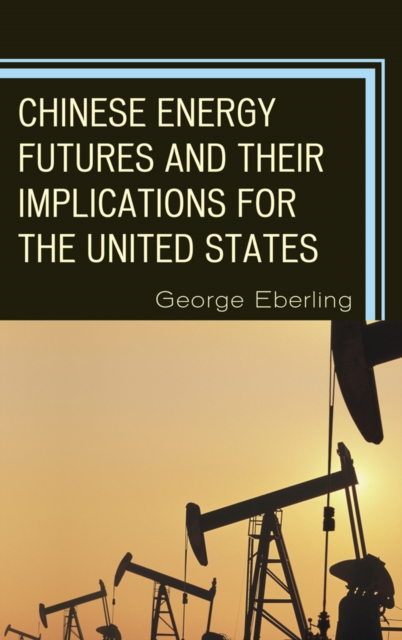
Chinese energy futures and their implications for the United States
China's rise in the global arena is undeniably altering the global status quo. Its rise is closely linked to and reflected in its rising dependence on imported oil, adroit soft power, economic prowess and corresponding impressive economic growth, its military modernization, and its strategic engagement of the world as an alternative model of political and economic development. As the status quo changes, the United States theoretically becomes less influential politically, economically, and militarily, because China is skillfully harnessing and strategically exercising the elements of national power to acquire scarce oil energy resources in the Near East, Western Hemisphere, and Sub-Saharan Africa. Chinese Energy Futures and Their Implications for the United States, by George Eberling, examines how Chinese oil energy specifically will shape future Sino-American relations under conditions of dependency and non-dependency, and whether competition or cooperation for scarce energy resources will result. Eberling uses both scenario analysis and the PRINCE method to examine three possible Chinese oil energy futures: Competitive Dependency, Competitive Surplus, and Cooperative Surplus. Chinese Energy Futures also discusses and evaluates the strategic implications of these scenarios with respect to the United States.
eBook
The Hungry Dragon
This volume provides an up to date and accessible examination of China's global search for resources, focusing primarily on oil. This focus provides a powerful rationale to explain China's actions overseas, as it impacts on economic, energy and foreign policies.
A strong feature of the book is a comprehensive examination of geopolitical issues. Three country case studies (Angola, Brazil and Cambodia) are complemented by two chapters on opportunities and risks to China, and an examination as to how strategies are developed into tangible actions. This book also examines a number of overlapping debates regarding the varieties of capitalisms (autocratic vs. democratic), the urgent need for rebalancing as the world undergoes global crises, and the issues surrounding natural resources in the context of governance, liberal-oriented notions and poverty traps.
The book is aimed at general as well as specialized readers and examines the subject in relation to international affairs, especially how the geopolitics of scarcity is driving states to be tenser, more observant of each other, and more acute to foreign initiatives.
eBook
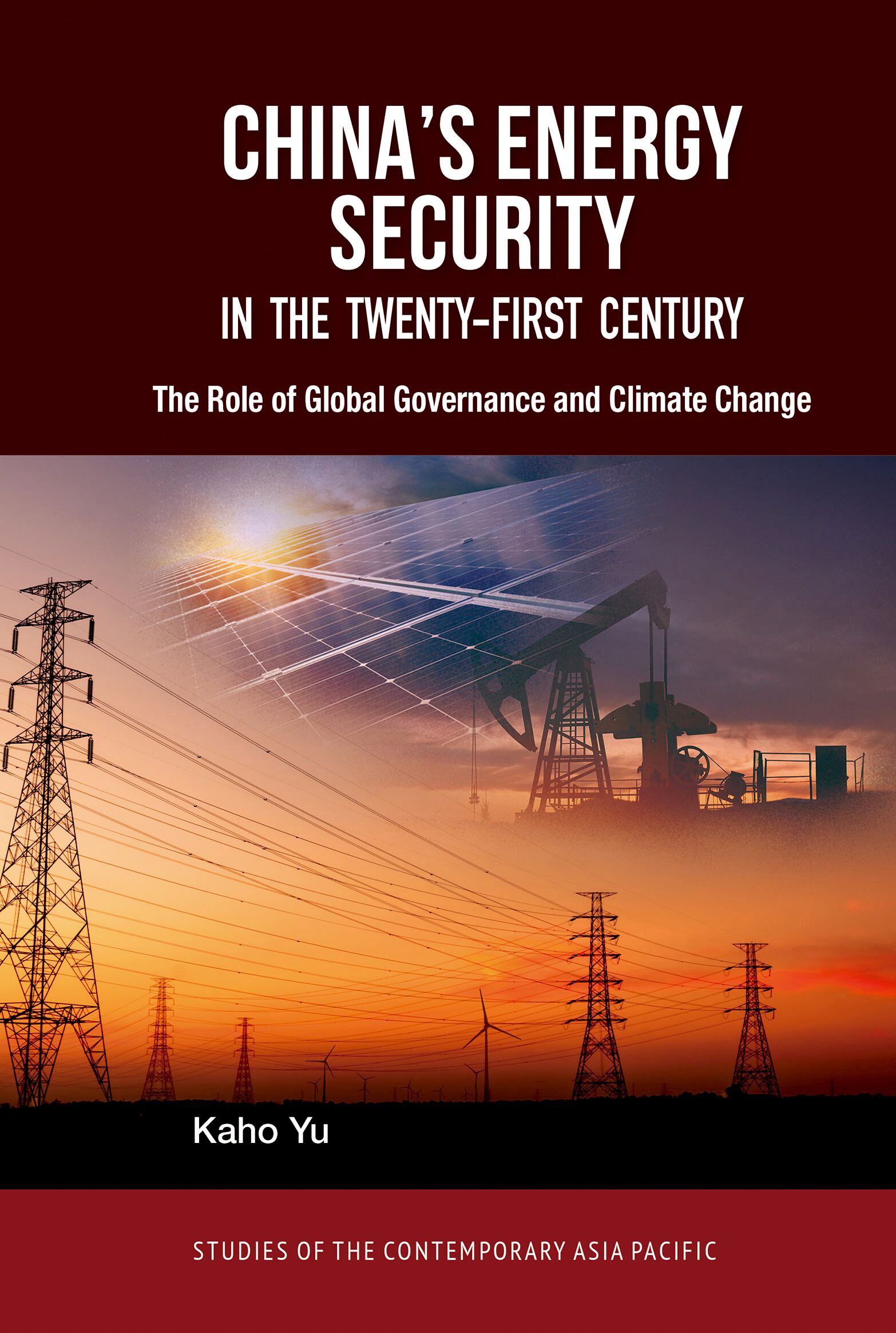
China's Energy Security in the Twenty-First Century
Kaho Yu's China's Energy Security in the Twenty-First Century: The Role of Global Governance and Climate Change explores the evolution of China's energy security from its bilateral going-out strategy to its more multilateral Belt and Road Initiative. By analysing the topic from a multidisciplinary perspective, this book examines China's evolving role in global energy governance through four empirical case studies: China's energy cooperation with Russia and Central Asia, Africa, the European Union, and the Asia Infrastructure Investment Bank.
eBook
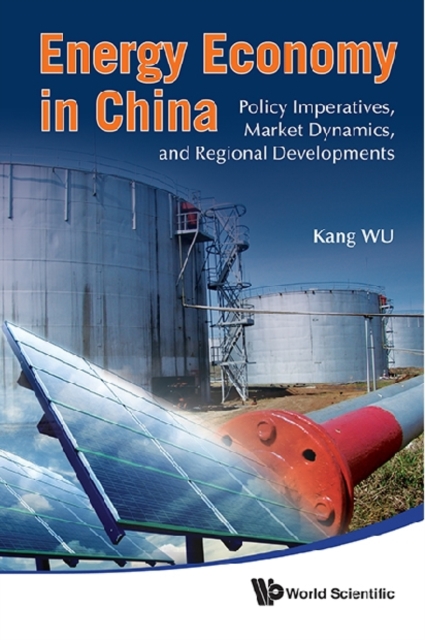
Energy economy in China : policy imperatives, market dynamics, and regional developments
The key subjects of the book are policy imperatives, market dynamics and regional developments concerning oil and gas, as well as energy as a whole in China. In addition to national policies and issues, the objective of this book is to study China's regional oil and gas demand, supply and trade, energy balances, and economic development, with projections up till 2030. Particular emphasis will be given to challenges facing the Chinese government in ensuring future oil supplies, pipeline and liquefied natural gas (LNG) imports, energy security, downstream oil refining sector developments, the use of natural gas for power generation, and oil and gas related environmental issues. The impact of China's oil and gas sector developments, market dynamics, rising imports, and overseas investment on the Asia-Pacific region and the world at large are examined.
Energy Economy in China also reviews current and future oil refining projects, gas pipelines, LNG import terminals, and emerging new markets in China over the next fifteen years.
eBook

China's Quest for Great Power
This book addresses three important facets of China's modern development. First is the ongoing modernization of the People's Liberation Army Navy (PLAN). The Chinese navy has grown from a relatively small, backward force in the 1980s into a capable twenty-first century maritime power. The PLAN now deploys around the world and includes nuclear-powered submarines, the first of several aircraft carriers, modern guided missile destroyers and frigates, and the world's most formidable force of seagoing cruise and ballistic missiles. This modern, growing navy is intended in significant part to undergird China's global search for energy sources and security. Beijing's determination to maintain its historic economic growth depends on energy security. These two national priorities--a navy capable of defending China's national security and economic interests and secury energy resources--come together to define and support Chinese foreign policy. This book addresses these three in both global and Asian contextual terms, with special emphasis on relations between China and the United States.
eBook

Energy economy in China
Key Features:Focuses on oil and gas as key elements of energy security; most other books focus on coal and powerIncludes forecasts of China's future oil/gas demand, supply and trade, and the implications for the rest of the Asia-Pacific region and the worldProvides detailed analysis of regional energy developments, flows and future growth.
eBook

The Hungry Dragon
This volume provides an up to date and accessible examination of China's global search for resources, focusing primarily on oil. This focus provides a powerful rationale to explain China's actions overseas, as it impacts on economic, energy and foreign policies.
A strong feature of the book is a comprehensive examination of geopolitical issues. Three country case studies (Angola, Brazil and Cambodia) are complemented by two chapters on opportunities and risks to China, and an examination as to how strategies are developed into tangible actions. This book also examines a number of overlapping debates regarding the varieties of capitalisms (autocratic vs. democratic), the urgent need for rebalancing as the world undergoes global crises, and the issues surrounding natural resources in the context of governance, liberal-oriented notions and poverty traps.
The book is aimed at general as well as specialized readers and examines the subject in relation to international affairs, especially how the geopolitics of scarcity is driving states to be tenser, more observant of each other, and more acute to foreign initiatives.
\"The Hungry Dragon arrives at a perfect time. Burgos and Ear, already authorities on China’s appetite for resources across the world in journals as varied as Asian Survey , Geopolitics and the Journal of Contemporary China , have written a book of incredible scope and breadth. The Hungry Dragon is the culmination of their scholarly efforts and indispensable for students and scholars of China and energy security alike. If you want to know about China’s energy security strategy and how the rest of the world, but most importantly America, should react, read this book!\" - Wei Liang, Monterey Institute of International Studies and co-editor, China and Global Trade Governance: China’s Ten-Year Experience in the World Trade Organization
Contents
Preface
I. Introduction
Chapter 1: China, Energy, and the World
Chapter 2: The Geopolitics of China’s Global Resources
II. Country Case Studies
Chapter 3: Angola
Chapter 4: Brazil
Chapter 5: Cambodia
III. Conclusion
Chapter 6: Assessing Opportunities, Mitigating Risks
Chapter 7: From Strategies to Actions
eBook