
Catalogue Search | MBRL


Are you sure you want to remove the book from the shelf?

{{itemTitle}}
401
result(s) for
"Engineering mathematics Textbooks."
Sort by:
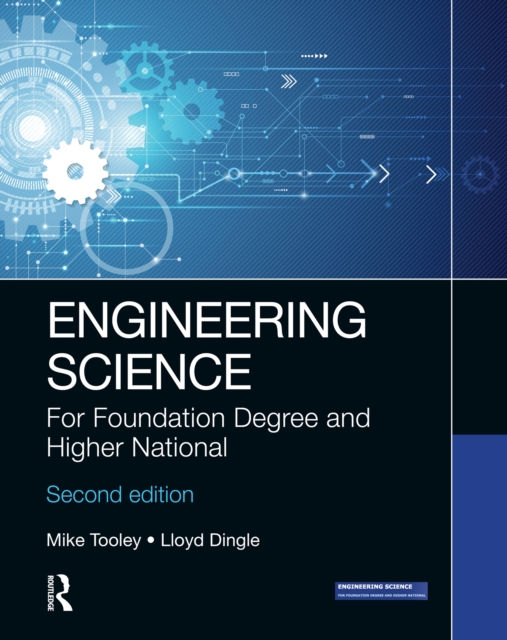
Engineering Science
Focusing primarily on core topics in mechanical and electrical science, students enrolled on a wide range of higher education engineering courses at undergraduate level will find Engineering Science, second edition, an invaluable aid to their learning.
With updated and expanded content, this new edition covers sections on the mechanics of materials, dynamics, thermodynamics, electrostatics and electromagnetic principles, and a.c./d.c. circuit theory. Entirely new sections are devoted to the study of gyroscopes and the effect of applied torques on their behaviour, and the use of Laplace transformation as a tool for modelling complex networks of inductance, capacitance and resistance. In addition, a new overview of the decibel (dB) introduces a handy technique for expressing logarithmic ratios.
Knowledge-check and review questions, along with activities, are included throughout the book, and the necessary background mathematics is integrated alongside the appropriate areas of engineering. The result is a clear and easily accessible textbook that encourages independent study and covers the essential scientific principles that students will meet at this level.
The book is supported with a companion website for students and lecturers at www.key2engineeringscience.com, and it includes:
Solutions to the Test Your Knowledge and Review Questions in the book
Further guidance on Essential Mathematics with introductions to vectors, vector operations, the calculus and differential equations, etc.
An extra chapter on steam properties, cycles and plant
Downloadable SCILAB scripts that help simplify some of the advanced mathematical content
Selected illustrations from the book
eBook

When Computers Were Human
Before Palm Pilots and iPods, PCs and laptops, the term \"computer\" referred to the people who did scientific calculations by hand. These workers were neither calculating geniuses nor idiot savants but knowledgeable people who, in other circumstances, might have become scientists in their own right. When Computers Were Human represents the first in-depth account of this little-known, 200-year epoch in the history of science and technology. Beginning with the story of his own grandmother, who was trained as a human computer, David Alan Grier provides a poignant introduction to the wider world of women and men who did the hard computational labor of science. His grandmother's casual remark, \"I wish I'd used my calculus,\" hinted at a career deferred and an education forgotten, a secret life unappreciated; like many highly educated women of her generation, she studied to become a human computer because nothing else would offer her a place in the scientific world. The book begins with the return of Halley's comet in 1758 and the effort of three French astronomers to compute its orbit. It ends four cycles later, with a UNIVAC electronic computer projecting the 1986 orbit. In between, Grier tells us about the surveyors of the French Revolution, describes the calculating machines of Charles Babbage, and guides the reader through the Great Depression to marvel at the giant computing room of the Works Progress Administration. When Computers Were Human is the sad but lyrical story of workers who gladly did the hard labor of research calculation in the hope that they might be part of the scientific community. In the end, they were rewarded by a new electronic machine that took the place and the name of those who were, once, the computers.
eBook


Supporting the Transition Between Mathematics and Physics in the First Year of University
Undergraduate science students face difficulties using mathematics in their physics courses. Choosing an institutional perspective, we consider that these students experience a permanent transition between mathematics in their mathematics courses and mathematics in their physics courses. We refer to the anthropological theory of the didactic and the notion of didactic contract to understand this transition. In France, the Maths4sciences digital resources have been designed to help students learn the mathematics used in physics. We investigate students’ difficulties in the math-physics transition and the affordances and limitations of Maths4sciences resources to help them. We designed a physics exercise where students must recognize and solve a first-order linear differential equation. We interviewed three students who worked on this exercise and had access to a Maths4sciences tutorial sheet concerning such differential equations in a physics context. Through the analysis of these interviews, we observed that students faced different types of difficulties: recognizing mathematical types of tasks intervening in the technique for solving the physics exercise, performing types of tasks blending mathematics and physics, and making sense of physical notations, in particular. The Maths4sciences tutorial sheet only helped them with some of these difficulties. Beyond the cases studied, our work evidences the difficulties raised for students by different kinds of “recognition” types of tasks in physics and suggests directions for curriculum design and teaching mathematics for physics.
Journal Article
Reasoning and Proof in Algebra: The Case of Three Reform-Oriented Textbooks in China
Examining the narratives of algebra content of three popular series of mathematics textbooks in China, this study explored the opportunities for students to learn about reasoning and proof (RP). In this study, we incorporated Davis’s subdivision of conjecture into Stylianides’s framework. Based on this, we analysed the components of RP (patterns, conjectures, proofs and non-proof arguments), as well as the purposes of each component respectively. The results show that the proportion of RP tasks was less than 40% and there was no significant statistical difference in the number of RP components by grade among the three series of textbooks. On the other hand, across topic levels, there was a significant statistical difference in RP tasks. Furthermore, there were only a few opportunities for developing conjecture precursors and proof precursors. Based on them, we discussed the arrangement and features of Chinese textbooks to explain these differences.
Journal Article

An Implicitly Extended Crank–Nicolson Scheme for the Heat Equation on a Time-Dependent Domain
We consider a time-stepping scheme of Crank–Nicolson type for the heat equation on a moving domain in Eulerian coordinates. As the spatial domain varies between subsequent time steps, an extension of the solution from the previous time step is required. Following Lehrenfeld and Olskanskii (ESAIM: M2AN 53(2):585–614, 2019), we apply an implicit extension based on so-called ghost-penalty terms. For spatial discretisation, a cut finite element method is used. We derive a complete a priori error analysis in space and time, which shows in particular second-order convergence in time under a parabolic CFL condition. Finally, we present numerical results in two and three space dimensions that confirm the analytical estimates, even for much larger time steps.
Journal Article

A review of recent advances in global optimization
This paper presents an overview of the research progress in deterministic global optimization during the last decade (1998–2008). It covers the areas of twice continuously differentiable nonlinear optimization, mixed-integer nonlinear optimization, optimization with differential-algebraic models, semi-infinite programming, optimization with grey box/nonfactorable models, and bilevel nonlinear optimization.
Journal Article

Connectivity in resources for teaching graph theory in engineering education
This contribution explores the teaching of graph theory in the context of engineering education. We examine how teachers use collectively designed resources in terms of their backgrounds. After a literature review, we justify the choice to develop an analytical framework for studying the materials in terms of connections to be established in the resources. We suggest developments around the theoretical concept of connectivity, which allows us to analyze the potential connectivity, characterized by the connections enabled by the resources for teaching; and the effective connectivity that develops in teachers’ practices and during the implementation of resources. We study the effective connectivity in terms of each teacher’s personal relationship with graph theory. Graph theory evolves at the interface of mathematics and computer science research. We consider the case of two teachers, a computer scientist and a mathematician in a French Engineering School in France. The data collected consists of resources for teaching graph theory in engineering courses and interviews with teachers. As for results, we characterize how forms of connectivity developed in the use of resources for teaching graph theory are largely determined by the teachers’ backgrounds.
Journal Article