
Catalogue Search | MBRL


Are you sure you want to remove the book from the shelf?

{{itemTitle}}
309
result(s) for
"England Bristol."
Sort by:

Migrants and refugees : Muslim and Christian Pakistani families in Bristol
This study analyses the immigration of Muslim and Christian Pakistani families coming into Britain. It examines the families' lives in Britain and argues that the differences between the Muslims and the Christians must be traced back to the different ways in which they see their positions in Pakistan.
Book

(Re)Analysing Community Empowerment: Rationalities and Technologies of Government in Bristol's New Deal for Communities
Urban regeneration is increasingly framed around notions of community empowerment. Policy programmes seek to make communities visible and then strengthen and support them through the establishment of a leadership role in urban regeneration practices. At first glance, this appears to be a positive development. Yet commentators note how community partnerships—seen to invoke a 'rolling back' of the state—are indicative of a particular economic logic that is governing urban policy provision. Partnerships, it is argued, constitute tokenistic organisations that do not represent the diversity of interests within a particular area. Instead, they work primarily in support of business or government agendas. This paper re-orientates this critique. Focusing on one example of a community-led urban regeneration programme—New Deal for Communities in Bristol—it explores the subjects and spaces to emerge in and through this new form of governance. By identifying the manner in which New Deal for Communities composes all participants as partnering subjects, it posits community engagement as the medium through which power is being reconstituted in extremely comprehensive ways. It then questions the possibilities for developing and sustaining alternative forms of collaborative practice.
Journal Article

The rough guide to Bath, Bristol and Somerset : includes Salisbury and Stonehenge
Full-colour throughout, The Rough Guide to Bath, Bristol & Somerset is the ultimate guide to this alluring region. With 30 years experience and our trademark 'tell it like it is' writing style, Rough Guides cover all the basics with practical, on-the-ground details, as well as unmissable alternatives to the usual must-see sights.
Book
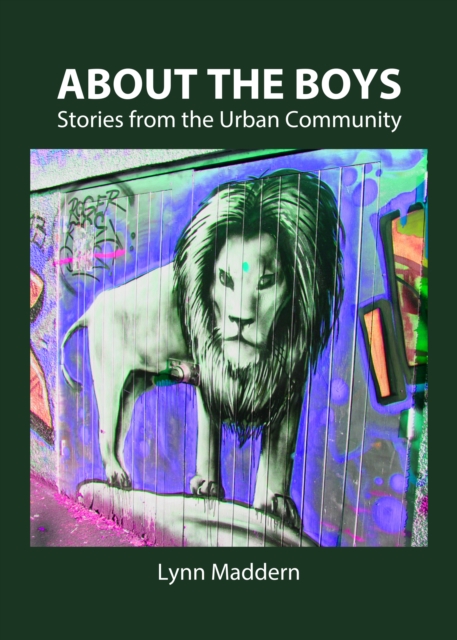
About The Boys
At a time of unprecedented international immigration, seven Somali and African Caribbean boys are working their way through primary and secondary education. It is inner city Bristol and, like large cities across the UK, local communities and schools are receiving many thousands of Somali refugees on their doorstep. As new priorities are swiftly established in the staff room, a new pecking order develops in the playground. In an attempt to improve relations between rival groups, seven boys ar.
eBook


Higher education, social class and the mobilisation of capitals: recognising and playing the game
Strategies employed by middle-class families to ensure successful educational outcomes for their children have long been the focus of theoretical and empirical analysis in the United Kingdom and beyond. In austerity England, the issue of middle-class social reproduction through higher education increases in saliency, and students' awareness of how to 'play the game' of enhancing their chances to acquire a sought-after graduate position becomes increasingly important. Using data from a longitudinal study of working-class and middle-class undergraduates at Bristol's two universities (the Paired Peers project), we employ Bourdieu's conceptual tools to examine processes of capital mobilisation and acquisition by students to enhance future social positioning. We highlight middle-class advantage over privileged access to valued capitals, and argue that the emphasis on competition, both in terms of educational outcomes and the accrual of capital in the lives of working-class and middle-class students, compounds rather than alleviates social inequalities.
Journal Article

The bookseller
When the body of a bookseller is discovered, collapsed in a pool of blood in his Bristolian bookshop, it is immediately clear that he has been murdered. What is unclear is how someone could have met such a violent end in this quiet, peaceful place. DS Cross is adept at dismissing red-herrings but a worrying development in his personal life has left him hopelessly distracted, leaving his usual means of deciphering evidence challenged. The world of bookselling is a quiet one, but it is full of passionate and ambitious characters. They know a rare book equals a big payoff - and their extensive reading means they also know the best ways to get away with murder.
BOOK
The uneven impact of austerity on the voluntary and community sector
There has been much debate about the impact of recession and austerity on the voluntary and community sector over recent years. Using secondary data from the 2008 National Survey of Third Sector Organisations, Clifford et al. (2013), writing in this journal, have argued that voluntary sector organisations located in more deprived local authorities are likely to suffer most due to the combined effect of cuts in government funding in these areas and their greater dependency on statutory funding. This paper develops this argument by exploring the sector's changing relationship with the state through an empirical analysis of the differential impact of recession and austerity on voluntary and community organisations involved in public service delivery in the two English core cities of Bristol and Liverpool. This paper highlights how the scale and unevenness of public spending cuts, the levels of voluntary sector dependency on statutory funding and the rising demands for the sector's services in a period of recession and austerity are being experienced locally. It portrays a sector whose resilience is being severely tested and one that is being forced rapidly to restructure and reposition itself in an increasingly challenging funding environment.
Journal Article

Higher education, social class and social mobility : the degree generation
This book explores higher education, social class and social mobility from the point of view of those most intimately involved: the undergraduate students. It is based on a project which followed a cohort of young undergraduate students at Bristol's two universities in the UK through from their first year of study for the following three years, when most of them were about to enter the labour market or further study. The students were paired by university, by subject of study and by class background, so that the fortunes of middle-class and working-class students could be compared. Narrative data gathered over three years are located in the context of a hierarchical and stratified higher education system, in order to consider the potential of higher education as a vehicle of social mobility. Jessie Abrahams is a PhD student in the School of Social Sciences at Cardiff University, UK. Ann-Marie Bathmaker is Professor of Vocational and Higher Education at the University of Birmingham, UK. Harriet Bradley is Professor of Women's Employment at the University of the West of England, UK and Professor Emerita at Bristol University, UK. Tony Hoare was Director of Research in Widening Participation, University of Bristol, UK, from 2006 till 2015. Nicola Ingram is Lecturer in Education and Social Justice at Lancaster University, UK. Dr Richard Waller is Associate Professor of the Sociology of Education at the University of the West of England, UK.
Book

Slavery obscured : the social history of the slave trade in an English provincial port
Slavery Obscured aims to assess how the slave trade affected the social life and cultural outlook of the citizens of a major English city, and contends that its impact was more profound than has previously been acknowledged.
eBook