
Catalogue Search | MBRL


Are you sure you want to remove the book from the shelf?

{{itemTitle}}
2,251
result(s) for
"England York."
Sort by:

York : art, architecture and archaeology
\"York explores the archaeology, art, architecture and cultural heritage of the city in the late Middle Ages. In the years since the resurrection of the British Archaeological Association conference, in 1976, the association has met in the city only once (in 1988), for a conference that celebrated Yorkshire Monasticism. As a consequence, the secular and vernacular architecture as well as the architecture, art and imagery of York Minster were excluded from its scope, something redressed in the meeting that took place in 2017. As many recent publications have focused on York in the earlier medieval period, this book shines a much needed light on the city in the later Medieval Ages. Starting with a range of essays on York Minster by authors directly involved in major conservation projects undertaken in the last 10 years, the book also includes information on the vernacular architecture and transport infrastructure of York, as well as the parochial and material culture of the period. Illuminating the extensive resources for the study of the late Middle Ages in England's second capital, this book provides new research on this important city and will be suitable for researchers in Medieval archaeology, art history, literature and material culture\"-- Provided by publisher.
BOOK

Playing a Part in History
The York Mystery Plays are a cycle of originally performed on wagons in the city. They date from the fourteenth century and Biblical narrative from Creation to Last Judgment. After nearly four hundred years without a performance, a revival of the York Mysteries began in 1951 when local amateurs led by professional theatre practitioners staged them during the festival of Britain. Playing a Part in History examines the ways in which the revival of these plays transformed them for twentieth- and twenty-first-century audiences.
Considering such topics as the contemporary popularity of the plays, the agendas of the revivalists, and major production differences, Margaret Rogerson provides a fascinating comparison of medieval and modern English drama. Drawing extensively on archival material, and newspaper and academic reviews of the plays in recent years, Playing a Part in History is not only an illuminating account of early English drama, but also of the ways in which theatre allows people to interact with the past.
eBook


The respectability of late Victorian workers : a case study of York, 1867-1914
This study of the working classes of York in the late Victorian period places respectability at the heart of the interpretation of working-class culture, drawing attention to its distinctive role within working-class daily life while eschewing a class-bas.
eBook

The apothecary rose
In the year of our Lord 1363, two suspicious deaths in the infirmary of St. Mary's Abbey catch the attention of the powerful John Thoresby, Lord Chancellor of England and Archbishop of York. One victim is a pilgrim, while the second is Thoresby's ne'er-do-well ward, both apparently poisoned by a physic supplied by Master Apothecary Nicholas Wilton. In the wake of these deaths, the archbishop dispatches one-eyed spy Owen Archer to York to find the murderer. Under the guise of a disillusioned soldier keen to make a fresh start, Owen insinuates himself into Wilton's apothecary as an apprentice. But he finds Wilton bedridden, with the shop being run by his lovely, enigmatic young wife, Lucie. As Owen unravels a tangled history of scandal and tragedy, he discovers at its center a desperate, forbidden love twisted over time into obsession. And the woman he has come to love is his prime suspect.
Book

Cardinal Adam Easton (C. 1330-1397)
The varied career of the Medideval Cardinal Adam Easton (c.1330--1397) led him from Norwich Cathedral Priory to Oxford, Avignon and Rome. This volume presents recent research on Easton's oeuvre, his diplomacy and the books that accompanied him on his travels.
eBook

Transnational lives in global cities : a multi-sited study of Chinese Singaporean migrants
This volume investigates the transnational experiences of Chinese Singaporeans who lived in one of four global cities: Hong Kong, London, New York, or Singapore. The author argues that these middle-class, well-educated, and often highly skilled migrants mostly experienced a sense of dis-embeddedness, and not cosmopolitanism, or hybridity, in their transnational lives.
Book
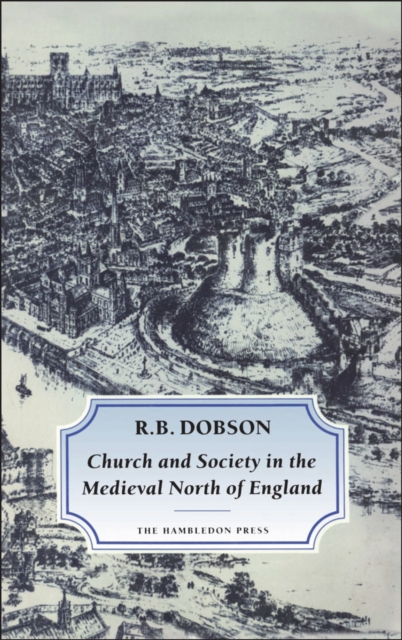
Church and Society in the Medieval North of England
English history has usually been written from the perspective of the south, from the viewpoint of London or Canterbury, Oxford or Cambridge. Yet throughout the middle ages life in the north of England differed in many ways from that south of the Humber. In ecclesiastical terms, the province of York, comprising the dioceses of Carlisle, Durham and York, maintained its own identity, jealously guarding its prerogatives from southern encroachment. In their turn, the bishops and cathedral chapters of Carlisle and Durham did much to prevent any increase in the powers of York itself. Barrie Dobson is the leading authority on the history of religion in the north of England during the later middle ages. In this collection of essays he discusses aspects of church life in each of the three dioceses, identifying the main features of religion in the north and placing contemporary religious attitudes in both a social and a local context. He also examines, among other issues, the careers of individual prelates, including Alexander Neville, archbishop of York and Richard Bell, bishop of Carlisle (1478-95); the foundation of chantries in York; and the writing of history at York and Durham in the later middle ages.
eBook

Records of Convocation XIX: Introduction
An introduction to the entire Convocation Records of the Church of England, offering an invaluable survey of this important source.The convocation records of the Churches of England and Ireland are the principal source of our information about the administration of those churches from middle ages until modern times. They contain the minutes of clergy synods,the legislation passed by them, tax assessments imposed by the king on the clergy, and accounts of the great debates about religious reformation; they also include records of heresy trials in the fifteenth and sixteenth centuries,many of them connected with the spread of Lollardy. However, they have never before been edited or published in full, and their publication as a complete set of documents provides a valuable resource for scholarship. The introductory volume presents both a chronological and a thematic survey of the English convocations from 1313 to the mid-nineteenth century, with a postscript bringing the account up to the present day. The chronological survey gives a detailed account of each individual convocation; the thematic survey explains the pattern of membership, the procedures and functions of the convocations and their relationship to other legislative institutions both at home and abroad. Detailed statistics, in tabular form, support the earlier sections, and the volume also includes a complete concordance to David Wilkins' Concilia Magnae Britanniae et Hiberniae, for which this edition of the convocation records is a partial replacement.
eBook