
Catalogue Search | MBRL


Are you sure you want to remove the book from the shelf?

{{itemTitle}}
503
result(s) for
"English drama Adaptations."
Sort by:

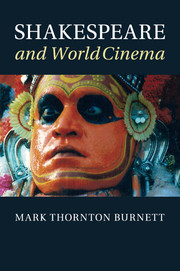
Shakespeare and World Cinema
Shakespeare and World Cinema radically re-imagines the field of Shakespeare on film, drawing on a wealth of examples from Africa, the Arctic, Brazil, China, France, India, Malaysia, Mexico, Singapore, Tibet, Venezuela, Yemen and elsewhere. Mark Thornton Burnett explores the contemporary significance of Shakespeare cinema outside the Hollywood mainstream for the first time, arguing that these adaptations are an essential part of the story of Shakespearean performance and reception. The book reveals in unique detail the scope, inventiveness and vitality of over seventy films that have undeservedly slipped beneath the radar of critical attention and also discusses regional Shakespeare cinema in Latin America and Asia. Utilising original interviews with filmmakers throughout, it introduces new auteurs, analyses multiple adaptations of plays such as Macbeth and Romeo and Juliet and pioneers fresh methodologies for understanding the role that Shakespeare continues to play in the international marketplace.
eBook

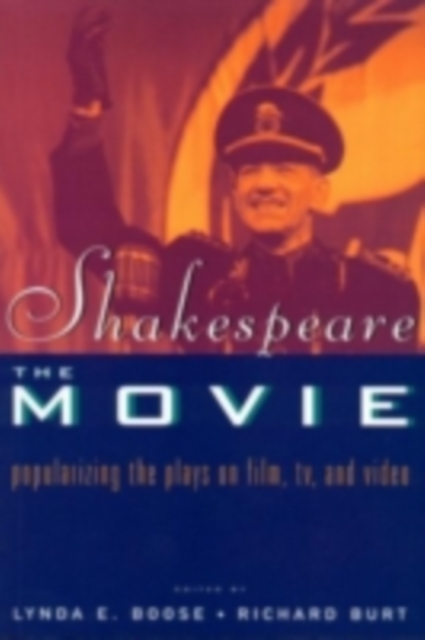
Shakespeare, The Movie
Shakespeare, The Movie brings together an impressive line-up of contributors to consider how Shakespeare has been adapted on film, TV, and video, and explores the impact of this popularization on the canonical status of Shakespeare. Taking a fresh look at the Bard an his place in the movies, Shakespeare, The Movie includes a selection of what is presently available in filmic format to the Shakespeare student or scholar, ranging across BBC television productions, filmed theatre productions, and full screen adaptations by Kenneth Branagh and Franco Zeffirelli. Films discussed include: * Amy Heckerling's Clueless * Gus van Sant's My Own Private Idaho * Branagh's Henry V * Baz Luhrman's William Shakespeare's Romeo and Juliet * John McTiernan's Last Action Hero * Peter Greenaway's Prospero's Books * Zeffirelli's Hamlet .
eBook
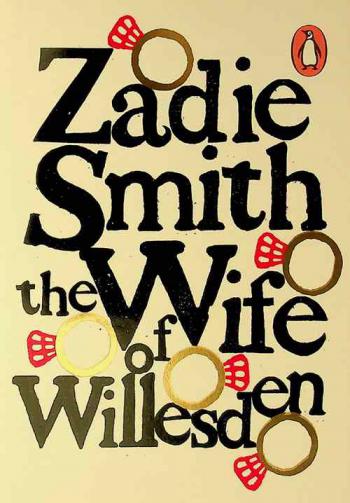
The wife of Willesden : incorporating : the wife of Willesden's tale, which tale is preceded by the general lock-in and the wife of Willesden's prologue and followed by A retraction, told in verse couplets ; translated from the Chaucerian into North Weezian
'Married five times. Mother. Lover. Aunt. Friend. She plays many roles round here. And never Scared to tell the whole of her truth, whether Or not anyone wants to hear it. Wife Of Willesden: pissed enough to tell her life Story to whoever has ears and eyes . . .' Zadie Smith's first time writing for the stage, The Wife of Willesden is a riotous twenty-first century translation of Geoffrey Chaucer's classic The Wife of Bath's Prologue, brought to glorious life on the Kilburn High Road.
BOOK
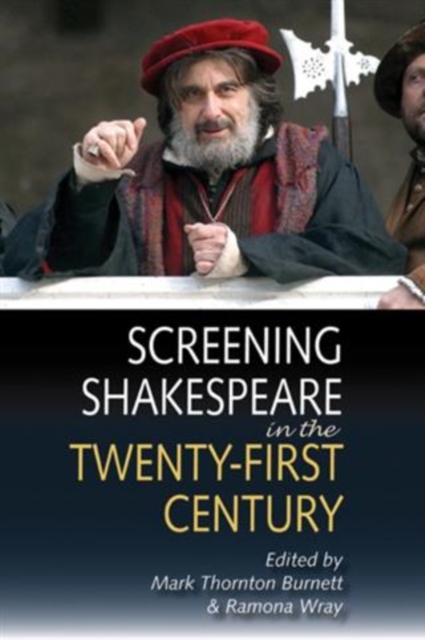
Screening Shakespeare in the twenty-first century
This bold new collection surveys the rich field of Bardic film representations, from Michael Almereyda's Hamlet and the BBC \"Shakespea(Re)-Told\" season to Michael Radford's The Merchant of Venice and Peter Babakitis' Henry V. The volume offers in-depth analyses of major and obscure productions, touching on advertisements, appropriations, postcolonial reinventions, and mass media citations, arguing that Shakespeare is a magnet for debate over style, literary authority, nationality, ethnicity, gender, and romance. Consideration the Derry Film Initiative Hamlet, the New Zealand The Maori Merchant of Venice, and the television documentary In Search of Shakespeare, this collection innovatively assesses the continuing relevance of Shakespeare in his many local and global screen incarnations.
eBook

Screening the Royal Shakespeare Company : a critical history
\"No theatre company has been involved in such a broad range of adaptations for television and film as the Royal Shakespeare Company. Starting with the Stratford Memorial Theatre company's version of Richard III in 1910, these continue today with the highly successful RSC Live from Stratford-upon-Avon cinema broadcasts. Among the iconic productions have been The Wars of the Roses (BBC, 1965), Peter Brook's film of King Lear (1971), Channel's 4's epic version of Nicholas Nickleby (1982) and Hamlet with David Tennant (BBC, 2009). Drawing on interviews with actors and directors, The RSC on Screen explores this remarkable history of collaborations between stage and screen and considers key questions about adaptation that concern all those involved in theatre, film and television. John Wyver is a broadcasting historian and the television producer of Hamlet as well as of RSC Live from Stratford-upon-Avon, and so is uniquely well-placed both to provide a vivid account of the RSC's television and film productions as well as to contribute an award-winning practitioner's insights into screen adaptation's rich potential and numerous challenges\"-- Provided by publisher.
Book
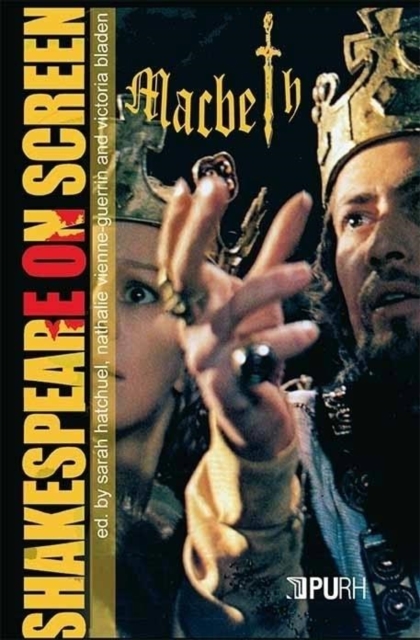
Shakespeare on Screen
This addition to the Shakespeare on Screen series reveals the remarkable presence of Macbeth in the global Shakespearean screenscape. What is it about Macbeth that is capable of extending beyond Scottish contexts and speaking globally, locally and glocally? Does the extensive adaptive reframing ofMacbeth suggest the paradoxical irrelevance of the original play? After examining the evident topic of the supernatural elements-the witches and the ghost-in the films, the essays move from a revisitation of the well-known American screen versions, to an analysis of more recent Anglophone productions and to world cinema (Asia, France, South Africa, India, Japan, etc.). Questions of lineage and progeny are broached, then extended into the wider issues of gender. Finally, ballet remediations, filmic appropriations, citations and mises-en-abyme of Macbeth are examined, and the book ends with an analysis of a Macbeth script that never reached the screen.
eBook

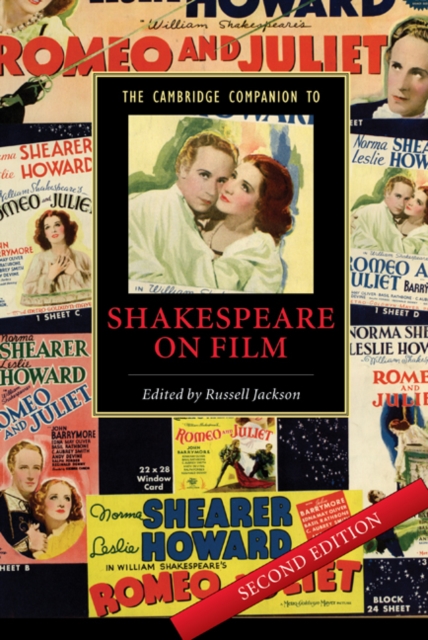
The Cambridge companion to Shakespeare on film
Film adaptations of Shakespeare's plays are increasingly popular and now figure prominently in the study of his work and its reception. This Companion is a lively collection of critical and historical essays on the films adapted from, and inspired by, Shakespeare's plays. Chapters have been revised and updated from the first edition to include the most recent films and scholarship. An international team of leading scholars discuss Shakespearean films from a variety of perspectives: as works of art in their own right; as products of the international movie industry; and as the work of particular directors from Laurence Olivier and Orson Welles to Franco Zeffirelli and Kenneth Branagh. They also consider specific issues such as the portrayal of Shakespeare's women and the supernatural. The emphasis is on feature films for cinema, rather than television, with strong coverage of Hamlet, Richard III, Macbeth, King Lear and Romeo and Juliet.
eBook