
Catalogue Search | MBRL


Are you sure you want to remove the book from the shelf?

{{itemTitle}}
215
result(s) for
"English language -- Interrogative"
Sort by:

Did you burp? : how to ask questions...or not!
Describes what a question is, how to form one correctly, and when it is appropriate to ask one.
Book

Tag questions in conversation : a typology of their interactional and stance meanings
This monograph deals with variable tag questions. These are utterances with a variable interrogative tag, like It's peculiar writing, isn't it, and the semi-variable tag innit, such as Nice, innit. The aim is to provide a corpus-based, comprehensive semantic-pragmatic typology of British English tag questions.
eBook
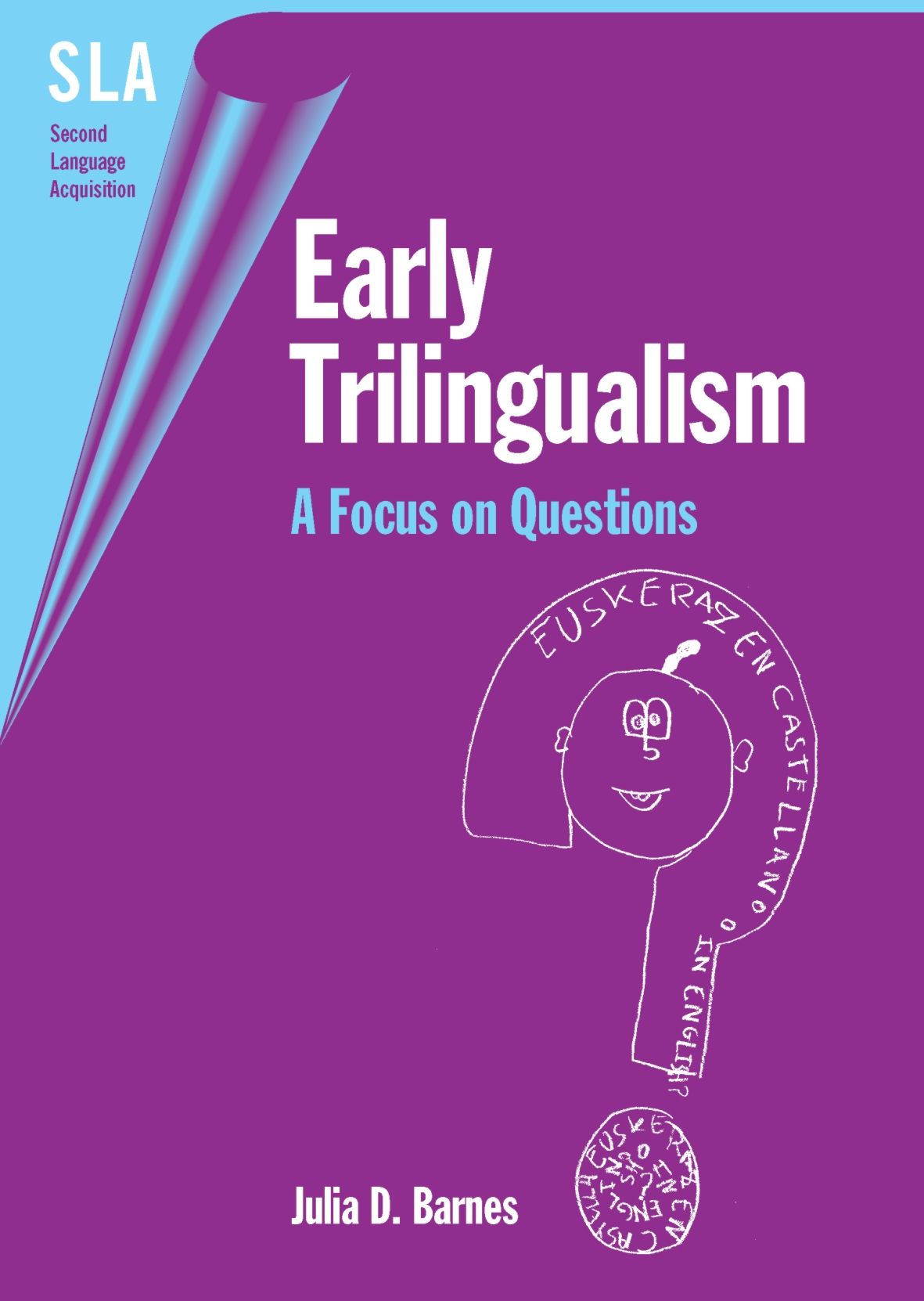
Early Trilingualism
The book describes how a trilingual child in the Basque Country, where Spanish and Basque are the languages of the community, is able to successfully acquire English at home through interaction with her mother. It focuses on her acquisition of the form and function of English questions.
eBook

True to Form
This book is concerned with the meaning and use of two kinds of declarative sentences:1) It's raining?2) It's raining.The difference between (1) and (2) is intonational: (1) has a final rise--indicated by the question mark--while (2) ends with a fall.Christine Gunlogson's central claim is that the meaning and use of both kinds of sentences must be understood in terms of the meaning of their defining formal elements, namely declarative sentence type and rising versus falling intonation. Gunlogson supports that claim through an investigation of the use of declaratives as questions. On one hand, Gunlogson demonstrates that rising and falling declaratives share an aspect of conventional meaning attributable to their declarative form, distinguishing them both from the corresponding polar interrogative (Is it raining?) and constraining their use as questions. On the other hand, since (1) and (2) constitute a minimal pair, differing only in intonation, systematic differences in character and function between them--in particular, the relative \"naturalness\" of (1) as a question compared to (2) --must be located in the contrast between the fall and the rise. To account for these two sets of differences, Gunlogson gives a compositional account of rising and falling declaratives under which declarative form expresses commitment to the propositional content of the declarative. Rising versus falling intonation on declaratives is responsible for attribution of the commitment to the Addressee versus the Speaker, respectively. The result is an inherent contextual \"bias\" associated with declaratives, which constitutes the crucial point of difference with interrogatives. The compositional analysis is implemented in the framework of context update semantics (Heim 1982 and others), using an articulated version of the Common Ground (Stalnaker 1978) that distinguishes the commitments of the individual discourse participants.Restrictions on
eBook
The acquisition and use of yes-no questions in English : a corpus-study from a usage-based perspective
This monograph offers a comprehensive account of the L1-acquisition and use of yes-no questions in English from a usage-based, construction grammar perspective. On the basis of the BNC and a high-density, longitudinal CHILDES corpus, the book explores two issues which have largely been neglected in previous research: 1. the prevalence of non-canonical questions (such as elliptical and declarative questions) in adult-to-adult as well as child(-directed) speech and the L1-acquisition of these structures. 2. The discourse-functional properties of both canonical and non-canonical yes-no questions, especially with regard to their influence on the acquisition process.
eBook
Academic Writing and Reader Engagement
Academic Writing and Reader Engagement offers a concise linguistic description of the use and functions of questions in English, French, and Spanish and discusses their value to the teaching of academic writing. This book:
Enables a better understanding of how writers engage readers in academic writing in English, French, and Spanish and where each language behaves similarly or differently;
Explains how authors express opinions, organise discourse, and create relationships with readers via questions in their academic writing and the various functions questions perform;
Brings together research on corpus and contrastive linguistics, highlighting how these two fields can support one another;
Offers a thorough investigation of reader engagement markers from a range of linguistic perspectives and considers how knowledge of these markers could be applied to the teaching and learning of academic writing in each language;
Employs corpus data totalling approximately 1.2 million words from all three languages to illustrate the varying roles and representations of questions in each language.
Providing an invaluable resource for scholars learning to communicate successfully within their academic community, as well as teachers of English, French, and/or Spanish for academic purposes, this book is key reading for students and researchers of academic discourse, contrastive linguistics, and corpus linguistics.
eBook
Non-declarative Sentences
Non-declarative sentences such as interrogatives, imperatives and exclamations are analyzed together as a single class. The author gives a general characterization of all three types and shows that there are no other types of non-declarative sentences. Definitions are offered for the notions of declaration and presupposition. These definitions are applicable to all types of sentence, both declarative and non-declarative. A defining characteristic of non-declarative sentences is that only strongly intensional operators can apply to them to form complex sentences. It is shown that this property of non-declaratives implies that such sentences do not have declarations. A particular case of the relation between questions and conditionals is studied in more detail.
eBook

Varieties of Questions in English Conversation
This book examines relations which hold between morphosyntactic form and communicative function in discourse by examining form-function correlations of noninterrogative questions in ordinary English conversation. So-called nontypical declarative and nonclausal questions are identified functionally. The role morphosyntax plays in the production and interpretation of these forms as doing questioning is then considered. Speakers are shown to use specific patterns of morphosyntactic marking to enable recipients to interpret noninterrogatives as functional questions. Explanations for morphosyntactic patterns found in the data are stated in terms of discourse use.
eBook


POLARITY PARTICLE RESPONSES AS A WINDOW ONTO THE INTERPRETATION OF QUESTIONS AND ASSERTIONS
This article provides an account of the distribution and interpretation of POLARITY PARTICLES in responses, starting with yes and no in English, and then extending the coverage to their crosslinguistic kin. Polarity particles are used in responses to both declarative and interrogative sentences, and thus provide a window onto the semantics and discourse effects of such sentences. We argue that understanding the distribution and interpretation of polarity particles requires a characterization of declaratives and interrogatives that captures a series of challenging similarities and differences across these two sentence types. To meet this challenge we combine and extend insights from inquisitive semantics, dynamic semantics, and commitment-based models of discourse. We then provide a full account of the English data that leads to a typology of polarity particles and a series of crosslinguistic predictions. These predictions are checked against data from Romanian, Hungarian, French, and German, languages that contrast with English in that they have ternary polarity particle systems, and contrast with one another in further subtle ways.
Journal Article