
Catalogue Search | MBRL


Are you sure you want to remove the book from the shelf?

{{itemTitle}}
6
result(s) for
"English language -- North America -- Phonetics"
Sort by:

An Introduction to the Comparative Phonetics of English and French in North America
This textbook is designed to fill two basic needs. One is for a clear and straightforward presentation of the rudiments of articulatory phonetics which is geared specifically to the requirements of the (future) language teacher, and not exclusively to the student of linguistics, and in which the basic concepts and terminology are introduced via English as opposed to a variety of languages. An even greater need, perhaps, and one that has gone unfulfilled for too long, is for a simple but reasonably complete overview of the phonetic inventory of North American French.
eBook
The Atlas of North American English
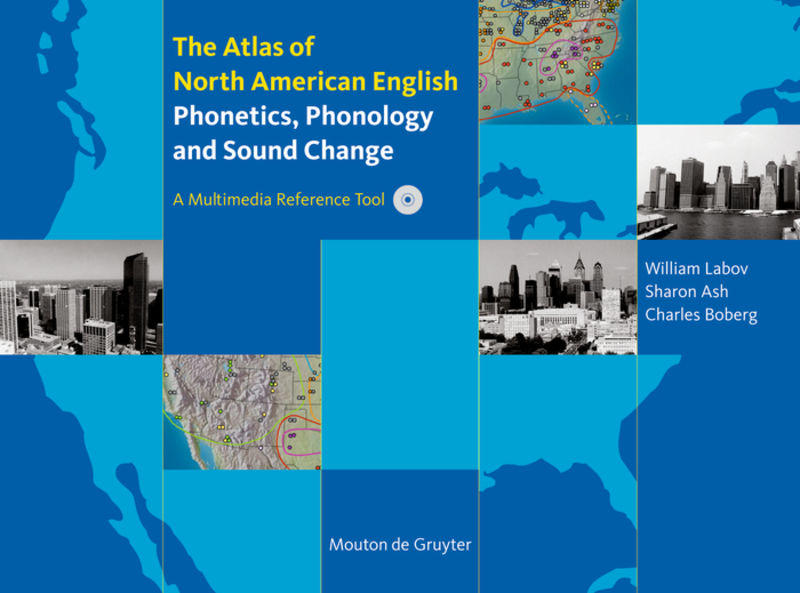
The Atlas of North American English provides the first overall view of the pronunciation and vowel systems of the dialects of the U.S. and Canada. The Atlas re-defines the regional dialects of American English on the basis of sound changes active in the 1990s and draws new boundaries reflecting those changes. It is based on a telephone survey of 762 local speakers, representing all the urbanized areas of North America. It has been developed by Bill Labov, one of the leading sociolinguists of the world, together with his colleagues Sharon Ash and Charles Boberg.
The Atlas consists of a printed volume accompanied by an interactive CD-ROM. The print and multimedia content is also available online.
Combined Edition: Book and Multimedia CD-ROM
The book contains
* 23 chapters that re-define the geographic boundaries of North American dialects and trace the influence of gender, age, education, and city size on the progress of sound change;
* findings that show a dramatic and increasing divergence of English in North America;
* 139 four color maps that illustrate the regional distribution of phonological and phonetic variables across the North American continent;
* 120 four color vowel charts of individual speakers.
The multimedia CD-ROM supplements the articles and maps by providing
* a data base with measurements of more than 100,000 vowels and mean values for 439 speakers;
* the Plotnik program for mapping each of the individual vowel systems;
* extended sound samples of all North American dialects;
* multimedia applications to enhance classroom presentations.
Online Version: Book and CD-ROM content plus additional data
The online version comprises the contents of the book and the multimedia CD-ROM along with additional data. It
* presents a wider selection of data, maps, and audio samples that will be recurrently updated;
* proffers simultaneous access to the information contained in the book and on the multimedia CD-ROM to all users in the university/library network;
* provides students with easy access to research material for classroom assignments.
For more information, please contact Mouton de Gruyter: customerservice@degruyter.com [customerservice@degruyter.com]
System Requirements for CD-ROM and Online Version
Windows PC: Pentium PC, Windows 9x, NT, or XP, at least 16MB RAM, CD-ROM Drive, 16 Bit Soundcard, SVGA (600 x 800 resolution)
Apple MAC: OS 6 or higher, 16 Bit Soundcard, at least 16MB RAM
Supported Browsers: Internet Explorer, 5.5 or 6 (Mac OS: Internet Explorer 5.1)/Netscape 7.x or higher/Mozilla 1.0 or higher/Mozilla Firefox 1.0 or higher
PlugIns: Macromedia Flash Player 6/Acrobat Reader
eBook

Retroflex Versus Bunched in Treatment for Rhotic Misarticulation: Evidence From Ultrasound Biofeedback Intervention
To document the efficacy of ultrasound biofeedback treatment for misarticulation of the North American English rhotic in children. Because of limited progress in the first cohort, a series of two closely related studies was conducted in place of a single study. The studies differed primarily in the nature of tongue-shape targets (e.g., retroflex, bunched) cued during treatment.
Eight participants received 8 weeks of individual ultrasound biofeedback treatment targeting rhotics. In Study 1, all 4 participants were cued to match a bunched tongue-shape target. In Study 2, participants received individualized cues aimed at eliciting the tongue shape most facilitative of perceptually correct rhotics.
Participants in Study 1 showed only minimal treatment effects. In Study 2, all participants demonstrated improved production of rhotics in untreated words produced without biofeedback, with large to very large effect sizes.
The results of Study 2 indicate that with proper parameters of treatment, ultrasound biofeedback can be a highly effective intervention for children with persistent rhotic errors. In addition, qualitative comparison of Studies 1 and 2 suggests that treatment for the North American English rhotic should include opportunities to explore different tongue shapes, to find the most facilitative variant for each individual speaker.
Journal Article
Dialectical Effects on Nasalance: A Multicenter, Cross-Continental Study
Purpose: This study investigated nasalance in speakers from six different dialectal regions across North America using recent versions of the Nasometer. It was hypothesized that many of the sound changes observed in regional dialects of North American English would have a significant impact on measures of nasalance. Method: Samples of the Zoo Passage, the Rainbow Passage, and the Nasal Sentences were collected from young adult male and female speakers (N = 300) from six North American dialectical regions (Midland/Mid-Atlantic; Inland North Canada; Inland North; North Central; South; and Western dialects). Results: Across the three passage types, effect sizes for dialect were moderate in strength and accounted for approximately 7%-9% of the variation in nasalance. Increased differences in nasalance tended to occur between speakers from distinctly different geographical regions, with the highest nasalance across all passages observed for speakers from the Texas South dialect region. Conclusion: Clinicians and researchers who use perceptual and instrumental measures of speech production should be aware that dialectical and socially acquired speech patterns may influence the acoustic characteristics of speech and may also influence the interpretation of normative expectations and typical versus disordered cutoff scores for instruments such as the Nasometer.
Journal Article


Reconsidering language orientation for undergraduate singers
Foreign language lyric diction is a compulsory subject in all undergraduate vocal performance degrees in universities. However, the effectiveness of its teaching depends on the capacity of students to absorb the material, for which many are largely unprepared, due to their lack of previous language study. Further, native speakers of North American English experience difficulty in distinguishing reflex responses in their own speech from the proper articulations of foreign sounds. Initially, lyric diction textbooks addressing Italian, French, and German are reviewed for their content, pedagogical sequence, use of International Phonetic Alphabet, and exercises, with regard to their appropriateness for use at the undergraduate level. The role of phonetics in teaching lyric diction is then explored in relation to anatomy and physiology, as well as consonant and vowel formation. Consonant articulation and vowel formation as typically demonstrated by native North American singers are analyzed, and descriptive diacritics from the International Phonetic Alphabet are used to show the contrast between the native North American singers’ habits in speech and singing, and the articulatory adjustments necessary to form accurate foreign sounds. English vowel and consonant sounds are compared to sounds in Italian, German, and French with which they have allophonic relationships. Exercises are prescribed for the correction of North American accents in pronouncing Italian, German, and French.
Dissertation