
Catalogue Search | MBRL


Are you sure you want to remove the book from the shelf?

{{itemTitle}}
9,987
result(s) for
"English language Foreign countries"
Sort by:


Culture and Identity through English as a Lingua Franca
The use of English as a global lingua franca has given rise to new challenges and approaches in our understanding of language and communication. One area where ELF (English as a lingua franca) studies, both from an empirical and theoretical orientation, have the potential for significant developments is in our understanding of the relationships between language, culture and identity. ELF challenges traditional assumptions concerning the purposed 'inexorable' link between a language and a culture. Due to the multitude of users and contexts of ELF communication the supposed language, culture and identity correlation, often conceived at the national level, appears simplistic and naïve. However, it is equally naïve to assume that ELF is a culturally and identity neutral form of communication. All communication involves participants, purposes, contexts and histories, none of which are 'neutral'. Thus, we need new approaches to understanding the relationship between language, culture and identity which are able to account for the multifarious and dynamic nature of ELF communication.
eBook


World Englishes in Asian Contexts
This book is the first comprehensive treatment of the spread, acculturation, functions and evolution of English in Asia. It discusses all major issues resulting from the introduction of English in culturally different contexts and the two-way interaction
eBook
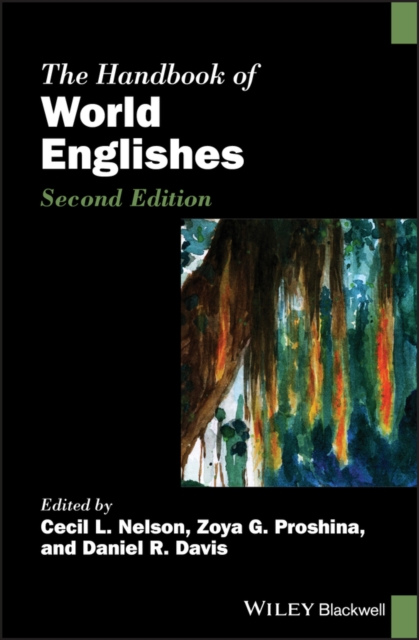
The handbook of world Englishes
The Handbook of World Englishes is a collection of articles on the cross-cultural and transnational linguistic convergence and change of the English language.Now in its second edition, this Handbook brings together multiple theoretical, contextual, and ideological perspectives, and offers new interpretations of the changing identities of world.
eBook


Intelligibility in World Englishes
Intelligibility is the term most generally used to address the complex of criteria that describe, broadly, how useful someone's English is when talking or writing to someone else. Set within the paradigm of world Englishes - which posits that the Englishes of the world may be seen as flexibly categorized into three Circles (Inner, Outer, Expanding) in terms of their historical developments - this text provides a comprehensive overview of the definitions and scopes of intelligibility, comprehensibility and interpretability, and addresses key topics within this paradigm:
Who - if anyone - provides the models and norms for a given population of English users?
Hybridity and creativity in world Englishes
Evaluating paradigms: misinformation and disinformation
Practicalities of dealing with the widening variety of Englishes
Is English \"falling apart\"?
The much-debated issue of intelligibility touches not only sociolinguistic theory but all aspects of English language teaching, second language acquisition, language curriculum planning, and regional or national language planning. Designed for students, teacher educators, and scholars internationally, each chapter includes 'Topics for Discussion and Assignments' and 'Suggestions for Further Reading'.
eBook


Words of the World
Most people think of the Oxford English Dictionary (OED) as a distinctly British product. Begun in England 150 years ago, it took more than 60 years to complete and, when it was finally finished in 1928, the British prime minister heralded it as a 'national treasure'. It maintained this image throughout the twentieth century, and in 2006 the English public voted it an 'Icon of England', alongside Marmite, Buckingham Palace and the bowler hat. However, this book shows that the dictionary is not as 'British' as we all thought. The linguist and lexicographer, Sarah Ogilvie, combines her insider knowledge and experience with impeccable research to show that the OED is in fact an international product in both its content and its making. She examines the policies and practices of the various editors, applies qualitative and quantitative analysis, and finds new OED archival materials in the form of letters, reports and proofs. She demonstrates that the OED, in its use of readers from all over the world and its coverage of World English, is in fact a global text.
eBook