
Catalogue Search | MBRL


Are you sure you want to remove the book from the shelf?

{{itemTitle}}
168
result(s) for
"English language Paragraphs."
Sort by:
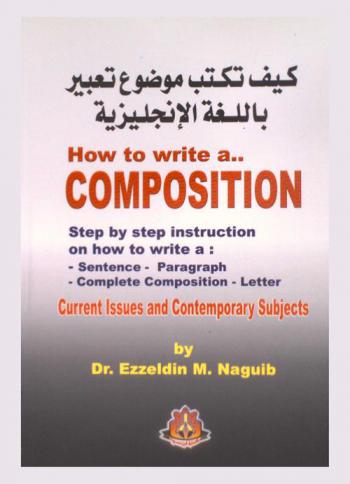


Writing to inform
Step-by-step instructions on informative writing: includes researching and getting organized, writing the first draft, making revisions, editing the writing, and sharing your work.
Book

Advanced learners’ foreign language-related emotions across the four skills
Individual differences researchers have recently begun to investigate the concept of emotions and their role in language learning (MacIntyre, Gregersen, & Mercer, 2016). Our aim is to report on a project exploring English majors’ feelings related to their use of foreign languages. Using a qualitative research design, participants were asked to write a paragraph in their mother tongue (Hungarian) describing their emotional experiences in connection with foreign languages and one of the four language skills. Our database comprised altogether 166 paragraphs from 31 male and 135 female students, with 43 texts on listening, 35 on speaking, 47 on reading, and 41 on writing. With the help of content analytical techniques, the texts were divided into thematic units and coded by the two authors. A framework of academically-relevant emotions (Pekrun, 2014) was used to guide our initial coding and the categories were modified where it was felt necessary. Results indicate that the two emotions most frequently experienced by English majors are predominantly related to enjoyment and language anxiety, and these emotions vary not only according to the skill involved but also depending on the context of language use (in class or outside class).
Journal Article
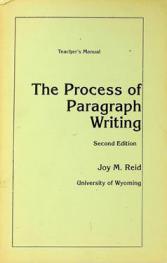

An Analysis of Common Errors Made by Grade 7 Students in Writing English Paragraphs at a Secondary School in Hanoi, Vietnam
Error analysis is a technique that identifies and classifies the inappropriate forms that foreign language learners produce (Crystal, 1987), and it is considered a useful tool for helping them improve their writing skills. The study investigated the secondary students' common errors in writing English paragraphs. During the first term of the school year 2023-2024, 43 grade 7 students from a secondary school in Hanoi participated in a descriptive quantitative research project. The participants were asked to complete three writing tests at three different times to generate their written errors based on Ferris’ (2014) model of error analysis. The findings indicate that the types of errors that grade 7 students made are lexical errors, syntactic errors, morphological errors, orthographical errors, and paragraph errors. Lexical, syntactic, and orthographical errors are greatly committed by the students. Accordingly, it comes to the conclusion that secondary students in general and 7th graders in particular struggle with writing English paragraphs. The results of the research would also give the secondary teachers of English some implications, such as focusing on grammatical patterns, emphasizing irregular instances, offering adequate practice opportunities, implementing explicit instructions, and engaging students in interactive exercises, visual aids, collaborative activities, authentic materials, etc. to mitigate the students' written errors.
Journal Article

An Analysis of Lexical and Syntactic Errors Found in English Narrative Paragraphs Written by Thai EFL English and Non-English Major Students
This study aimed to analyze lexical and syntactic errors and to compare similarities and differences of types of lexical and syntactic errors found in English narrative paragraphs written by Thai EFL students. The participants in this study included 40 English and 40 non-English major students selected through purposive sampling. The research instrument was a writing test. According to the findings of the research, illustrating the first 5 ranks from the most to the least, the types of errors committed by English major students were found as follows: lexical errors: articles, spelling, prepositions, word choice, and pronouns; syntactic errors: verb tenses, punctuation, conjunctions, run-on sentences, and fragments. Moreover, regarding the errors committed by non-English major students, the results revealed types of lexical errors: spelling, prepositions, articles, word choice, and word form, and types of syntactic errors: verb tenses, punctuation, fragments, capitalization, and singular and plural. To compare the similarities and differences among error types, the findings revealed that there were 8 similar types and 2 different types of lexical errors; there were 26 similar types and 12 different types of syntactic errors. The findings of the study could significantly contribute to the development of pedagogical approaches to teaching English writing for Thai EFL students studying in both English and non-English majors.
Journal Article
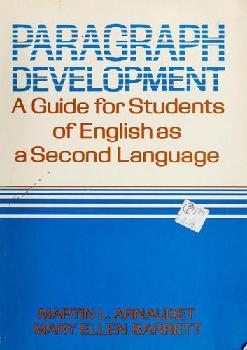

The SFL genre-based approach to writing in EFL contexts
This research investigates the changes in English as a Foreign Language (EFL) learners’ psychological attributes in relation to awareness of the lexicogrammatical features and generic structures of a discussion genre essay. This was achieved by implementing a genre-based approach to text-based writing lessons during a 15-week course. The following lesson procedure was implemented: stage (1): modeling and deconstruction of a text, stage (2): writing of target texts, stage (3): genre analysis of peers’ essays, and stage (4): writing of an analysis reflection. The results indicated specific improvements in genre-based writing, particularly among low-proficiency English learners. Results suggest that their understanding of “interpersonal meaning” such as modal verbs improved. Improvements in the use of modal auxiliaries were also noted, in that the word “should” did not appear in pre-writing texts; however, the frequency improved in post-writing texts, especially in the final paragraph, which comprised the writers’ opinions and suggestions.
Journal Article