
Catalogue Search | MBRL


Are you sure you want to remove the book from the shelf?

{{itemTitle}}
109
result(s) for
"English language Reading Study and teaching Computer-assisted instruction"
Sort by:

Using the IDOL Model to Develop Literature-Integrated CALL Materials
This study presents the IDOL model (Arafah, 2019), a framework that integrates literature and Computer-Assisted Language Learning (CALL) into developing ELT materials. Structured in four systematic stages, the model demonstrates how pedagogical principles—combining literature with technology-enhanced instruction—lay the foundation for creating a prototype of CALL resources enriched with literary content. This rigorous development research was conducted at Alauddin State Islamic University Makassar, involving 73 participants, including 53 students, 10 lecturers, and 10 graduates from an EFL program. Data collection methods included needs analysis questionnaires, interviews, and evaluation checklists. Guided by the IDOL model, the developed prototype served as a versatile teaching resource for English instruction in the university's EFL program, functioning effectively as both primary and supplementary material. The application of the IDOL model illustrates the creation of robust teaching materials that integrate the rich potential of literature in language instruction, the interactivity of technology, and strong pedagogical foundations. This study offers a valuable framework for future projects to develop CALL materials that harness the potential of literature in English Language Teaching (ELT), inspiring educators and material designers alike.
Journal Article

Effects of a mobile game-based English vocabulary learning app on learners’ perceptions and learning performance: A case study of Taiwanese EFL learners
Many studies have demonstrated that vocabulary size plays a key role in learning English as a foreign language (EFL). In recent years, mobile game-based learning (MGBL) has been considered a promising scheme for successful acquisition and retention of knowledge. Thus, this study applies a mixed methodology that combines quantitative and qualitative approaches to assess the effects of PHONE Words, a novel mobile English vocabulary learning app (application) designed with game-related functions (MEVLA-GF) and without game-related functions (MEVLA-NGF), on learners’ perceptions and learning performance. During a four-week experiment, 20 sophomore students were randomly assigned to the experimental group with MEVLA-GF support or the control group with MEVLA-NGF support for English vocabulary learning. Analytical results show that performance in vocabulary acquisition and retention by the experimental group was significantly higher than that of the control group. Moreover, questionnaire results confirm that MEVLA-GF is more effective and satisfying for English vocabulary learning than MEVLA-NGF. Spearman rank correlation results show that involvement and dependence on gamified functions were positively correlated with vocabulary learning performance.
Journal Article

Accelerated English Teaching Methods: The Role of Digital Technology
This article presents the impact of digital teaching method in the form of Rosetta Stone program on the quality of English language acquisition. The study involved 320 third-year students who study in the People’s Republic of China. Group B post-assessment results show an increase in scores on the four assessment criteria: reading, listening, writing, and speaking after the Rosetta Stone intervention. Reading skills increased by 33.6%, listening by 26.0%, writing by 48.6%, and speaking by 20.5%. Students from group B who were additionally Rosetta Stone users had a 7.4% higher average achievement rate than the control group, which proves the effectiveness of the program in the context of English language learning. Correlations were calculated between the cumulative score of the specific criteria and the general criteria as well as the individual assessment categories, all correlations were positive, weak, medium, or strong.
Journal Article

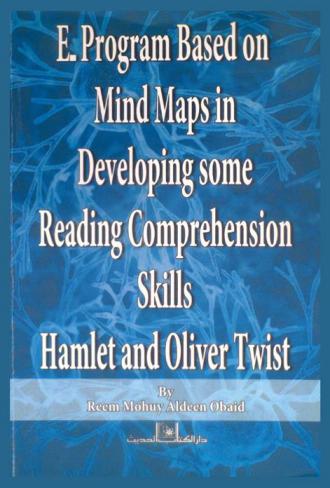
The effects of schema strategy training using digital mind mapping on reading comprehension: A case study of Chinese university students in EFL context
With the increasing popularity of computer-assisted language learning in the past decades, how to teach English reading in the new educational landscape created has become a challenge. Abundant literature has contributed to reading strategy instruction worldwide, however, empirical studies on computer-aided schema strategy training for Chinese university students in the EFL context have been relatively uncommon. This research aimed to find out whether there was a significant improvement in Chinese university students' reading comprehension after schema strategy instruction (SSI) using digital mind mapping (DMM) or not. This research also aimed to demonstrate students' perceptions regarding the positive and negative influencing factors of SSI using DMM. A mixed case study approach was applied due to its complexity and the small number of participants. The data were collected by using semi-structured group interview and reading comprehension tests. The interview data were analyzed quantitatively by using simple percentage analysis and described qualitatively as well. The reading comprehension test data were analyzed quantitatively by using descriptive statistics and non-parametric statistics. It was found that SSI using DMM effectively promoted participants' awareness of schema strategy in reading, however, no significant improvement in reading comprehension scores was found. Furthermore, visualization of DMM, cooperation among participants, and personalized schemata were perceived as positive influencing factors while imbalanced time arrangement, difficulty in cooperative work, and problems with DMM use were considered negative influencing factors of SSI using DMM. In conclusion, this study highlights the potential of concentrated strategy intervention with DMM to enhance EFL learners' reading literacy.
Journal Article

Investigating the Need for Computer Assisted Cooperative Learning to Improve Reading Skills Among Yemeni University EFL Students: A Needs Analysis Study
The aim of this needs analysis article was to investigate the students' needs for computer assisted cooperative learning (CACL) in studying reading skills. The needs analysis depends on present situation analysis (PSA). The result of the analysis showed that both professors and students use the internet for reading outside the university. Moreover, both professors and students showed that the students need CALL, cooperative learning in studying reading skills. There is a need, therefore, for implementing computer assisted cooperative learning in teaching reading comprehension skills because this is a new method for Yemeni students and it might help them to improve their reading skills as reading has not been improved among Yemeni university EFL students in the last two decades. More importantly, although Yemeni students have not experienced e-learning before, they are willing to accept CACL as a new teaching method.
Journal Article

Defining the Role of Artificial Intelligence in Improving English Writing Skills Among Indonesian Students
Artificial intelligence (AI) is a technological product in the form of an application usable in education. The implementation of AI, specifically in the teaching and learning process in Higher Education, not only broadens students' scientific knowledge academically but also facilitates awareness about current technological developments. Therefore, this study aimed to explore the improvement of English writing skills through the integration of AI into reading practices and provision of adequate feedback for skills enhancement. Also, students' attitude toward the use of AI in the teaching and learning process served as the intervening variables. This study was conducted at Higher Schools in Makassar City, Indonesia, and data were collected from 80 students through questionnaires and subsequently analyzed using path analysis. The results showed that (1) Students' attitude toward the use of AI played a mediating role in explaining the effect of reading and feedback on writing skills, (2) Reading had an indirect effect through attitude on writing skills improvement, and (3) Lecturers feedback had an indirect effect through attitude on writing skills.
Journal Article

Experiencing emergency remote teaching as an EFL educator in Chile at the onset of the Covid-19 pandemic
In this qualitative study, we seek to explore the experiences of English as a foreign language (EFL) university teachers in Chile during the first semester of emergency remote teaching (ERT) in 2020. We conducted 17 semi-structured interviews and analysed them using qualitative content analysis. Emergent themes were divided into two general categories as perceived from the teacher's point of view, advantages and disadvantages. Among the results were a perceived decrease in participation and interaction, and time and health issues. Convenience, accessibility of information, increased flexibility and adaptability of teachers emerged as positive elements. This study sheds light on ERT and its repercussions for university EFL teachers during the early days of the pandemic. Ultimately, providing an in-depth look at what Chilean teachers experienced as Covid-19 pandemic shook up higher education with teachers at the forefront of this disruption.
Journal Article
Mobile Assisted Language Learning in university EFL courses in Japan: developing attitudes and skills for self-regulated learning
This paper reports a project in which researchers at universities in Japan explored the use of Mobile Assisted Language Learning (MALL) practices by developing a learning module intended to help improve students’ scores on the TOEIC Listening and Reading Tests. MALL practices are currently being developed at universities in Japan because almost all students have mobile phones, many of them have had informal learning experiences with mobile devices, and students are integrating the communication and information gathering capabilities of mobile technology into their own lifestyles. The private nature of mobile phone communication may create barriers when students are asked to use personal mobile phones for school-centered learning activities. In this study a Nintendo DS mobile was used because it was affordable and students were familiar with this device for game playing and learning activities. In addition, because this device does not have the same telephone, messaging, and Internet functions that have made mobile phones an integral part of students’ private lives, a device such as the Nintendo DS may be a neutral mobile platform for the development of MALL activities which could later be adapted and transferred for use on private mobile phones. The primary aim of this study was to discover whether certain MALL practices would foster an advanced form of self-study, self-regulated learning (SRL). In SRL students take responsibility for arousing and sustaining their own motivation in order to make, carry out, and evaluate strategic learning plans. It was concluded that the use of the MALL learning module encouraged study without teacher intervention, i.e., self study, in terms of time spent on learning tasks, levels of satisfaction derived from the tasks, and self-measured achievement. Furthermore, SRL was observed in terms of the specificity of the goals, the customized creation of learning tasks and their in-class applications.
Journal Article

Impact of E-Learning Activities on English as a Second Language Proficiency among Engineering Cohorts of Malaysian Higher Education: A 7-Month Longitudinal Study
Recent technology implementation in learning has inspired language educators to employ various e-learning techniques, strategies, and applications in their pedagogical practices while aiming at improving specific learning efficiencies of students. The current study attempts to blend e-learning activities, including blogging, video making, online exercises, and digital storyboarding, with English language teaching and explores its impact on engineering cohorts at a public university in Malaysia. The longitudinal research study used three digital applications—Voyant Tools, Lumos Text Complexity Analyzer, and Advanced Text Analyzer—to analyze the data collected through a variety of digital assignments and activities from two English language courses during the researched academic semesters. Contributing to the available literature on the significance of integrating technology innovation with language learning, the study found that implementing e-learning activities can provide substantial insights into improving the learners’ different linguistic competencies, including writing competency, reading comprehension, and vocabulary enhancement. Moreover, the implementation of such innovative technology can motivate students to engage in more peer interactivity, learning engagement, and self-directed learning.
Journal Article