
Catalogue Search | MBRL


Are you sure you want to remove the book from the shelf?

{{itemTitle}}
58
result(s) for
"English language Rhetoric Computer-assisted instruction."
Sort by:


Multimodal Literacies and Emerging Genres
A student's avatar navigates a virtual world and communicates the desires, emotions, and fears of its creator. Yet, how can her writing instructor interpret this formof meaningmaking?Today, multiple modes of communication and information technology are challenging pedagogies in composition and across the disciplines. Writing instructors grapple with incorporating new forms into their curriculums and relating them to established literary practices. Administrators confront the application of new technologies to the restructuring of courses and the classroom itself.Multimodal Literacies and Emerging Genresexamines the possibilities, challenges, and realities of mutimodal composition as an effective means of communication. The chapters view the ways that writing instructors and their students are exploring the spaces where communication occurs, while also asking \"what else is possible.\" The genres of film, audio, photography, graphics, speeches, storyboards, PowerPoint presentations, virtual environments, written works, and others are investigated to discern both their capabilities and limitations. The contributors highlight the responsibility of instructors to guide students in the consideration of their audience and ethical responsibility, while also maintaining the ability to \"speak well.\" Additionally, they focus on the need for programmatic changes and a shift in institutional philosophy to close a possible \"digital divide\" and remain relevant in digital and global economies.Embracing and advancing multimodal communication is essential to both higher education and students. The contributors therefore call for the examination of how writing programs, faculty, and administrators are responding to change, and how the many purposes writing serves can effectively converge within composition curricula.
eBook

Because digital writing matters : improving student writing in online and multimedia environments
\"How to apply digital writing skills effectively in the classroom, from the prestigious National Writing Project As many teachers know, students may be adept at text messaging and communicating online but do not know how to craft a basic essay. In the classroom, students are increasingly required to create web-based or multi-media productions that also include writing. Since writing in and for the online realm often defies standard writing conventions, this book defines digital writing and examines how best to integrate new technologies into writing instruction. Shows how to integrate new technologies into classroom lessons. Addresses the proliferation of writing in the digital age. Offers a guide for improving students' online writing skills. The book is an important manual for understanding this new frontier of writing for teachers, school leaders, university faculty, and teacher educators.\"--Provided by publisher.
Book

Learning and Teaching Writing Online
This volume explores the challenges facing practitioners in higher education who use online environments and explores strategies for enhancing the experience of learners. The book focuses on online feedback, collaboration, and course design.
eBook

Cultivating Ecologies for Digital Media Work
The onslaught of the digital age has rapidly redefined the parameters of virtually every aspect of daily life, and the world of academic scholarship is no exception. In English departments across American institutions of higher education, faculty members face an uphill battle in the struggle for professional recognition of their digital works. In Cultivating Ecologies for Digital Media Work , author Catherine C. Braun calls for a shift in thinking about the professional methods and digital goals of the English studies discipline and its central texts.
Braun’s in-depth study documents English professors and the challenges they face in both career and classroom as they attempt to gain appropriate value for digital teaching and creation within their field, departments, and institutions. Braun proposes that to move English studies into the future, three main questions must be addressed. First, what counts as a text? How should we approach the reading of texts? Finally, how should we approach the production of texts? In addition to reconsidering the nature of texts in English studies, she calls for crucial changes in higher-education institutional procedures themselves, including new methods of evaluating digital scholarship on an even playing field with other forms of work during the processes for promotion and tenure.
With insightful expertise, Braun analyzes how the new age of digital scholarship not only complements the traditional values of the English studies discipline but also offers constructive challenges to old ideas about texts, methods, and knowledge production. Cultivating Ecologies for Digital Media Work is the first volume to offer specific examination of the digital shift’s impact on English studies and provides the scaffold upon which productive conversations about the future of the field and digital pedagogy can be built.
eBook

Virtual peer review : teaching and learning about writing in online environments
In a reassessment of peer review practices, Lee-Ann Kastman Breuch explores how computer technology changes our understanding of this activity. She defines “virtual peer review” as the use of computer technology to exchange and respond to one another’s writing in order to improve it. Arguing that peer review goes through a remediation when conducted in virtual environments, the author suggests that virtual peer review highlights a unique intersection of social theories of language and technological literacy.
eBook

Rhetorics and Technologies
Recognizing an increasingly technological context for rhetorical activity, the thirteen contributors to this volume illuminate the challenges and opportunities inherent in successfully navigating intersections between rhetoric and technology in existing and emergent literacy practices. Edited by Stuart A. Selber, Rhetorics and Technologies positions technology as an inevitable aspect of the rhetorical situation and as a potent force in writing and communication activities. Taking a broad approach, this volume is not limited to discussion of particular technological systems (such as new media or wikis) or rhetorical contexts (such as invention or ethics). The essays instead offer a comprehensive treatment of the rhetoric-technology nexus. The book's first section considers the ways in which the social and material realities of using technology to support writing and communication activities have altered the borders and boundaries of rhetorical studies. The second section explores the discourse practices employed by users, designers, and scholars of technology when communicating in technological contexts. In the final section, projects and endeavors that illuminate the ways in which discourse activities can evolve to reflect emerging sociopolitical realties, technologies, and educational issues are examined. The resulting text bridges past and future by offering new understandings of traditional canons of rhetoric—invention, arrangement, style, memory, and delivery—as they present themselves in technological contexts without discarding the rich history of the field before the advent of these technological innovations.
eBook

Composing Media Composing Embodiment
\"What any body is-and is able to do-cannot be disentangled from the media we use to consume and produce texts.\" ---from the Introduction.
Kristin Arola and Anne Wysocki argue that composing in new media is composing the body-is embodiment. InComposing (Media) = Composing (Embodiment),they havebrought together a powerful set of essays that agree on the need for compositionists-and their students-to engage with a wide range of new media texts. These chapters explore how texts of all varieties mediate and thereby contribute to the human experiences of communication, of self, the body, and composing. Sample assignments and activities exemplify how this exploration might proceed in the writing classroom.
Contributors here articulate ways to understand how writing enables the experience of our bodies as selves, and at the same time to see the work of (our) writing in mediating selves to make them accessible to institutional perceptions and constraints. These writers argue that what a body does, andcan do, cannot be disentangled from the media we use, nor from the times and cultures and technologies with which we engage.
To the discipline of composition, this is an important discussion because it clarifies the impact/s of literacy on citizens, freedoms, and societies. To the classroom, it is important because it helps compositionists to support their students as they enact, learn, and reflect upon their own embodied and embodying writing.
eBook
Digital writing for English language learners
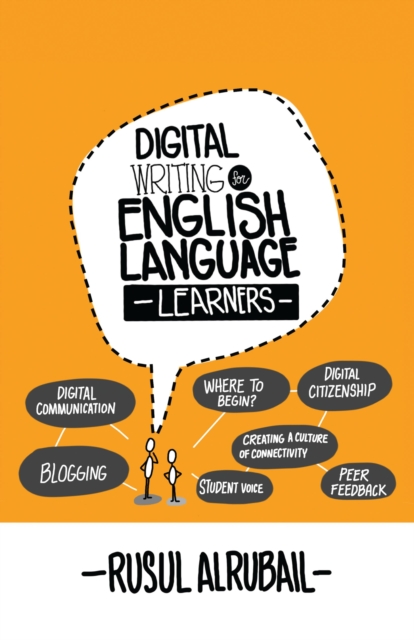
Digital Writing for English Language learners looks at practical ways educators can implement the use of technology in their English and Language Arts classroom for English Language Learners. The book provides a variety of classroom activities and assignments that can be completed with English Language Learners using social media and other digital writing tools. The book also looks at creating a culture that fosters the necessary conditions for student voice to thrive in an English Language Learners' classroom.
eBook

The Rhetoric of Cool
The Rhetoric of Cool: Composition Studies and New Media offers a historical critique of composition studies’ rebirth narrative, using that critique to propose a new rhetoric for new media work. Author Jeff Rice returns to critical moments during the rebirth of composition studies when the discipline chose not to emphasize technology, cultural studies, and visual writing, which are now fundamental to composition studies. Rice redefines these moments in order to invent a new electronic practice. The Rhetoric of Cool addresses the disciplinary claim that composition studies underwent a rebirth in 1963. At that time, three writers reviewed technology, cultural studies, and visual writing outside composition studies and independently used the word cool to describe each position. Starting from these three positions, Rice focuses on chora, appropriation, commutation, juxtaposition, nonlinearity, and imagery—rhetorical gestures conducive to new media work-- to construct the rhetoric of cool. An innovative work that approaches computers and writing issues from historical, critical, theoretical, and practical perspectives, The Rhetoric of Cool challenges current understandings of writing and new media and proposes a rhetorical rather than an instrumental response for teaching writing in new media contexts.
eBook