
Catalogue Search | MBRL


Are you sure you want to remove the book from the shelf?

{{itemTitle}}
39
result(s) for
"English language Syntax Study and teaching Foreign speakers"
Sort by:
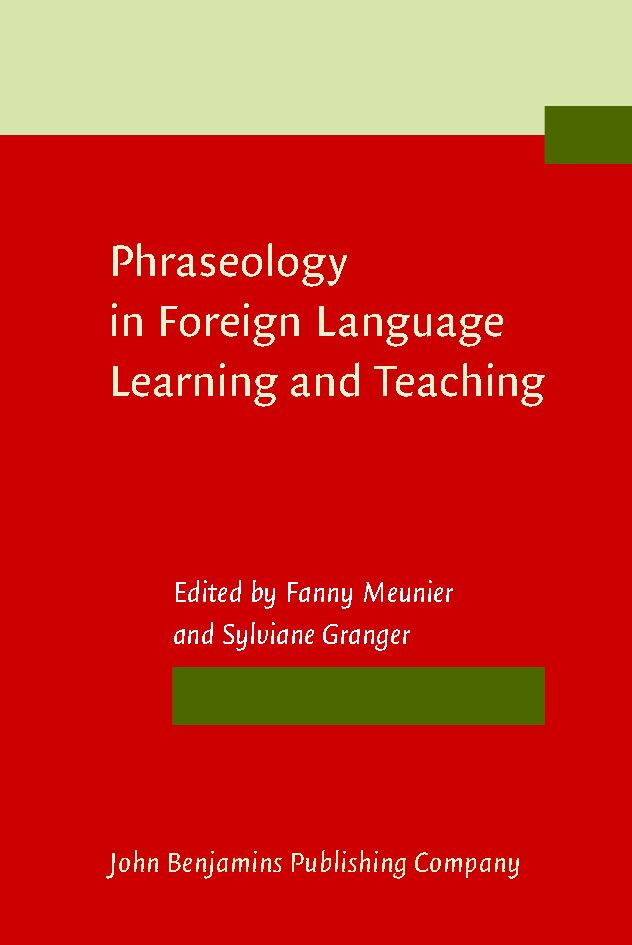
Phraseology in Foreign Language Learning and Teaching
This book addresses the key role of phraseology in second language acquisition and instruction. It is divided into three main sections: Extracting and Describing Phraseological Units investigates the role played by native and learner corpora in the extraction and description of multiword units, two initial and crucial steps in informing language pedagogy; Learning Phraseological Units deals with the learning aspect, an oft-neglected yet essential dimension of phraseology in second/foreign language pedagogy, this section also addresses issues in new literacies; and Recording and Exploiting Phraseological Units focuses on pedagogical tools, notably monolingual and bilingual dictionaries and textbooks. This stimulating collection presents cutting edge research in the field and identifies major avenues for future theoretical and applied work. It is of particular relevance to researchers and teachers interested in the patterned nature of language.
eBook
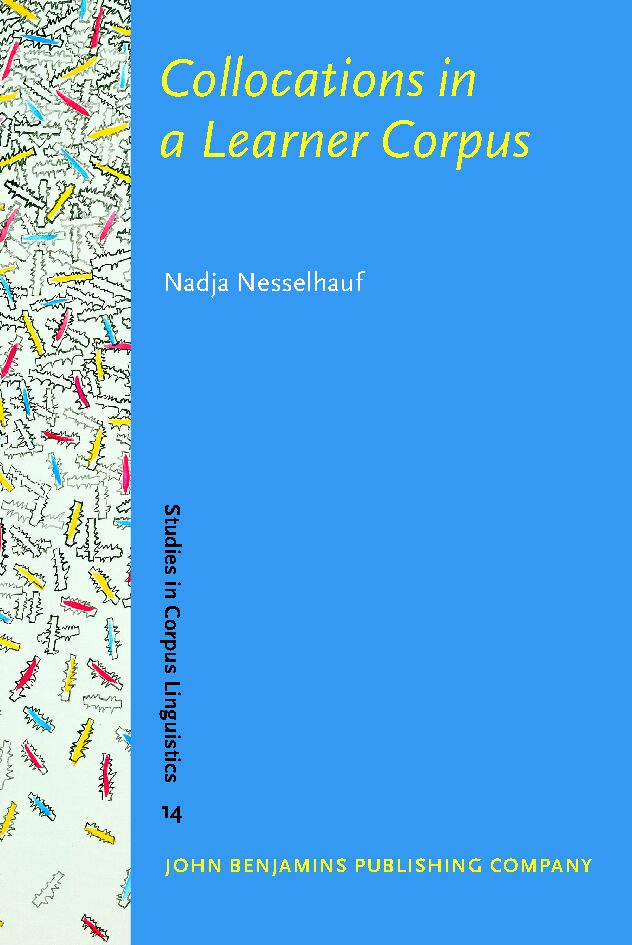
Collocations in a Learner Corpus
Collocations are both pervasive in language and difficult for language learners, even at an advanced level. In this book, these difficulties are for the first time comprehensively investigated. On the basis of a learner corpus, idiosyncratic collocation use by learners is uncovered, the building material of learner collocations examined, and the factors that contribute to the difficulty of certain groups of collocations identified. An extensive discussion of the implications of the results for the foreign language classroom is also presented, and the contentious issue of the relation of corpus linguistic research and language teaching is thus extended to learner corpus analysis.
eBook

Structure and Meaning in English
An essential guide to grammar specifically designed for teachers of English which can be used as a course book, or a reference work. This practical volume focuses on the topics which are essential skills for language learners and which teachers need to understand to be professionally competent. It gives exercises, and learner error information to guide teachers in teaching and assessing grammar learning. This book is designed to help teachers of English develop an understanding of the aspects of English which are essentially relevant for learners who speak other languages. Using corpus research, Kennedy cuts to the heart of what is important in the teaching of English grammar.
eBook
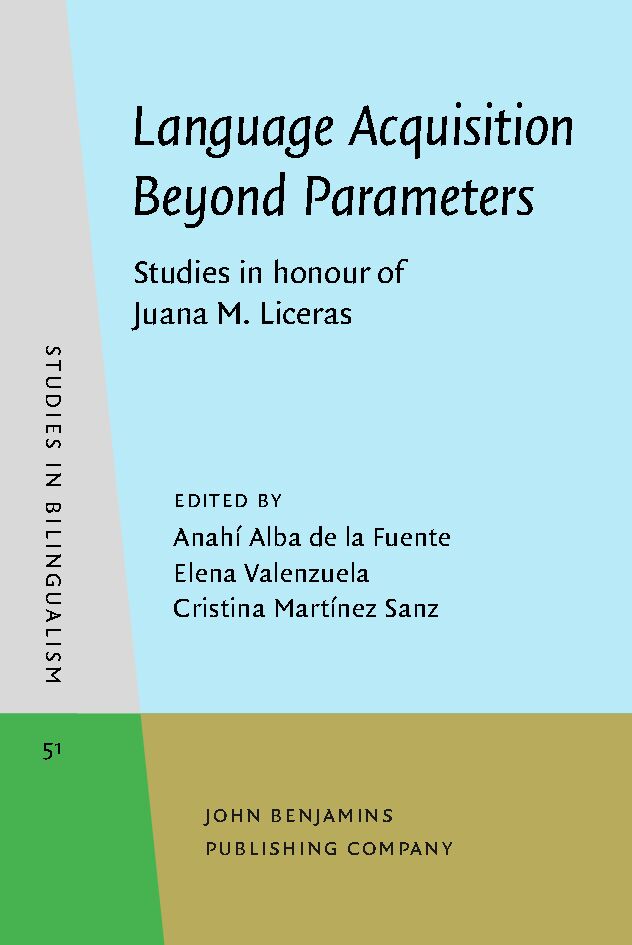
Language acquisition beyond parameters : studies in honour of Juana M. Liceras
The chapters in this volume take different approaches to the exploration of language acquisition processes in various populations (monolingual and bilingual first language acquisition, L2 acquisition) and address issues in syntax, morphology, pragmatics, language processing and interface phenomena. This volume is a tribute to Juana M. Liceras' fundamental and enduring contribution to the field of Spanish Second Language Acquisition (SLA). All the chapters in the volume are linked to or inspired by Juana's extensive body of work, and, like Juana's research, they all stand at the crossroads of formal and experimental linguistics. Together, the studies presented in this volume are a reflection of Juana's impact both as a mentor and as a collaborative researcher while at the same time showcasing current trends and new directions in the field of generative SLA.
eBook

The trends and developments of L2 Japanese research in the 2010s
This article updates the trends and developments of Japanese as a second language (JSL) research since Mori and Mori (2011) by reviewing nearly 200 selected empirical studies published in English or Japanese between 2010 and early 2019. The first section of this review examines the cognitive aspects of second language (L2) Japanese development, focusing on vocabulary and kanji (i.e., Chinese characters transferred into Japanese) learning, syntactic development, and the issues surrounding reading and writing. The second part investigates sociocultural issues in L2 Japanese development and use, including pragmatic development, multilingual/translingual perspectives, and multilingual youth. The third section explores the role of affective variables (primarily learner motivation) in L2 Japanese development. The last section considers various pedagogical issues, including corpus-based studies and the development of materials and resources, instructional designs and classroom studies, technology-enhanced language learning and new instructional models, critical approaches to teaching Japanese and content-based instruction. The review of these themes illuminates trends and emerging areas of interest in post-2010 L2 Japanese research inspired by current developments in applied linguistics and second language acquisition (SLA) research, as well as unique features of Japanese language and sociocultural contexts.
Journal Article

Cultural and linguistic imperialism and the EIL movement : Evidence from a textbook analysis
The perspective of English as an International Language (EIL) has been proposed mainly to alleviate the tenets of language and cultural imperialism and, of course, to facilitate communication through different varieties of English. Hence, English language classrooms are the preliminary venue for the inception of such a rudimentary movement. Bearing this in mind, in this study, we evaluated a number of recently published English textbooks, World English, Top Notch and American English File as supplementary resources in language teaching and learning. In so doing, adopting a schema-based viewpoint, computer files of the reading texts of the books were created, and their single and phrasal words or schemata were categorised into the three domains, semantic, syntactic and parasyntactic. In order to investigate the cultural load of each single schema and to find to what extent the EIL paradigm has been framed within the textbooks, Kachru's (1992) division of inner, outer, and expanding circles was employed. The overall results revealed that, although these textbooks aimed to address the language learners anywhere in the world, their references to the inner circle countries and native speakers of English still surpass the outer and expanding circle countries. [Author abstract]
Journal Article

RECEPTIVE AND PRODUCTIVE VOCABULARY LEARNING: The Effects of Reading and Writing on Word Knowledge
This study investigates the effects of receptive and productive
vocabulary learning on word knowledge. Japanese students studying
English as a foreign language learned target words in three glossed
sentences and in a sentence production task in two experiments. Five
aspects of vocabulary knowledge—orthography, syntax, association,
grammatical functions, and meaning and form—were each measured by
receptive and productive tests. The study uses an innovative
methodology in that each target word was tested in 10 different ways.
The first experiment showed that, when the same amount of time was
spent on both tasks, the reading task was superior. The second
experiment showed that, when the allotted time on tasks depends on the
amount of time needed for completion, with the writing task requiring
more time, the writing task was more effective. If the second
experiment represents authentic learning, then a stronger argument can
be made to use productive vocabulary learning tasks over receptive
tasks.I wish to acknowledge the generous
input of the following people in the evolution of this paper: Paul
Nation, Jonathan Newton, and Jim Dickie from Victoria University of
Wellington, and the anonymous SSLA reviewers, for their
helpful comments.
Journal Article

Using meta-analysis of technique and timing to optimize corrective feedback for specific grammatical features
Grammar varies in semantic, morphosyntactic, and phonological complexity, which may influence what type of Corrective Feedback (CF) is effective. The present study was designed to investigate the best form of CF for each grammatical feature, in conjunction with associated variables such as learner proficiency level and L1 influence. Fifteen studies, all of which had English as a Foreign Language (EFL) learners with a Korean L1 and productive measures of speech or writing, were selected for study. Results suggest that grammatical features which are very similar to the L1 may benefit more from implicit reformulations (recasts). Explicit CF (direct and metalinguistic feedback) appears more useful for semantically and syntactically complex features such as the English article and past hypothetical conditional. Finally, research of proficiency level suggests that timely emphasis of specific grammatical features is needed in order for CF to be effective.
Journal Article
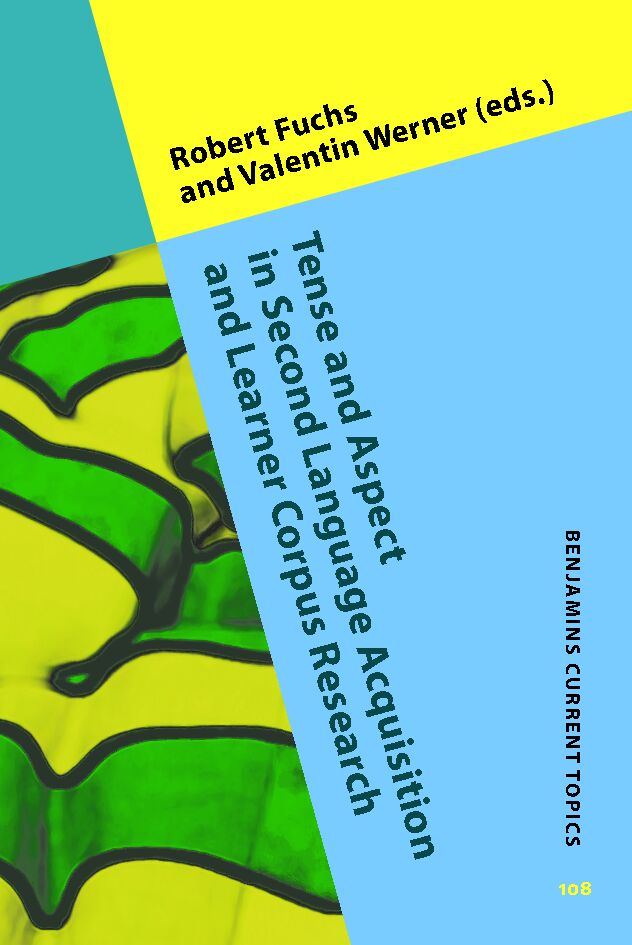
Tense and Aspect in Second Language Acquisition and Learner Corpus Research
This volume shows which additional insights into the area of tense and aspect in learner language can be gained using corpus data. Originally published as special issue of International Journal of Learner Corpus Research 4:2 (2018).
eBook