
Catalogue Search | MBRL


Are you sure you want to remove the book from the shelf?

{{itemTitle}}
136
result(s) for
"English language Translating into Arabic."
Sort by:
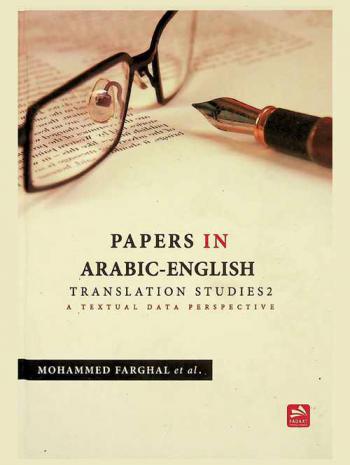

Challenges for Arabic Machine Translation
This chapter addresses the exploitation of a supervised machine learning technique to automatically induce Arabic-to-English transfer rules from chunks of parallel aligned linguistic resources. The induced structural transfer rules encode the linguistic translation knowledge for converting an Arabic syntactic structure into a target English syntactic structure. These rules are going to be an integral part of an Arabic-English transfer-based machine translation. Nevertheless, a novel morphological rule induction method is employed for learning Arabic morphological rules that are applied in our Arabic morphological analyzer. To demonstrate the capability of the automated rule induction technique, we conducted rule-based translation experiments that use induced rules from a relatively small data set. The translation quality of the hybrid translation experiments achieved good results. in terms of WER.
eBook

Thinking Arabic translation : a course in translation method : Arabic to English
\"Thinking Arabic Translation is an indispensable book for linguists who want to develop their Arabic-to-English translation skills. Clear explanations, discussions, examples and exercises enable students to acquire the skills necessary for tackling a broad range of translation problems. The book has a practical orientation, addressing key issues for translators such as cultural differences, genre, and revision and editing. It is a book on translation method, drawing on a range of notions from linguistics and translation theory to encourage thoughtful consideration of possible solutions to practical problems. This new edition includes: - new and up-to-date examples from all types of translation, covering broad issues that have emerged in the Arab world in recent years - texts drawn from a wide variety of writing types, including newspapers, prose fiction, poetry, constitutions and political speeches - at least 3 full-length practical translation exercises in each chapter to compliment the discussions and consolidate learning. Thinking Arabic Translation is key reading for advanced students wishing to perfect their language skills or considering a career in translation.\" -- Provided by publisher
Book

Between English and Arabic
This book offers a challenging and stimulating perspective on translation. It is a comprehensive practical course in translation between English and Arabic and, as such, will be invaluable to students of translation. Based on contrastive linguistics, it features a variety of translation key concepts, including lexical, grammatical and stylistic issues. The book balances theory and application in translation. The book is the result of the many courses the author has taught to students of Ara.
eBook


Introduction to Healthcare for Arabic-speaking Interpreters and Translators
Introduction to Healthcare for Arabic-speaking Interpreters and Translators follows the seminal publication Introduction to Healthcare for Interpreters and Translators (Crezee, 2013) and has been supplemented with Arabic glossaries and comments about health communication between Anglophones and Arabic speakers.
eBook

The Georgetown guide to Arabic-English translation
Mughazy, a well-respected scholar of Arabic linguistics and a Georgetown Languages board member, takes a practical approach to the task of translating nonfiction from Arabic to English. Using Optimality Theory from linguistics, he provides a new way, based in linguistics, of looking at best practices for translation with the goal to find the most accurate translation. He aims to approach translation more scientifically (identify the problem, test hypotheses, selecting the best option and finding patterns) than those who use the more widely known literary translation theory. Although there are several books out on this topic, none address it as Mughazy has. This is a unique approach that offers a new, more practical way for those with advanced knowledge of Arabic to learn how to translate. As more schools begin or consider beginning translation programs, this book may find a larger audience over the years. Mughazy's book is rich with authentic examples, exercises (answer key included), and includes very valuable appendices for the learner. As Clara told me, \"This is a book I wish I had had in grad school.\"
Book

Disarming words
In a book that radically challenges conventional understandings of the dynamics of cultural imperialism, Shaden M. Tageldin unravels the complex relationship between translation and seduction in the colonial context. She examines the afterlives of two occupations of Egypt--by the French in 1798 and by the British in 1882--in a rich comparative analysis of acts, fictions, and theories that translated the European into the Egyptian, the Arab, or the Muslim.
eBook

Arabic-English-Arabic translation : issues and strategies
\"This book is a manual for both advanced students and translators for translation between Arabic and English. The authors take a practical approach, focusing on contrastive stylistics and pay particular attention to the main areas of difficulty in English/Arabic translation. Each lesson contains translation examples and samples gleaned from authentic materials, both from literature and the media, plus additional exercises. A glossary and list of online resources are also provided at the back of the book\"-- Provided by publisher.
Book

Saudi Learner Translation Corpus: The design and compilation of an English–Arabic learner translation corpus
This article introduces the Saudi Learner Translation Corpus (SauLTC), an innovative multi-version English–Arabic parallel corpus featuring part-of-speech tagging. We describe the corpus parameters and compilation process and explain how textual processing and sentence alignment are conducted. The participants include 366 student translators, 48 instructors, and 23 alignment verifiers. The corpus provides access to two target versions of every ST to allow the detection of the changes in the translation and revision processes from the initial to the final draft. The translations were collected over three years, yielding 5,160,386 tokens. The metadata of 23 sentence alignment verifiers were added to the analysis as a unique variable to investigate individual differences in the manual verification process. This unidirectional corpus can be used to identify student translators’ strategies and errors in translation and analyze the efficacy of instructors’ feedback. Furthermore, it is accessible via an application and a website. It provides translation teachers and researchers with a database that can help develop corpus-based and corpus-driven teaching materials.
Journal Article