
Catalogue Search | MBRL


Are you sure you want to remove the book from the shelf?

{{itemTitle}}
42
result(s) for
"English language-Rhetoric-Research"
Sort by:

How to write a lot : a practical guide to productive academic writing
\"All academics need to write, and many struggle to finish their dissertations, articles, books, or grant proposals. Writing is hard work and can be difficult to wedge into a frenetic academic schedule. This revised and updated edition of Paul Silvia's popular guide provides practical, lighthearted advice to help academics overcome common barriers and become productive writers. Silvia's expert tips have been updated to apply to a wide variety of disciplines, and this edition has a new chapter devoted to grant and fellowship writing\"-- Provided by publisher.
Book

Rhetorica in Motion
Rhetorica in Motionis the first collected work to investigate feminist rhetorical research methods in both contemporary and historical contexts. The contributors analyze the decision-making processes and methodologies employed in deciphering the origins, meanings, theories, workings, and manifestations of feminist rhetoric.The volume examines familiar themes, such as archival, literary, and online research, but also looks to other areas of rhetoric, such as disability studies; gerontology/aging studies; Latina/o, queer, and transgender studies; performance studies; and transnational feminisms in both the United States and larger geopolitical spaces.Rhetorica in Motionincorporates previous views of feminist research, outlines a set of principles that guides current methods, and develops models for undertaking future inquiry, including working as individuals or balancing the dynamics of group research. The text explores how feminist research embodies what has come before and reflects what researchers, institutions, and instructors bring to it and what it brings to them. Underlying the discovery of this volume is the understanding that feminist rhetoric is in constant motion in a dynamic that resists definition.
eBook
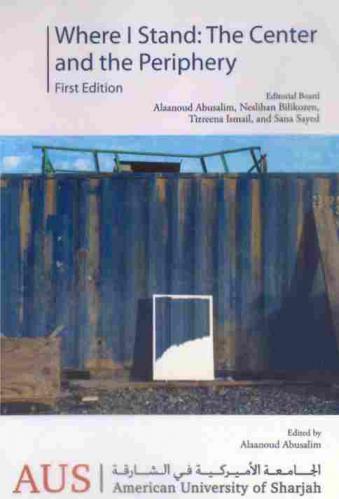
Where I stand : the center and the periphery
\"This is the first edition of a custom book for WRI 102 courses in the American University of Sharjah (AUS) [...] With an attempt to engage the students and provide compelling ideas for writing college-level essays, the reading selection for the book has been chosen carefully from a variety of sources to reflect a broad range of perspectives, ideas, arguments, and rhetorical styles.\" --page xi.

Rhetorics and Technologies
Recognizing an increasingly technological context for rhetorical activity, the thirteen contributors to this volume illuminate the challenges and opportunities inherent in successfully navigating intersections between rhetoric and technology in existing and emergent literacy practices. Edited by Stuart A. Selber, Rhetorics and Technologies positions technology as an inevitable aspect of the rhetorical situation and as a potent force in writing and communication activities. Taking a broad approach, this volume is not limited to discussion of particular technological systems (such as new media or wikis) or rhetorical contexts (such as invention or ethics). The essays instead offer a comprehensive treatment of the rhetoric-technology nexus. The book's first section considers the ways in which the social and material realities of using technology to support writing and communication activities have altered the borders and boundaries of rhetorical studies. The second section explores the discourse practices employed by users, designers, and scholars of technology when communicating in technological contexts. In the final section, projects and endeavors that illuminate the ways in which discourse activities can evolve to reflect emerging sociopolitical realties, technologies, and educational issues are examined. The resulting text bridges past and future by offering new understandings of traditional canons of rhetoric—invention, arrangement, style, memory, and delivery—as they present themselves in technological contexts without discarding the rich history of the field before the advent of these technological innovations.
eBook


Beyond the archives : research as a lived process
This collection of highly readable essays reveals that research is not restricted to library archives. When researchers pursue information and perspectives from sources beyond the archives—from existing people and places— they are often rewarded with unexpected discoveries that enrich their research and their lives. Beyond the Archives: Research as a Lived Process presents narratives that demystify and illuminate the research process by showing how personal experiences, family history, and scholarly research intersect. Editors Gesa E. Kirsch and Liz Rohan emphasize how important it is for researchers to tap into their passions, pursuing research subjects that attract their attention with creativity and intuition without limiting themselves to traditional archival sources and research methods. Eighteen contributors from a number of disciplines detail inspiring research opportunities that led to recently published works, while offering insights on such topics as starting and finishing research projects, using a wide range of types of sources and methods, and taking advantage of unexpected leads, chance encounters and simple clues. In addition, the narratives trace the importance of place in archival research, the parallels between the lives of research subjects and researchers, and explore archives as sites that resurrect personal, cultural, and historical memory. Beyond the Archives sheds light on the creative, joyful, and serendipitous nature of research, addressing what attracts researchers to their subjects, as well as what inspires them to produce the most thorough, complete, and engaged scholarly work. This timely and essential volume supplements traditional-method textbooks and effectively models concrete practices of retrieving and synthesizing information by professional researchers.
eBook

From reading-writing research to practice
Teachers regularly seek to update their practice with newly-developed tools from the realm of research, with the aim of applying them directly in the classroom, particularly for teaching reading and writing. Thus, teachers' continuing education is dependent on the effective dissemination and appropriation of research results.
Book

Working in the archives : practical research methods for rhetoric and composition
Working in the Archives focuses on the pragmatic questions of archival research—e.g., the methods of archival work. Using real examples from a range of scholars and archival holdings, the collection introduces novice archival researchers to the issues, workings, and resources of archival research.
eBook


Rhetorica in Motion
Rhetorica in Motion is the first collected work to investigate feminist rhetorical research methods in both contemporary and historical contexts. The contributors analyze the decision-making processes and methodologies employed in deciphering the origins, meanings, theories, workings, and manifestations of feminist rhetoric.The volume examines familiar themes, such as archival, literary, and online research, but also looks to other areas of rhetoric, such as disability studies; gerontology/aging studies; Latina/o, queer, and transgender studies; performance studies; and transnational feminisms in both the United States and larger geopolitical spaces. Rhetorica in Motion incorporates previous views of feminist research, outlines a set of principles that guides current methods, and develops models for undertaking future inquiry, including working as individuals or balancing the dynamics of group research. The text explores how feminist research embodies what has come before and reflects what researchers, institutions, and instructors bring to it and what it brings to them. Underlying the discovery of this volume is the understanding that feminist rhetoric is in constant motion in a dynamic that resists definition.
eBook