
Catalogue Search | MBRL


Are you sure you want to remove the book from the shelf?

{{itemTitle}}
34
result(s) for
"English literature -- South Asian authors -- History and criticism"
Sort by:


South Asian writers in twentieth-century Britain : culture in translation
This book provides an historical account of the publication and reception of South Asian Anglophone writing from the 1930s to the present, based on original archival research drawn from a range of publishing houses. This comparison of succeeding generations of writers who emigrated to, or were born in, Britain examines how the experience of migrancy, the attitudes towards migrant writers in the literary marketplace, and the critical reception of them, changed significantly throughout the 20th century. The book shows how the aesthetic, cultural, and political context changed significantly for each generation, producing radically different kinds of writing and transforming the role of the post-colonial writer of South Asian origin. The extensive use of original materials from publishers' archives shows how shifting political, academic, and commercial agendas in Britain and North America influenced the selection, content, presentation, and consumption of many of these texts. The differences between writers of different generations can thus in part be understood in terms of the different demands of their publishers and expectations of readers in each decade. Writers from different generations are paired accordingly in each chapter: Nirad Chaudhuri (1897–1999) with Tambimuttu (1915–83); Ambalavener Sivanandan (born 1923) with Kamala Markandaya (born 1924); Salman Rushdie (born 1947) with Farrukh Dhondy (born 1944); and Hanif Kureishi (born 1954) with Meera Syal (born 1963). Raja Rao, Mulk Raj Anand, Attia Hosain, V. S. Naipaul, and Aubrey Menen are also discussed.
eBook


Paradoxes of Postcolonial Culture
This innovative contribution to understanding the promise and contradictions of contemporary postcolonial culture applies a wide array of theoretical tools to a large body of literature. The author compares the work of established Indian writers including Bharati Mukherjee, Meena Alexander, Sara Suleri, and Sunetra Gupta to new writings by such Afro-Italian immigrant women as Ermina dell’Oro, Maria Abbebù Viarengo, Ribka Sibhatu, and Sirad Hassan. Sandra Ponzanesi’s analysis highlights a set of dissymmetrical relationships that are set in the context of different imperial, linguistic, and market policies. By dealing with issues of representation linked to postcolonial literary genres, to gender and ethnicity questions, and to new cartographies of diaspora, this book imbues the postcolonial debate with a new élan.
eBook

Violent Belongings
Focusing on the historical and contemporary narration of the Partition of India,Violent Belongingsexamines transnational South Asian culture from 1947 onwards. Spanning the Indian subcontinent and its diasporas in the United Kingdom and the United States, it asks how postcolonial/diasporic literature (eg., Rushdie, Mistry, Sidwa and Lahiri), Bollywood film, personal testimonies and journalism represent the violence, migration and questions of national belonging unleashed by that pivotal event during which two million people died and sixteen million were displaced.In addition to challenging the official narratives of independence and Partition, these narratives challenge our contemporary understanding of gender and ethnicity in history and politics.Violent Belongingsargues that both male and female bodies, and heterosexual coupledom, became symbols of the nation in public life. In the newly independent Indian nation both men and women were transformed into ideal citizens or troubling bodies, immigrants or refugees, depending on whether they were ethnically Hindu, Muslim, Jewish or Sikh. The divisions set in motion during Partition continue into our own time and account for ethnic violence in South Asia.
eBook

Culinary Fictions
For South Asians, food regularly plays a role in how issues of race, class, gender, ethnicity, and national identity are imagined as well as how notions of belonging are affirmed or resisted.Culinary Fictionsprovides food for thought as it considers the metaphors literature, film, and TV shows use to describe Indians abroad. When an immigrant mother in Jhumpa Lahiri'sThe Namesakecombines Rice Krispies, Planters peanuts, onions, salt, lemon juice, and green chili peppers to create a dish similar to one found on Calcutta sidewalks, it evokes not only the character's Americanization, but also her nostalgia for India.
Food, Anita Mannur writes, is a central part of the cultural imagination of diasporic populations, andCulinary Fictionsmaps how it figures in various expressive forms. Mannur examines the cultural production from the Anglo-American reaches of the South Asian diaspora. Using texts from novels-Chitra Divakaruni'sMistress of Spicesand Shani Mootoo'sCereus Blooms at Night-and cookbooks such as Madhur Jaffrey'sInvitation to Indian Cookingand Padma Lakshmi'sEasy Exotic, she illustrates how national identities are consolidated in culinary terms.
eBook
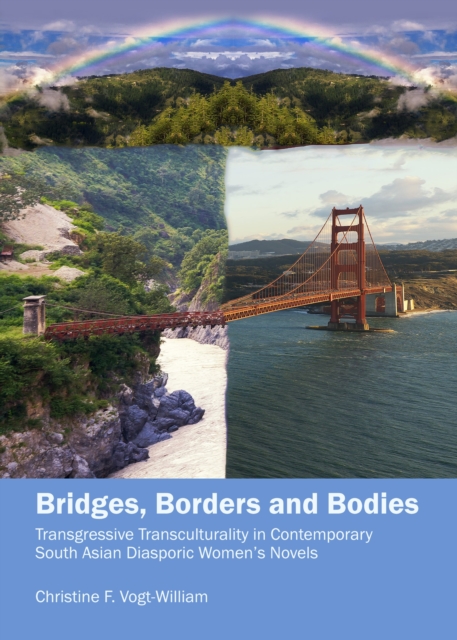
Bridges, Borders and Bodies
South Asian diasporas can be considered transcultural legacies of colonialism, while constituting transcultural forms of postcolonial reality in todays globalised world. The main focus of investigation here is South Asian womens fiction, where diverse forms of identity negotiation undertaken by the protagonists in a number of contemporary novels (from the 1990s to the early 2000s) are read as transgressions. The themes of early gendered experiences of South Asian indentured labour migratio.
eBook

Mythologies of Migration, Vocabularies of Indenture
Pirbhai uses the critical paradigm of 'indenture history' to examine the local literary and cultural histories that have influenced and shaped the development of novel-length fiction by writers of the South Asian diaspora in national contexts as diverse as Mauritius, South Africa, Guyana, and Fiji.
eBook

Anxieties of Empire and the Fiction of Intrigue
Focusing on late nineteenth- and twentieth-century stories of detection, policing, and espionage by British and South Asian writers, Yumna Siddiqi presents an original and compelling exploration of the cultural anxieties created by imperialism. She suggests that while colonial writers use narratives of intrigue to endorse imperial rule, postcolonial writers turn the generic conventions and topography of the fiction of intrigue on its head, launching a critique of imperial power that makes the repressive and emancipatory impulses of postcolonial modernity visible. Siddiqi devotes the first part of her book to the colonial fiction of Arthur Conan Doyle and John Buchan, in which the British regime's preoccupation with maintaining power found its voice. The rationalization of difference, pronouncedly expressed through the genre's strategies of representation and narrative resolution, helped to reinforce domination and, in some cases, allay fears concerning the loss of colonial power. In the second part, Siddiqi argues that late twentieth-century South Asian writers also underscore the state's insecurities, but unlike British imperial writers, they take a critical view of the state's authoritarian tendencies. Such writers as Amitav Ghosh, Michael Ondaatje, Arundhati Roy, and Salman Rushdie use the conventions of detective and spy fiction in creative ways to explore the coercive actions of the postcolonial state and the power dynamics of a postcolonial New Empire. Drawing on the work of leading theorists of imperialism such as Edward Said, Frantz Fanon, and the Subaltern Studies historians, Siddiqi reveals how British writers express the anxious workings of a will to maintain imperial power in their writing. She also illuminates the ways South Asian writers portray the paradoxes of postcolonial modernity and trace the ruses and uses of reason in a world where the modern marks a horizon not only of hope but also of economic, military, and ecological disaster.
eBook