
Catalogue Search | MBRL


Are you sure you want to remove the book from the shelf?

{{itemTitle}}
27,676
result(s) for
"English writers"
Sort by:
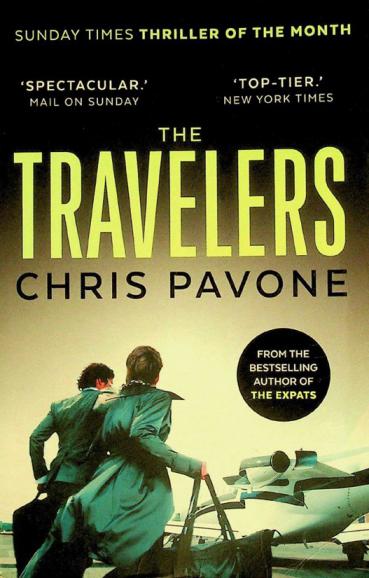
The travelers
When a woman with whom he has shared a harmless flirtation shows up at his hotel door with a gun, travel writer and food expert Will Rhodes discovers the real reason his job occasionally requires him to assume different names and deliver mysterious parcels.
Book

Wittgenstein and Johnson: Notes on a Neglected Appreciation
M. O’C. Drury and Norman Malcolm both report that Wittgenstein gave them copies of Samuel Johnson’s Prayers and Meditations, a book that he said he valued highly. Given that Wittgenstein’s commentators have mined the ideas of other religious thinkers he admired (Kierkegaard, Tolstoy, and so on) in order to illuminate his ambiguous thinking about religion, it is perhaps strange that this voiced appreciation of Johnson’s prayers has not been further investigated. The purpose of this paper is to correct that neglect. This is done by way of an exploration of the nature and content of Johnson’s prayers, and an analysis of how these prayers reflect the tormented state of Johnson’s mind and his concerns about indolence, death and judgment. Wittgenstein had noted that Malcolm would only like Johnson’s prayers if he looked at them “from the angle from which I see them”, something which in the context of his letter to Malcolm suggests the very “human” quality of these prayers, and their origin in Johnson’s personal struggles. A description of Wittgenstein’s own struggles (which mirror to some extent those of Johnson in their worries about indolence, judgment, and a guilt that requires confession) can then form the background to an understanding, not just of Wittgenstein’s personal spiritual state of mind, but of his philosophical account of religious belief and the turbulent human passions from which religion arises. Significant points of contact are noted between the respective thinking of Wittgenstein and Johnson, suggestive of new avenues of research that might profitably be explored.
Journal Article

Defiance : the extraordinary life of Lady Anne Barnard
\"Born in Scotland in 1772, Lady Anne Barnard lived at the heart of Georgian society. She wrote one of the most popular ballads of her day, captivated Sir Walter Scott with her poetry, rubbed shoulders with the Prince of Wales, and dazzled Samuel Johnson with her repartee. Lady Anne's charisma and talent were undeniable; she was well known as both a beauty and a wit. However, she was also seen as an eccentric--an artist defined by her defiance of convention ... Stephen Taylor draws on Lady Anne's private papers, including six volumes of her never-before-published memoirs, to construct a ... biography of her remarkable life\"--Amazon.com.
Book

E.M. Forster, Surrey, and the golden fleece
E.M. Forster's journals and diaries provide an overview of the English writer's literary and biographical relationship with Surrey, England. The two pageant plays he wrote while living in the county demonstrate the writer's appreciation for rural Surrey's beauty.
Journal Article

Hedging in the Results and Discussion Section of English Applied Linguistics Research Articles by Vietnamese and Foreign Writers
Hedging in academic writing in general and in research article (RA) in specific has a vital role in enabling writers to minimize their opposing claims and negotiate the meaning. Nevertheless, hedging can be different from one discipline to another and from culture to another. This study, therefore, aims at examining the deployment of hedges in the Results and Discussion (R-D) section of English Applied Linguistics (AL) RAs by Vietnamese writers and their foreign counterparts. Two corpora consisting of 30 RAs written by Vietnamese writers and the other 30 ones by foreign writers were collected. The results revealed that both Vietnamese and foreign writers deployed hedges in the R-D section of English AL RAs at a similar frequency. Moreover, they shared common senses of utilizing the hedges’ types and functions in the R-D section of English AL RAs. This study has confirmed that the norms and practices of the AL, a soft science, were common among non-native English writers regardless of their culture-bound.
Journal Article


Rasselas
This essay reads Samuel Johnson’s Rasselas (1759) against the background of negative or apophatic theology and argues that it is unique among Johnson’s works in expressing a sense of life as an enigma. The silent or hidden symbol of the story is the Giza Sphinx, one of the foundational symbols of such theology: the second-century Church Father Clement of Alexandria, whose works Johnson owned, associated the enigmas of the Hebrew Bible with the mystery of the Egyptian sphinxes. More widely, Rasselas contains absent objects and symbols, enigmatic silences and responses, hidden images and paradoxes, self-defeating dualisms and habits of style, apophatic philosophy (“philosophy can tell no more”), and an enigmatic conclusion (“nothing”). The apophatic quality is embodied in the text through what Jorge Luis Borges refers to as Rasselas’s “agile music,” the subtle, flexible management of narrative voices, which generates a distinctive kind of attention in the reader.
Journal Article

