
Catalogue Search | MBRL


Are you sure you want to remove the book from the shelf?

{{itemTitle}}
93
result(s) for
"Englishness"
Sort by:

The politics of Englishness
This book provides a digest of the debates about England and Englishness, as well as a unique perspective on those debates. Not only does it provide readers with ready access to and interpretation of the significant literature on ‘The English Question’, but it also enables them to make sense of the political, historical and cultural factors which constitute that question, addressing the condition of England in three interrelated parts. The first part looks at traditional narratives of the English polity and reads them as legends of political Englishness, of England as the exemplary exception, exceptional in its constitutional tradition and exemplary in its political stability. The second part considers how the decay of that legend has encouraged anxieties about English political identity, of how English identity can be recognised within the new complexity of British governance. The third part revisits these legends and anxieties, examining them in terms of the actual and metaphorical ‘locations’ of Englishness: regionalism, Europeanism and Britishness.
eBook

This England
This book is a response to a demand for a history which is no less social than political, investigating what it meant to be a citizen of England living through the 1570s and 1580s. It examines the growing conviction of ‘Englishness’ in the sixteenth century, through the rapidly developing English language; the reinforcement of cultural nationalism as a result of the Protestant Reformation; the national and international situation of England at a time of acute national catastrophe; and through Queen Elizabeth I, the last of her line, who remained unmarried throughout her reign, refusing to even discuss the succession to her throne. The book explores the conviction among leading Elizabethans that they were citizens and subjects, also responsible for the safety of their commonwealth. The tensions between this conviction, born from a childhood spent in the Renaissance classics and in the subjection to the Old Testament of the English Bible, and the dynastic claims of the Tudor monarchy, are all explored at length. Studies of a number of writers who fixed the image of sixteenth-century England for some time to come; Foxe, Camden and other pioneers of the discovery of England are also included.
eBook

The road to Brexit
This collection explores British attitudes to Continental Europe that explain the Brexit decision. Addressing British-European entanglements and the impact of British Euroscepticism, the book argues that Britain is in denial about the strength of its ties to Europe. The volume brings together literary and cultural studies, history, and political science in an integrated analysis of views and practices that shape cultural memory. Part one traces the historical and political relationship between Britain and Europe, whilst Part two is devoted to exemplary case studies of films as well as popular Eurosceptic and historical fiction. Part three engages with border mindedness and Britain’s island story. The book is addressed both to specialists in cultural studies, and a wider audience interested in Brexit.
eBook

Remapping Englishness in Peter Ackroyd’s Milton in America
Peter Ackroyd’s historiographic metafictional novel
(2006) entails a critical return to history – critical in the sense that it questions the essence of historical knowledge and revisits the past in order to comment on the politics of national identity. Beneath a façade of historicity, the novel explores the continuity of English cultural identity and narrates a fictional story that centres on the conflict of Catholicism and Protestantism in the context of post-Restoration emigration of Puritans from England to New England. The “old faith”, although marginalized, continued to exist in post-Reformation England. The novel ties the significance of Catholicism to a thorough sense of Englishness. Catholic faith is shown as an ancient anchor of English identity. Peter Ackroyd delves into the collective memory of his race in search of a sense of commonality, believing in the continuity of English national identity. Challenging humanist assumptions about historical authenticity, the novel calls into question the idea of religious homogeneity, offering a different narrative as equally valuable.
Journal Article

Unravelling Britishness
This piece follows Stuart Ward's Untied Kingdom as it traverses a collapsing British Empire and an increasingly disunited United Kingdom to tell the complex history of Britishness in retreat across the world, mainly between 1945 and the early twenty-first century. It reviews some of the shifting meanings of Britishness that Ward charts in different contexts, different territories and at different moments in this history and the dwindling resonance of Britishness almost everywhere. It reviews other main themes that thread through the book: language, migration, race, belonging and unbelonging, nationalism, violence, and the impact of imperialism and colonialism on cultures, societies and mindsets.
Journal Article

‘Yo’r a Stranger and a Foreigner’: Negotiating the Borders of Englishness in Elizabeth Gaskell’s North and South
This paper explores the relevance of borders in relation to Elizabeth Gaskell’s North and South, a novel which, from its title, invites to consider ideas of geographical, social, and cultural divisions, and the role and pertinence of borders, be they physical or imaginary. Elizabeth Gaskell’s novel, through its dichotomous representation of England, puts into light a cultural ‘battle’ between North and South, embodied by the growing tension between the main characters, John Thornton and Margaret Hale. This conflict puts forth not only economic and social concerns, but also the definition of national identity, and the prevalence of the most authentic version of Englishness. Through the union of Margaret and John, the depiction of the consequences of a partial understanding of others, and the emphasis on the dangers of overindulging in one’s local pride, the novel strives for national unity. The imaginary border between North and South is thus displaced in order to enlarge the definition of Englishness, so as to include local colour, without erasing cultural specificities. Gaskell suggests that a reconciliation between national unity—the cornerstone of Englishness—and seemingly opposed regional ideals can be achieved through the recognition of the Other’s value, and this Other has many faces in North and South.
Journal Article
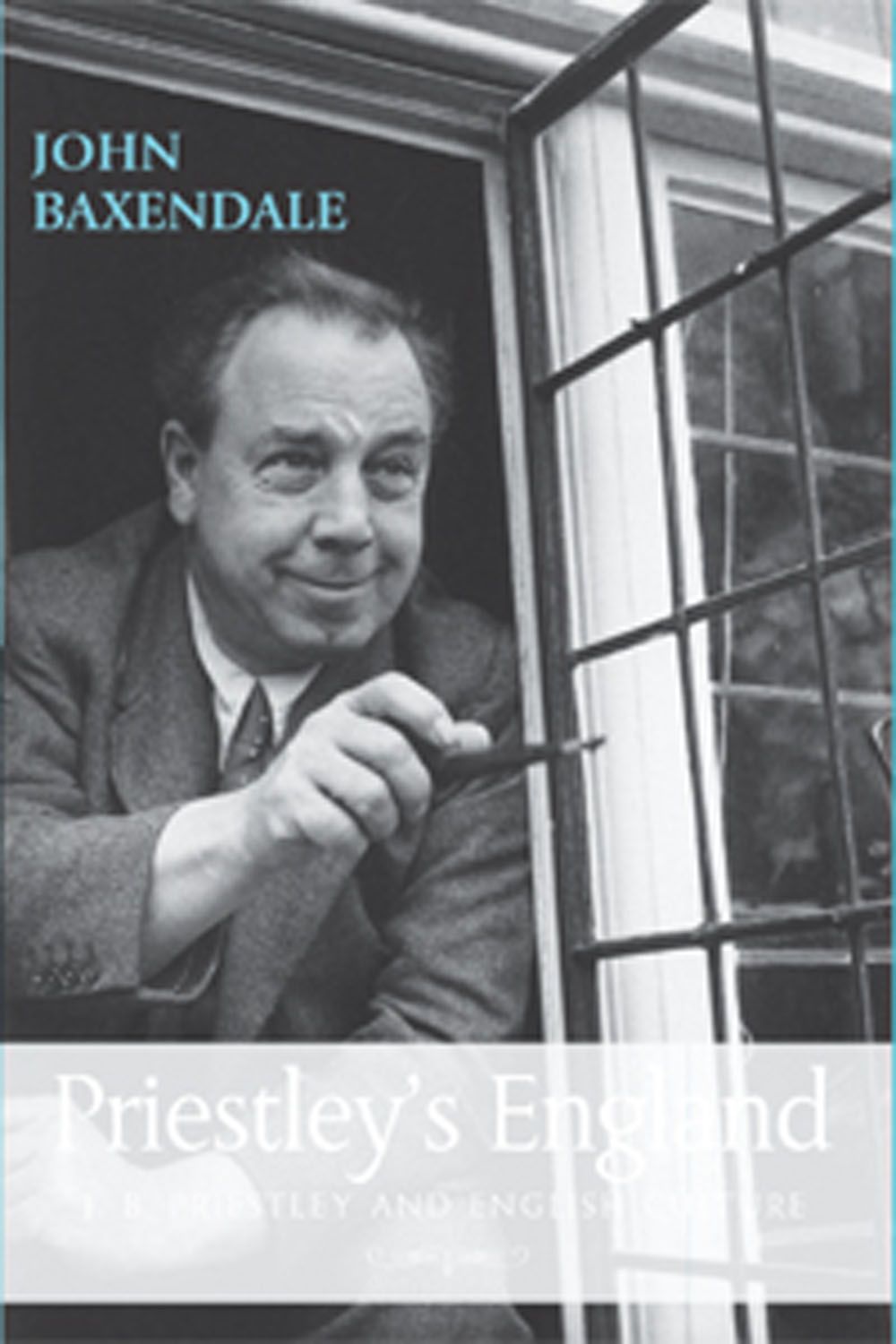
Priestley’s England
Priestley’s England is the first full-length academic study of J B Priestley - novelist, playwright, screen-writer, journalist and broadcaster, political activist, public intellectual and popular entertainer, one of the makers of twentieth-century Britain, and one of its sharpest critics. From his scathing analysis of a slump-stricken nation in the best-selling English Journey, to his popular wartime broadcasts which paved the way to 1945 and the welfare state, his post-war critique of ‘Admass’ and the Cold War (he was a co-founder of CND), and his continual engagement with the question of ‘Englishness’, Priestley addressed the key issues of the century from a radical standpoint in fiction, journalism and plays which appealed to a wide audience and made him one of the most successful writers of his day, in a career which spanned the 1920s and the 1980s.Priestley’s England explores the cultural, literary and political history of twentieth-century Britain through the themes which preoccupied Priestley throughout his life: competing versions of Englishness; tradition, modernity, and the decline of industrial England; ‘Americanisation’, mass culture and ‘Admass’; cultural values and ‘broadbrow’ culture; consumerism and the decay of the public sphere; the loss of spirituality and community in ‘the nervous excitement, the frenzy, the underlying despair of our century’. It argues that Priestley has been unjustly neglected for too long: we have a great deal to learn both from this extraordinary, multi-faceted man, and from the English radical tradition he represented.This book will appeal to all those interested in the culture and politics of twentieth-century Britain, in the continuing debates over ‘Englishness’ to which Priestley made such a key contribution, and in the life and work of one of the most remarkable and popular writers of the past century.
eBook
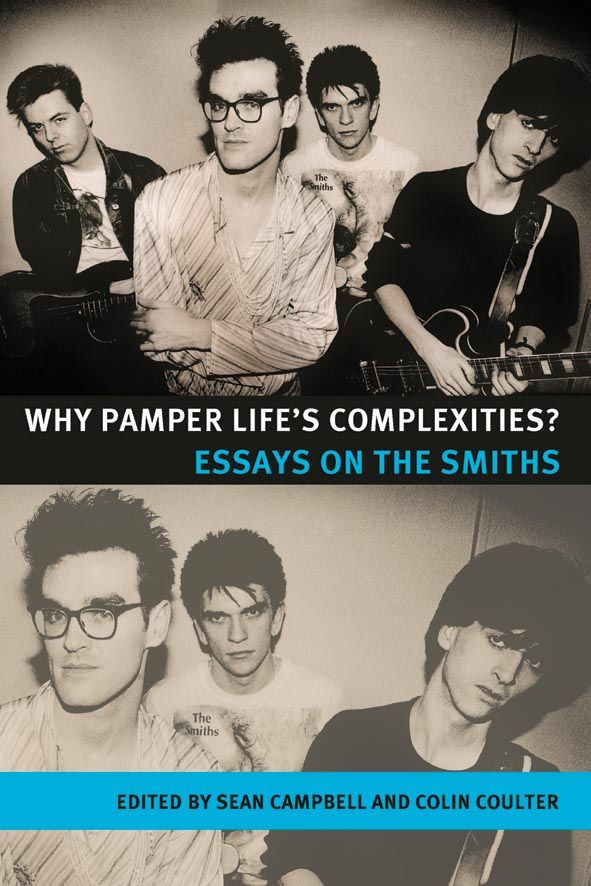
Why pamper life's complexities?
For five short years in the 1980s, a four-piece Manchester band released a collection of records that had undeniably profound effects on the landscape of popular music and beyond. Today, public and critical appreciation of The Smiths is at its height, yet the most important British band after The Beatles have rarely been subject to sustained academic scrutiny. Why pamper life’s complexities?: Essays on The Smiths seeks to remedy this by bringing together diverse research disciplines to place the band in a series of enlightening social, cultural and political contexts as never before.Topics covered by the essays range from class, sexuality, Catholicism, Thatcherism, regional and national identities, to cinema, musical poetics, suicide and fandom. Lyrics, interviews, the city of Manchester, cultural iconography and the cult of Morrissey are all considered anew. The essays breach the standard confines of music history, rock biography and pop culture studies to give a sustained critical analysis of the band that is timely and illuminating. This book will be of interest to scholars and students in the fields of sociology, literature, geography, cultural and media studies. It is also intended for a wider audience of those interested in the enduring appeal of one of the most complex and controversial bands. Accessible and original, these essays will help to contextualise the lasting cultural legacy of The Smiths.
eBook

An unnerving otherness: English nationalism and Rusedski’s smile
In view of scholarly work that has explored the socio-psycho significance of national performativity, the body and the “other,” this article critically analyses newspaper representations of the Canadian-born British tennis player Greg Rusedski. Drawing on Lacanian interpretations of the body, it illustrates how Rusedski’s media framing centered on a particular feature of his body – his “smile.” In doing so, we detail how Rusedski’s “post-imperial” Otherness – conceived as a form of “extimacy” (extimité) – complicated any clear delineation between “us” and “them,” positing instead a dialectical understanding of the splits, voids and contradictions that underscore the national “us.”
Journal Article
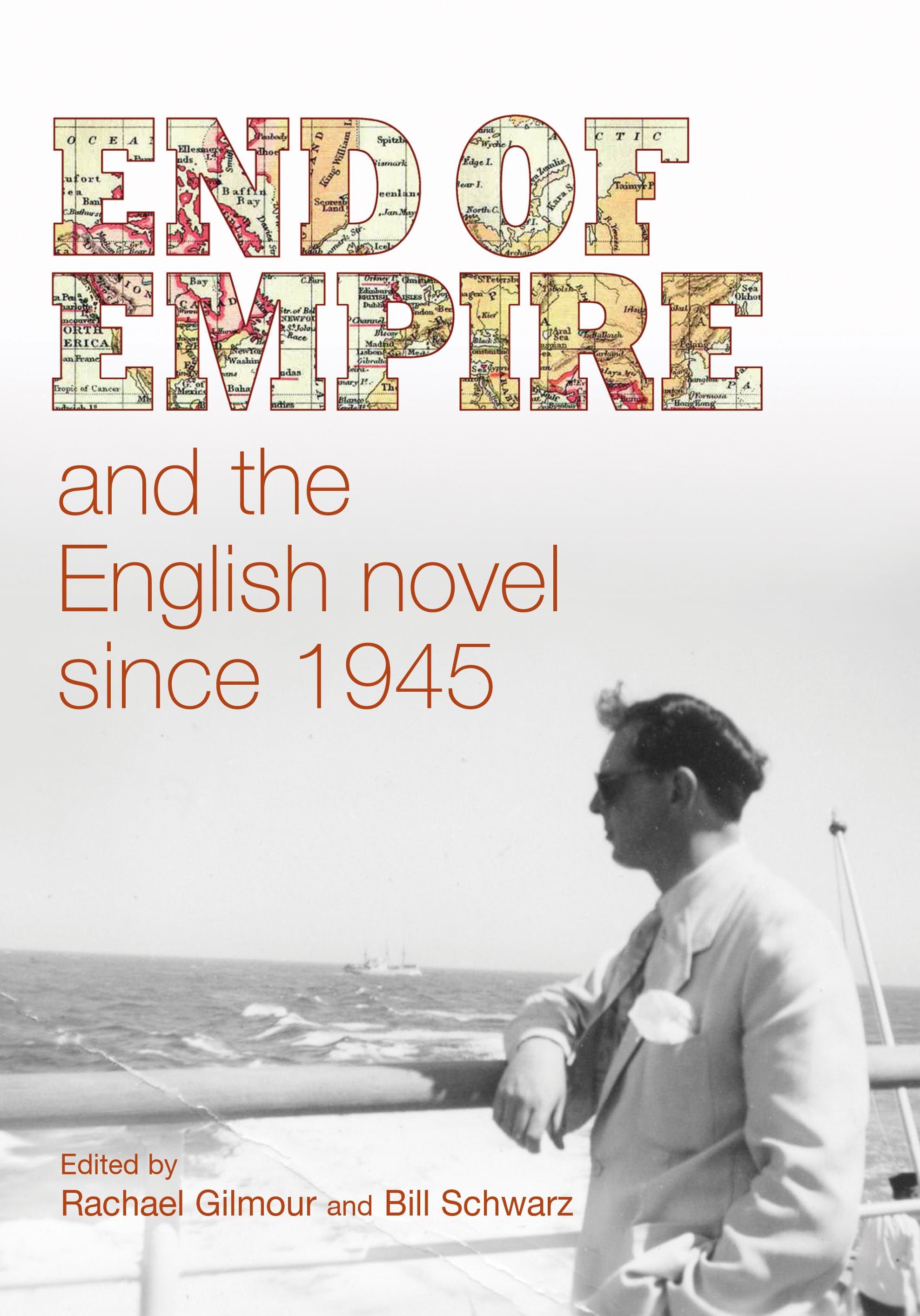
End of empire and the English novel since 1945
Available in paperback for the first time, this first book-length study explores the history of postwar England during the end of empire through a reading of novels which appeared at the time, moving from George Orwell and William Golding to Penelope Lively, Alan Hollinghurst and Ian McEwan. Particular genres are also discussed, including the family saga, travel writing, detective fiction and popular romances.All included reflect on the predicament of an England which no longer lies at the centre of imperial power, arriving at a fascinating diversity of conclusions about the meaning and consequences of the end of empire and the privileged location of the novel for discussing what decolonization meant for the domestic English population of the metropole. The book is written in an easy style, unburdened by large sections of abstract reflection. It endeavours to bring alive in a new way the traditions of the English novel.
eBook