
Catalogue Search | MBRL


Are you sure you want to remove the book from the shelf?

{{itemTitle}}
134
result(s) for
"Engravers"
Sort by:


The Syphilitic —Dürer’s Woodcut, a Pandemic Unveiled
In an age when science, astrology, and theology were inseparably intertwined, such a cosmological explanation sought to make sense of a disease perceived as either divine punishment or an apocalyptic omen. [...]Dürer’s composition serves not merely as a depiction of physical suffering but as a complex meditation on fate, human frailty, and the blurred boundaries between medical and metaphysical knowledge. Dürer’s woodcut captures the grotesque morphology and rapid dissemination of a novel pathogen whose biologic behavior defied both Galenic medicine and moral explanation (the interpretation of disease as both a natural imbalance of the bodily humors, according to Galenic medical theory, and as a consequence of moral or sinful behavior). Recent epidemiologic reports from the World Health Organization show a rising global incidence of syphilis and other sexually transmitted infections, particularly among young adults and marginalized populations.
Journal Article


Hotter droughts alter resource allocation to chemical defenses in piñon pine
Heat and drought affect plant chemical defenses and thereby plant susceptibility to pests and pathogens. Monoterpenes are of particular importance for conifers as they play critical roles in defense against bark beetles. To date, work seeking to understand the impacts of heat and drought on monoterpenes has primarily focused on young potted seedlings, leaving it unclear how older age classes that are more vulnerable to bark beetles might respond to stress. Furthermore, we lack a clear picture of what carbon resources might be prioritized to support monoterpene synthesis under drought stress. To address this, we measured needle and woody tissue monoterpene concentrations and physiological variables simultaneously from mature piñon pines (Pinus edulis) from a unique temperature and drought manipulation field experiment. While heat had no effect on total monoterpene concentrations, trees under combined heat and drought stress exhibited ~ 85% and 35% increases in needle and woody tissue, respectively, over multiple years. Plant physiological variables like maximum photosynthesis each explained less than 10% of the variation in total monoterpenes for both tissue types while starch and glucose + fructose measured 1-month prior explained ~ 45% and 60% of the variation in woody tissue total monoterpene concentrations. Although total monoterpenes increased under combined stress, some key monoterpenes with known roles in bark beetle ecology decreased. These shifts may make trees more favorable for bark beetle attack rather than well defended, which one might conclude if only considering total monoterpene concentrations. Our results point to cumulative and synergistic effects of heat and drought that may reprioritize carbon allocation of specific non-structural carbohydrates toward defense.
Journal Article

A taxonomic monograph of Nearctic Scolytus Geoffroy (Coleoptera, Curculionidae, Scolytinae)
The Nearctic bark beetle genus Scolytus Geoffroy was revised based in part on a molecular and morphological phylogeny. Monophyly of the native species was tested using mitochondrial (COI) and nuclear (28S, CAD, ArgK) genes and 43 morphological characters in parsimony and Bayesian phylogenetic analyses. Parsimony analyses of molecular and combined datasets provided mixed results while Bayesian analysis recovered most nodes with posterior probabilities >90%. Native hardwood- and conifer-feeding Scolytus species were recovered as paraphyletic. Native Nearctic species were recovered as paraphyletic with hardwood-feeding species sister to Palearctic hardwood-feeding species rather than to native conifer-feeding species. The Nearctic conifer-feeding species were monophyletic. Twenty-five species were recognized. Four new synonyms were discovered: Scolytuspraeceps LeConte, 1868 (= Scolytusabietis Blackman, 1934; = Scolytusopacus Blackman, 1934), Scolytusreflexus Blackman, 1934 (= Scolytusvirgatus Bright, 1972; = Scolytuswickhami Blackman, 1934). Two species were reinstated: Scolytusfiskei Blackman, 1934 and Scolytussilvaticus Bright, 1972. A diagnosis, description, distribution, host records and images were provided for each species and a key is presented to all species.
Journal Article
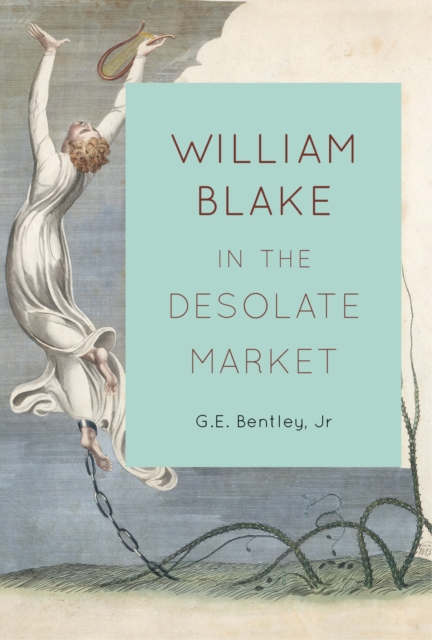
William Blake in the Desolate Market
Experience taught William Blake that \"Wisdom is sold in the desolate market where none come to buy.\" His brilliant achievements as a poet, painter, and engraver brought him public notice, but little income. William Blake in the Desolate Market records how Blake, the most original of all the major English poets, earned his living. G.E. Bentley Jr, the dean of Blake scholars, details the poet's occupations as a commercial engraver, print-seller, teacher, copperplate printer, painter, publisher, and vendor of his own books. In his early career as a commercial engraver, Blake was modestly prosperous, but thereafter his fortunes declined. For his most ambitious commercial designs, he made hundreds of folio designs and scores of engravings, but was paid scarcely more than twenty pounds for two or three years' work. His invention of illuminated printing lost money, and many of his greatest works, such as Jerusalem, were left unsold at his death. He came to believe that his \"business is not to gather gold, but to make glorious shapes.\" William Blake in the Desolate Market is an investigation of Blake's labours to support himself by his arts. The changing prices of his works, his costs and receipts, as well as his patrons and employers are expertly gathered and displayed to show the material side of the artistic career in Britain's Romantic period.
eBook

Recent bark beetle outbreaks influence wildfire severity in mixed-conifer forests of the Sierra Nevada, California, USA
In temperate forests, elevated frequency of drought related disturbances will likely increase the incidence of interactions between disturbances such as bark beetle epidemics and wildfires. Our understanding of the influence of recent drought and insect-induced tree mortality on wildfire severity has largely lacked information from forests adapted to frequent fire. A recent unprecedented tree mortality event in California’s Sierra Nevada provides an opportunity to examine this disturbance interaction in historically frequent-fire forests. Using field data collected within areas of recent tree mortality that subsequently burned in wildfire, we examined whether and under what conditions wildfire severity relates to severity of prefire tree mortality in Sierra Nevada mixed-conifer forests. We collected data on 180 plots within the 2015 Rough Fire and 2016 Cedar Fire footprints (California, USA). Our analyses identified prefire tree mortality as influential on all measures of wildfire severity (basal area killed by fire, RdNBR, and canopy torch) on the Cedar Fire, although it was less influential than fire weather (relative humidity). Prefire tree mortality was influential on two of three fire-severity measures on the Rough Fire, and was the most important predictor of basal area killed by fire; topographic position was influential on two metrics. On the Cedar Fire, the influence of prefire mortality on basal area killed by fire was greater under milder weather conditions. All measures of fire severity increased as prefire mortality increased up to prefire mortality levels of approximately 30–40%; further increases did not result in greater fire severity. The interacting disturbances shifted a pine-dominated system (Rough Fire) to a cedar–pine–fir system, while the pre-disturbance fir–cedar system (Cedar Fire) saw its dominant species unchanged. Managers of historically frequent-fire forests will benefit from utilizing this information when prioritizing fuels reduction treatments in areas of recent tree mortality, as it is the first empirical study to document a relationship between prefire mortality and subsequent wildfire severity in these systems. This study contributes to a growing body of evidence that the influence of prefire tree mortality on wildfire severity in temperate coniferous forests may depend on other conditions capable of driving extreme wildfire behavior, such as weather.
Journal Article

Acetophenone and Green Leaf Volatiles Do Not Enhance the Efficacy of Verbenone for Inhibiting Attraction of Ips pini (Coleoptera: Curculionidae) to Pheromone-baited Traps in Northern Arizona
We assessed attraction of pine engraver, Ips pini (Say) (Coleoptera: Curculionidae; Scolytinae), to pheromone-baited funnel traps treated with repellent semiochemicals in ponderosa pine, Pinus ponderosa var. scopulorum Engelm., forests in northern Arizona. Treatments included: 1) baited control (B, ipsdienol + lanierone), 2) 70 g of SPLAT Verb (a flowable, biodegradable formulation containing 10% verbenone, ISCA Technologies Inc., Riverside, CA, USA) + B, 3) 70 g of SPLAT Verb + (E)-2-hexen-1-ol+(Z)-2-hexen-1-ol + acetophenone + B, 4) 7.84-g verbenone pouch (Product #3413, Synergy Semiochemicals Corp., Delta, British Columbia, Canada) + B, and 5) 7.84-g verbenone pouch + (E)-2-hexen-1-ol+(Z)-2-hexen-1-ol + acetophenone + B. In total, 472 I. pini were collected. Trap catches were highest in baited traps and declined significantly with the addition of both formulations of verbenone. Traps treated with SPLAT Verb caught significantly fewer I. pini and male I. pini than those treated with verbenone pouches. The addition of (E)-2-hexen-1-ol+(Z)-2-hexen-1-ol + acetophenone to SPLAT Verb and the verbenone pouch had no effect on trap catch. Verbenone has potential as an effective tool for protecting P. ponderosa trees and slash from I. pini in northern Arizona, but the addition of (E)-2-hexen-1-ol+(Z)-2-hexen-1-ol + acetophenone to verbenone is unwarranted.
Journal Article

The Comstocks of Cornell—The Definitive Autobiography
The Comstocks of Cornell is the autobiography written
by the naturalist educator Anna Botsford Comstock about her life
and that of her husband, the entomologist John Henry Comstock-both
prominent figures in the scientific community and in Cornell
University history.
A first edition was published in 1953, but it omitted key
Cornellians, historical anecdotes, and personal insights. In this
twenty-first-century edition, Karen Penders St. Clair restores the
author's voice by reconstructing the entire manuscript as Anna
Comstock wrote it-and thereby preserves Comstock's memories of the
personal and professional lives of the couple as she originally
intended. The book includes an epilogue documenting the Comstocks'
last years and fills in gaps from the 1953 edition. Described as
serious legacy work, this book is an essential part of the history
of both Cornell University and its press.
eBook