
Catalogue Search | MBRL


Are you sure you want to remove the book from the shelf?

{{itemTitle}}
520
result(s) for
"Enlightenment France."
Sort by:


The Military Enlightenment
The Military Enlightenment brings to light a radically
new narrative both on the Enlightenment and the French armed forces
from Louis XIV to Napoleon. Christy Pichichero makes a striking
discovery: the Geneva Conventions, post-traumatic stress disorder,
the military \"band of brothers,\" and soldierly heroism all found
their antecedents in the eighteenth-century French armed
forces.
Readers of The Military Enlightenment will be startled
to learn of the many ways in which French military officers,
administrators, and medical personnel advanced ideas of human and
political rights, military psychology, and social justice.
eBook

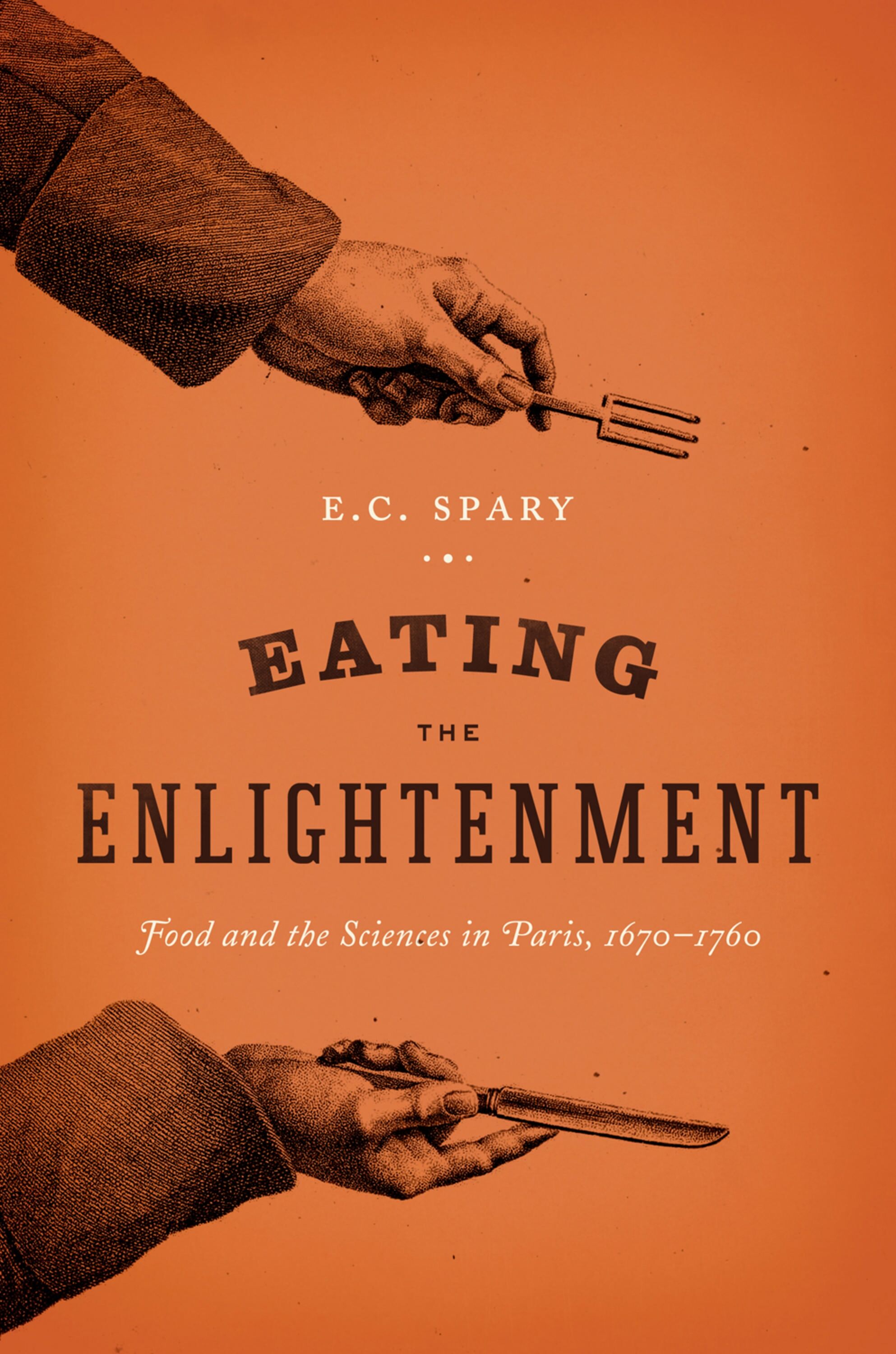
Eating the Enlightenment
Eating the Enlightenment offers a new perspective on the history of food, looking at writings about cuisine, diet, and food chemistry as a key to larger debates over the state of the nation in Old Regime France. Embracing a wide range of authors and scientific or medical practitioners—from physicians and poets to philosophes and playwrights—E. C. Spary demonstrates how public discussions of eating and drinking were used to articulate concerns about the state of civilization versus that of nature, about the effects of consumption upon the identities of individuals and nations, and about the proper form and practice of scholarship. En route, Spary devotes extensive attention to the manufacture, trade, and eating of foods, focusing upon coffee and liqueurs in particular, and also considers controversies over specific issues such as the chemistry of digestion and the nature of alcohol. Familiar figures such as Fontenelle, Diderot, and Rousseau appear alongside little-known individuals from the margins of the world of letters: the draughts-playing café owner Charles Manoury, the \"Turkish envoy\" Soliman Aga, and the natural philosopher Jacques Gautier d'Agoty. Equally entertaining and enlightening, Eating the Enlightenment will be an original contribution to discussions of the dissemination of knowledge and the nature of scientific authority.
eBook

The French enlightenment and the emergence of modern cynicism
\"Sharon A. Stanley analyzes cynicism from a political-theoretical perspective, arguing that cynicism isn't unique to our time. Instead, she posits that cynicism emerged in the works of French Enlightenment philosophers, such as Jean-Jacques Rousseau and Denis Diderot. She explains how eighteenth-century theories of epistemology, nature, sociability, and commerce converged to form a recognizably modern form of cynicism, foreshadowing postmodernism. While recent scholarship and popular commentary has depicted cynicism as threatening to healthy democracies and political practices, Stanley argues instead that the French philosophes reveal the possibility of a democratically hospitable form of cynicism\"--Provided by publisher.
Book

Brotherly Love
Friendship, an acquired relationship primarily based on choice rather than birth, lay at the heart of Enlightenment preoccupations with sociability and the formation of the private sphere. InBrotherly Love, Kenneth Loiselle argues that Freemasonry is an ideal arena in which to explore the changing nature of male friendship in Enlightenment France. Freemasonry was the largest and most diverse voluntary organization in the decades before the French Revolution. At least fifty thousand Frenchmen joined lodges, the memberships of which ranged across the social spectrum from skilled artisans to the highest ranks of the nobility. Loiselle argues that men were attracted to Freemasonry because it enabled them to cultivate enduring friendships that were egalitarian and grounded in emotion.
Drawing on scores of archives, including private letters, rituals, the minutes of lodge meetings, and the speeches of many Freemasons, Loiselle reveals the thought processes of the visionaries who founded this movement, the ways in which its members maintained friendships both within and beyond the lodge, and the seemingly paradoxical place women occupied within this friendship community. Masonic friendship endured into the tumultuous revolutionary era, although the revolutionary leadership suppressed most of the lodges by 1794. Loiselle not only examines the place of friendship in eighteenth-century society and culture but also contributes to the history of emotions and masculinity, and the essential debate over the relationship between the Enlightenment and the French Revolution.
eBook


Suffering Scholars
As early as Aristotle's Problem XXX , intellectual
superiority has been linked to melancholy. The association between
sickness and genius continued to be a topic for discussion in the
work of early modern writers, most recognizably in Robert Burton's
The Anatomy of Melancholy . But it was not until the
eighteenth century that the phenomenon known as the \"suffering
scholar\" reached its apotheosis, a phenomenon illustrated by the
popularity of works such as Samuel-Auguste Tissot's De la santé
des gens de lettres , first published in 1768. Though hardly
limited to French-speaking Europe, the link between mental endeavor
and physical disorder was embraced with particular vigor there, as
was the tendency to imbue intellectuals with an aura of otherness
and detachment from the world. Intellectuals and artists were
portrayed as peculiarly susceptible to altered states of health as
well as psyche-the combination of mental intensity and somatic
frailty proved both the privileges and the perils of
knowledge-seeking and creative endeavor.
In Suffering Scholars , Anne C. Vila focuses on the
medical and literary dimensions of the cult of celebrity that
developed around great intellectuals during the French
Enlightenment. Beginning with Tissot's work, which launched a
subgenre of health advice aimed specifically at scholars, she
demonstrates how writers like Voltaire, Diderot, Rousseau, and Mme
de Staël, responded to the \"suffering scholar\" syndrome and helped
to shape it. She traces the ways in which this syndrome influenced
the cultural perceptions of iconic personae such as the
philosophe , the solitary genius, and the learned lady. By
showing how crucial the so-called suffering scholar was to debates
about the mind-body relation as well as to sex and sensibility,
Vila sheds light on the consequences book-learning was thought to
have on both the individual body and the body politic, not only in
the eighteenth century but also into the decades following the
Revolution.
eBook


Modes of Play in Eighteenth-Century France
Collecting diverse critical perspectives on the topic of play—from dolls, bilboquets, and lotteries, to writing itself—this volume offers new insights into how play was used to represent and reimagine the world in eighteenth-century France. In documenting various modes of play, contributors theorize its relation to law, religion, politics, and economics. Equally important was the role of “play” in plays, and the function of theatrical performance in mirroring, and often contesting, our place in the universe. These essays remind us that the spirit of play was very much alive during the “Age of Reason,” providing ways for its practitioners to consider more “serious” themes such as free will and determinism, illusions and equivocations, or chance and inequality. Standing at the intersection of multiple intellectual avenues, this is the first comprehensive study in English devoted to the different guises of play in Enlightenment France, certain to interest curious readers across disciplinary backgrounds.
eBook