
Catalogue Search | MBRL


Are you sure you want to remove the book from the shelf?

{{itemTitle}}
37
result(s) for
"Enslaved persons Fiction."
Sort by:
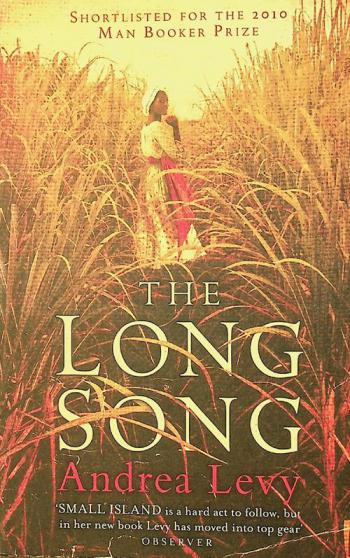
The long song
The child of a field slave on the Amity sugar plantation in Jamaica, July lives with her mother until a recently transplanted English widow decides to move her into the great house and rename her. She remains bound to the plantation despite her \"freedom.\" The arrival of a young English overseer dramatically changes life in the great house.

Uncle Tom's Cabin
The most controversial antislavery novel written in antebellum America, and a best-seller of the 19th century, this novel is credited with intensifying sectional conflict leading to the Civil War. In his introduction, Bromwich places the book in its Victorian contexts and reminds us why it is an enduring work of literary and moral imagination.
eBook


The Age of Phillis
\"An arresting and meticulously researched collection of poems\" about the life of Phillis Wheatley, the first black woman to publish a book in America ( Ms.Magazine ). In 1773, a young African American woman named Phillis Wheatley published a book of poetry, Poems on various Subjects, Religious and Moral (1773).
eBook

River sing me home
\"Rare. Moving. Powerful. This beautiful, page-turning and redemptive story of a mother's gripping journey across the Caribbean to find her stolen children in the aftermath of slavery marks the arrival of a remarkable new talent. Her search begins with an ending.... The master of the Providence plantation in Barbados gathers his slaves and announces the king has decreed an end to slavery. As of the following day, the Emancipation Act of 1834 will come into effect. The cries of joy fall silent when he announces that they are no longer his slaves; they are now his apprentices. No one can leave. They must work for him for another six years. Freedom is just another name for the life they have always lived. So Rachel runs. Away from Providence, she begins a desperate search to find her children-the five who survived birth and were sold. Are any of them still alive? Rachel has to know. The grueling, dangerous journey takes her from Barbados then, by river, deep into the forest of British Guiana and finally across the sea to Trinidad. She is driven on by the certainty that a mother cannot be truly free without knowing what has become of her children, even if the answer is more than she can bear. These are the stories of Mary Grace, Micah, Thomas Augustus, Cherry Jane and Mercy. But above all this is the story of Rachel and the extraordinary lengths to which a mother will go to find her children...and her freedom.\"-- Provided by publisher.
Book

Neither Fugitive nor Free
Part of the American Literatures Initiative Series Neither
Fugitive nor Free draws on the freedom suit as recorded in the
press and court documents to offer a critically and historically
engaged understanding of the freedom celebrated in the literary and
cultural histories of transatlantic abolitionism. Freedom suits
involved those enslaved valets, nurses, and maids who accompanied
slaveholders onto free soil. Once brought into a free jurisdiction,
these attendants became informally free, even if they were taken
back to a slave jurisdiction-at least according to abolitionists
and the enslaved themselves. In order to secure their freedom
formally, slave attendants or others on their behalf had to bring
suit in a court of law. Edlie Wong critically recuperates these
cases in an effort to reexamine and redefine the legal construction
of freedom, will, and consent. This study places such historically
central anti-slavery figures as Frederick Douglass, Olaudah
Equiano, and William Lloyd Garrison alongside such lesser-known
slave plaintiffs as Lucy Ann Delaney, Grace, Catharine Linda, Med,
and Harriet Robinson Scott. Situated at the confluence of literary
criticism, feminism, and legal history, Neither Fugitive nor Free
presents the freedom suit as a \"new\" genre to African American and
American literary studies.
eBook

Flags on the bayou
In the fall of 1863, the Union army is in control of the Mississippi river. Much of Louisiana, including New Orleans and Baton Rouge, is occupied. The Confederate army is retreating toward Texas, and being replaced by Red Legs, irregulars commanded by a maniacal figure, and enslaved men and women are beginning to glimpse freedom. When Hannah Laveau, an enslaved woman working on the Lufkin plantation, is accused of murder, she goes on the run with Florence Milton, an abolitionist schoolteacher, dodging the local constable and the slavecatchers that prowl the bayous. Wade Lufkin, haunted by what he observed-and did-as a surgeon on the battlefield, has returned to his uncle's plantation to convalesce, where he becomes enraptured by Hannah.
Book

Exhibiting Slavery
Exhibiting Slaveryexamines the ways in which Caribbean postmodern historical novels about slavery written in Spanish, English, and French function as virtual museums, simultaneously showcasing and curating a collection of \"primary documents\" within their pages. As Vivian Nun Halloran attests, these novels highlight narrative \"objects\" extraneous to their plot-such as excerpts from the work of earlier writers, allusions to specific works of art, the uniforms of maroon armies assembled in preparation of a military offensive, and accounts of slavery's negative impact on the traditional family unit in Africa or the United States. In doing so, they demand that their readers go beyond the pages of the books to sort out fact from fiction and consider what relationship these featured \"objects\" have to slavery and to contemporary life. The self-referential function of these texts produces a \"museum effect\" that simultaneously teaches and entertains their readers, prompting them to continue their own research beyond and outside the text.
eBook

Pro-slavery Psychiatry and Psychological Costs of Black Women’s Enslavement in Harriet Jacobs’s Incidents in the Life of a Slave Girl (1861)
With careful attention to nineteenth-century race science's psychiatric discourses about slavery and insanity that led to the management and containment of African Americans in or on plantations, asylums, and society writ large, this article examines various themes, narrative sketches and intertextualities in Incidents that illustrate Harriet Jacobs's theoretical conceptions about the devastating mental harm caused by forms of violence that were integral to the practice of slavery vis-à-vis black women-sexualized violence, forced and controlled reproduction, separation from children between and within plantations, runaway attempts, witnessing violence, and hazardous labor conditions. I argue that Jacobs's narrative troubles visions of resiliency and resistance during slavery that elide the impact of the institution's routinized violence. It demonstrates that enslaved women's embodied experiences of psychological suffering were vexed, multilayered, and ongoing.
Journal Article

The Poetics and Politics of the American Gothic
Taking as its point of departure recent insights about the performative nature of genre, The Poetics and Politics of the American Gothic challenges the critical tendency to accept at face value that gothic literature is mainly about fear. Instead, Agnieszka Soltysik Monnet argues that the American Gothic, and gothic literature in general, is also about judgment: how to judge and what happens when judgment is confronted with situations that defy its limits. Poe, Hawthorne, Melville, Gilman, and James all shared a concern with the political and ideological debates of their time, but tended to approach these debates indirectly. Thus, Monnet suggests, while slavery and race are not the explicit subject matter of antebellum works by Poe and Hawthorne, they nevertheless permeate it through suggestive analogies and tacit references. Similarly, Melville, Gilman, and James use the gothic to explore the categories of gender and sexuality that were being renegotiated during the latter half of the century. Focusing on \"The Fall of the House of Usher,\" The Marble Faun, Pierre, The Turn of the Screw, and \"The Yellow Wallpaper,\" Monnet brings to bear minor texts by the same authors that further enrich her innovative readings of these canonical works. At the same time, her study persuasively argues that the Gothic's endurance and ubiquity are in large part related to its being uniquely adapted to rehearse questions about judgment and justice that continue to fascinate and disturb.
Contents: Introduction; Unreliable narrators and 'unnatural sensations': irony and conscience in Edgar Allan Poe; 'Everywhere ... a cross - and nastiness at the foot of it': history, ethics, and slavery in Nathaniel Hawthorne's The Marble Faun; 'Thy catching nobleness unsexes me, my brother': queer knowledge in Herman Melville's Pierre; 'I was queer company enough - quite as queer as the company I received': the queer Gothic of Henry James and Charlotte Perkins Gilman; Bibliography; Index.
Agnieszka Soltysik Monnet is Assistant Professor of American Literature at the University of Lausanne, Switzerland.
eBook