
Catalogue Search | MBRL


Are you sure you want to remove the book from the shelf?

{{itemTitle}}
36,207
result(s) for
"Enterprise zones."
Sort by:

Special economic zones : progress, emerging challenges, and future directions
Ask three people to describe a special economic zone (SEZ) and three very different images may emerge. The first person may describe a fenced-in industrial estate in a developing country, populated by footloose multinational corporations (MNCs) enjoying tax breaks, with laborers in garment factories working in substandard conditions. In contrast, the second person may recount the 'miracle of Shenzhen,' a fishing village transformed into a cosmopolitan city of 14 million, with per capita gross domestic product (GDP) growing 100-fold, in the 30 years since it was designated as an SEZ. A third person may think about places like Dubai or Singapore, whose ports serve as the basis for wide range of trade- and logistics-oriented activities. In this book, the author use SEZ as a generic expression to describe the broad range of modern economic zones discussed in this book. But we are most concerned with two specific forms of those zones: (1) the export processing zones (EPZs) or free zones, which focus on manufacturing for export; and (2) the large-scale SEZs, which usually combine residential and multiuse commercial and industrial activity. The former represents a traditional model used widely throughout the developing world for almost four decades. The latter represents a more recent form of economic zone, originating in the 1980s in China and gaining in popularity in recent years. Although these models need not be mutually exclusive (many SEZs include EPZ industrial parks within them), they are sufficiently different in their objectives, investment requirements, and approach to require a distinction in this book.
eBook

Collaborative governance for urban revitalization : lessons from empowerment zones
The authors confront the puzzle of why the outcomes achieved by the original Empowerment Zones varied so widely given that each city had the same set of federal policy tools and resources and comparable neighborhood characteristics. Their analysis shows that revitalization outcomes are best explained by the quality of local governance.
Book
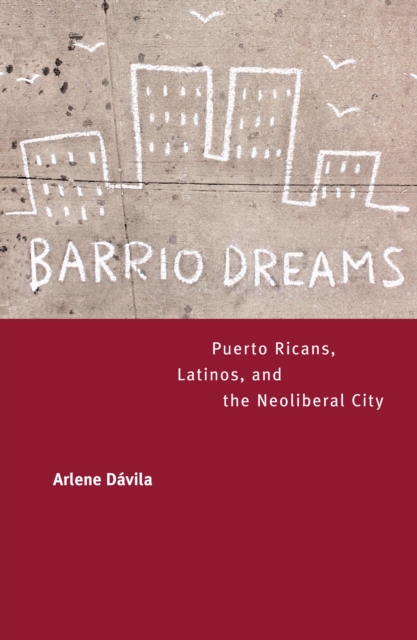
Barrio Dreams
Arlene Dávila brilliantly considers the cultural politics of urban space in this lively exploration of Puerto Rican and Latino experience in New York, the global center of culture and consumption, where Latinos are now the biggest minority group. Analyzing the simultaneous gentrification and Latinization of what is known as El Barrio or Spanish Harlem,Barrio Dreamsmakes a compelling case that-despite neoliberalism's race-and ethnicity-free tenets-dreams of economic empowerment are never devoid of distinct racial and ethnic considerations. Dávila scrutinizes dramatic shifts in housing, the growth of charter schools, and the enactment of Empowerment Zone legislation that promises upward mobility and empowerment while shutting out many longtime residents. Foregrounding privatization and consumption, she offers an innovative look at the marketing of Latino space. She emphasizes class among Latinos while touching on black-Latino and Mexican-Puerto Rican relations. Providing a unique multifaceted view of the place of Latinos in the changing urban landscape,Barrio Dreamsis one of the most nuanced and original examinations of the complex social and economic forces shaping our cities today.
eBook

The Neighborhood Effects of a Place-Based Policy—Causal Evidence from Atlanta’s Economic Development Priority Areas
Place-based policies refer to government efforts to enhance the economic performance of an area within its jurisdiction. Applying various difference in differences strategies, this study evaluates the neighborhood effects of a place-based policy—the Economic Development Priority Areas (EDPA) of Atlanta, Georgia, USA. Since the census block groups are locally defined and the boundaries may change over time, we defined the neighborhoods by creating a set of 0.25-mile- diameter circles evenly distributed across Atlanta, and used the created buffers as the comparison unit. The empirical estimates showed that EDPA designation significantly reduced poverty rate and increased housing price of EDPA neighborhoods but had no beneficial effects on population size and employment rate. The heterogeneous analysis with respect to different initial economic status of the neighborhoods showed a relative larger and significant effect of EDPA designation on low-income neighborhoods. The increasing labor demand induced by EDPA designation in low-income neighborhoods attracted more population to migrate in and put upward pressure on housing prices. The estimation results are robust when replacing the 0.25-mile-diameter circle neighborhoods with 0.5-mile-diameter circle neighborhoods. Although we found some positive effects of the EDPA program in Atlanta, it would be misguided to assume similar effects occur in other areas implementing place-based policies.
Journal Article
Building engines for growth and competitiveness in China : experience with special economic zones and industrial clusters
China's meteoric economic rise over the past three decades is an unprecedented \"growth miracle\" in human history. Since the Open Door policy and reforms that began in 1978, China's gross domestic product (GDP) has been growing at an average annual rate of more than 9 percent, with its global share increasing from 1 percent in 1980 to almost 6.5 percent in 2008 and its per capita GDP increasing from US$193 to US$3,263. Total exports have been growing at an average annual rate of 13 percent (21.5 percent from 1998 to 2007), with China's share of total exports increasing from 1.7 percent in 1980 to 9.5 percent in 2008. In 2007, China's incremental growth in real GDP actually exceeded its entire real GDP in 1979. In 2010, China is set to outpace Japan and become the world's second-largest economy. China has indisputably become an important growth engine of the global economy and a leader in international trade and investment. Rapid growth in the past decades has helped lift more than 400 million people out of poverty. These results are truly impressive. While China's rapid rise has become a hot topic for development debate among policy makers, business people, and scholars all over the world, the numerous special economic zones (SEZs) and industrial clusters that have sprung up since the reforms are undoubtedly two important engines for driving the country's growth.
eBook

The Political Economy of Local Government Enterprise Zone Designation
This study utilizes Cox proportional hazards modeling to examine the political and economic factors influencing local government enterprise zone designation in Illinois. Extending congressional dominance model literature to state legislatures, the findings support the importance of state legislators in driving policy benefits to their districts. Counties represented by a bill sponsor were 6.67 times more likely to receive an enterprise zone designation compared to a county not represented by a bill sponsor. However, the enterprise zones were designated in counties with a higher-than-average unemployment rate suggesting those counties in economic need were more likely to receive the intended benefit. Each unit difference in a higher unemployment rate compared to the state average means a county would be two times more likely to receive an enterprise zone designation.
Journal Article

Knowledge, technology, and cluster-based growth in Africa
Africa is on the move, demonstrating in recent years a significant potential for economic growth. Although the region still faces many challenges, it is also generating pockets of economic vitality in the form of enterprise clusters that are contributing to national, regional, and local productivity. Through case examples from Ghana, Kenya, Mauritius, Nigeria, South Africa, Tanzania, and Uganda, this book provides an understanding of how these dynamic enterprise clusters were formed and have evolved, and how knowledge, human capital, and technology have contributed to their success.
eBook

Collaborative Governance for Urban Revitalization
For more than one hundred years, governments have grappled with the complex problem of how to revitalize distressed urban areas. In 1995, the original urban Empowerment Zones (Atlanta, Baltimore, Chicago, Detroit, New York, and Philadelphia) each received a $100 million federal block grant and access to a variety of market-oriented policy tools to support the implementation of a ten-year strategic plan to increase economic opportunities and promote sustainable community development in high-poverty neighborhoods. In Collaborative Governance for Urban Revitalization, Michael J. Rich and Robert P. Stoker confront the puzzle of why the outcomes achieved by the original Empowerment Zones varied so widely given that each city had the same set of federal policy tools and resources and comparable neighborhood characteristics.
The authors' analysis, based on more than ten years of field research in Atlanta and Baltimore and extensive empirical analysis of EZ processes and outcomes in all six cities shows that revitalization outcomes are best explained by the quality of local governance. Good local governance makes positive contributions to revitalization efforts, while poor local governance retards progress. While policy design and contextual factors are important, how cities craft and carry out their strategies are critical determinants of successful revitalization. Rich and Stoker find that good governance is often founded on public-private cooperation, a stance that argues against both the strongest critics of neoliberalism (who see private enterprise as dangerous in principle) and the strongest opponents of liberalism (who would like to reduce the role of government).
eBook
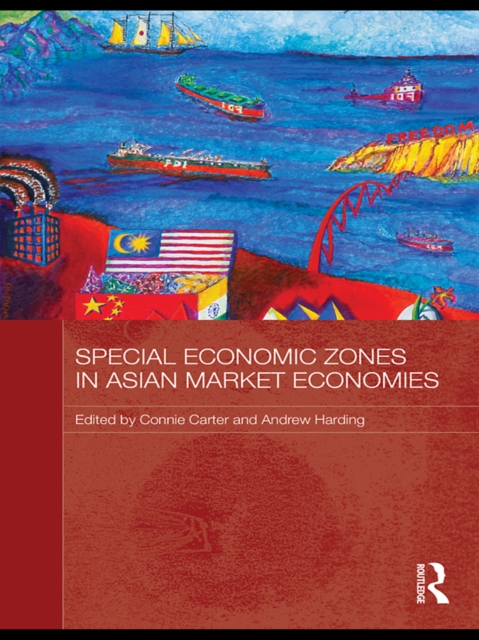
Special Economic Zones in Asian Market Economies
Special Economic Zones (SEZs) have proliferated rapidly during the past decade and are set to multiply in the next – embracing not only Asia and Europe but also Africa and the Americas. This book is the first to examine the Asian experience of SEZs in China, India, Malaysia and the Philippines. SEZs are usually clearly defined geographic areas in which national, provincial or local governments use policy tools (such as tax holidays; improved infrastructure; less onerous or differentiated regulations and incentives other than those generally available in the rest of the country) to attract and promote private - usually foreign - investment from enterprises which commit to create employment and to export their products or services, and generating foreign currency for the host country. SEZs have been especially successful in bringing about economic development in Asia, especially in China.
This book examines the origins, nature and status of special economic zones in Asia, together with the current trends connected with them, and the challenges they currently face. Although the World Trade Organisation cast doubts in 1995 on the future of special economic zones as a viable policy tool in the development agenda, special economic zones continue to be used, and favoured, as a way of encouraging foreign investment and economic development, with for example India, trying to emulate China, reincorporating special economic zones into its development policy. This book provides regional case studies of SEZs in Asian market economies to analyse the extent to which these zones serve the changing needs of Asian development.
Preface and Acknowledgements Contributors Abbreviations and Acronyms 1. SEZs: Policy incubators or catalysts for development? - Connie Carter and Andrew Harding 2. SEZs: A policy tool in search of a new agenda? - Peter Muchlinski 3. SEZs and China’s attempt to govern the labour market by law - Feng Xu 4. A tale of two Chinese SEZs: From exogenous to sustainable endogenous growth? - Connie Carter 5. SEZs and improved environmental management in China - Charles Krusekopf 6. SEZs and free ports in the Philippines: Challenges and opportunities in the Bases’ Conversion Program - Arnel Casanova 7. Iskandar and SEZs in Malaysia’s Dualistic Political Economy - Tey Tsun Hang 8. SEZs in India: an economic policy or a political intervention? - Shankar Gopalakrishnan 9. The Indian SEZ Act 2005 and its implications for modelling the law and governance of SEZs - Andrew Harding Resources
Connie Carter is Professor of Law at Royal Roads University and Adjunct Professor in the Faculty of Law at the University of Victoria, both in Victoria, BC, Canada; and also a Barrister of Lincolns Inn, London. Her recent publications include Law and Economic Development in Singapore and Fighting Fakes in China: Legal Protection of Trademarks & Brands in the PRC .
Andrew Harding is currently a member of the Faculty of Law, University of Victoria, BC, Canada, where he holds the Chair in Asia-Pacific Legal Relations and is Director of the Centre for Asia-Pacific Initiatives (CAPI). He is co-editor of New Courts in Asia, and Constitutional Courts: a Comparative Study.
eBook