
Catalogue Search | MBRL


Are you sure you want to remove the book from the shelf?

{{itemTitle}}
9,811
result(s) for
"Environment / Environmental Politics "
Sort by:
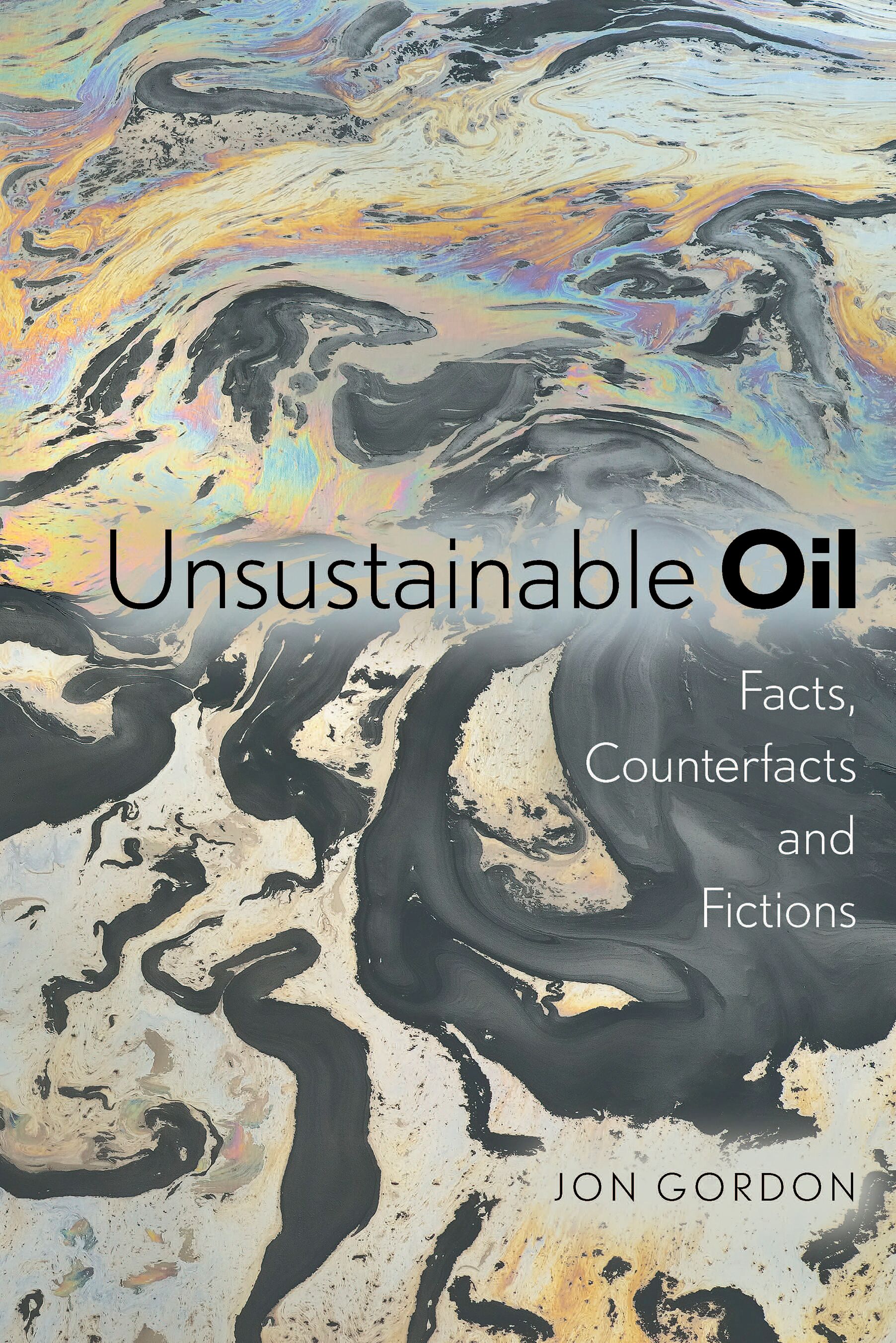
Unsustainable Oil
\"Sustainable development is, for government and industry at least, primarily a way of turning trees into lumber, tar into oil, and critique into consent; a way to defend the status quo of growth at any cost.\" —from the Introduction In Unsustainable Oil: Facts, Counterfacts and Fictions, Jon Gordon makes the case for re-evaluating the theoretical, political, and environmental issues around petroleum extraction. Doing so, he argues, will reinvigorate our understanding of the culture and the ethics of energy production in Canada. Rather than looking for better facts or better interpretations of the facts, Gordon challenges us to embrace the future after oil. Reading fiction can help us understand the cultural-ecological crisis that we inhabit. In Unsustainable Oil, using the lens of Alberta’s bituminous sands, he asks us to consider literature’s potential to open space for creative alternatives.
eBook

Living in Denial
Global warming is the most significant environmental issue of our time, yet public response in Western nations has been meager. Why have so few taken any action? In Living in Denial, sociologist Kari Norgaard searches for answers to this question, drawing on interviews and ethnographic data from her study of \"Bygdaby,\" the fictional name of an actual rural community in western Norway, during the unusually warm winter of 2000-2001.In 2000-2001 the first snowfall came to Bygdaby two months later than usual; ice fishing was impossible; and the ski industry had to invest substantially in artificial snow-making. Stories in local and national newspapers linked the warm winter explicitly to global warming. Yet residents did not write letters to the editor, pressure politicians, or cut down on use of fossil fuels. Norgaard attributes this lack of response to the phenomenon of socially organized denial, by which information about climate science is known in the abstract but disconnected from political, social, and private life, and sees this as emblematic of how citizens of industrialized countries are responding to global warming.Norgaard finds that for the highly educated and politically savvy residents of Bygdaby, global warming was both common knowledge and unimaginable. Norgaard traces this denial through multiple levels, from emotions to cultural norms to political economy. Her report from Bygdaby, supplemented by comparisons throughout the book to the United States, tells a larger story behind our paralysis in the face of today's alarming predictions from climate scientists.The hardcover edition does not include a dust jacket.
eBook

Tar Wars
Tar Wars offers a critical inside look at how leading image-makers negotiate escalating tensions between continuous economic growth mandated by a globalized economic system and its unsustainable environmental costs. As place branding assumes paramount importance in an increasingly global, visual, and ecologically conscious society, an international battle unfolds over Alberta’s bituminous sands. This battle pits independent documentary filmmakers against professional communicators employed by government and the oil industry. Tar Wars engages scholars and students in communications, film, environmental studies, social psychology, PR, media and cultural studies, and petrocultures. This book also speaks to decision makers, activists, and citizens exploring intersections of energy, environment, culture, politics, economy, media and power.
eBook

Ending the Fossil Fuel Era
Not so long ago, people North and South had little reason to believe that wealth from oil, gas, and coal brought anything but great prosperity. But the presumption of net benefits from fossil fuels is eroding as widening circles of people rich and poor experience the downside.A positive transition to a post-fossil fuel era cannot wait for global agreement, a swap-in of renewables, a miracle technology, a carbon market, or lifestyle change. This book shows that it is now possible to take the first step toward the post-fossil fuel era, by resisting the slow violence of extreme extraction and combustion, exiting the industry, and imagining a good life after fossil fuels. It shows how an environmental politics of transition might occur, arguing for going to the source rather than managing byproducts, for delegitimizing fossil fuels rather than accommodating them, for engaging a politics of deliberately choosing a post-fossil fuel world. Six case studies reveal how individuals, groups, communities, and an entire country have taken first steps out of the fossil fuel era, with experiments that range from leaving oil under the Amazon to ending mountaintop removal in Appalachia.
eBook
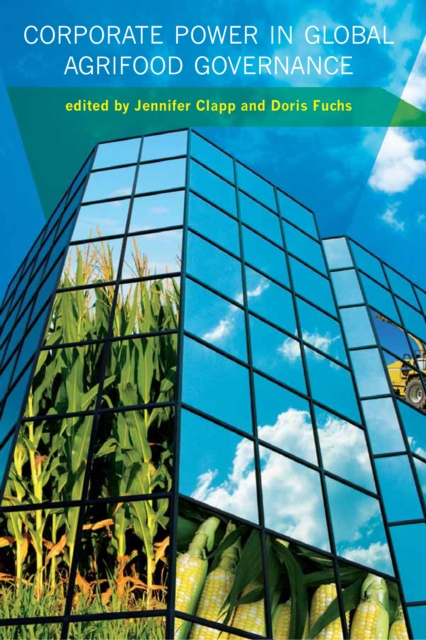
Corporate power in global agrifood governance
Experts examine the ways transnational corporations exercise power over governance of the global food system and the implications this has for sustainability
In today's globally integrated food system, events in one part of the world can have multiple and wide-ranging effects, as has been shown by the recent and rapid global rise in food prices. Transnational corporations (TNCs) have been central to the development of this global food system, dominating production, international trade, processing, distribution, and retail sectors. Moreover, these global corporations play a key role in the establishment of rules and regulations by which they themselves are governed. This book examines how TNCs exercise power over global food and agriculture governance and what the consequences are for the sustainability of the global food system. The book defines three aspects of this corporate power: instrumental power, or direct influence; structural power, or the broader influence corporations have over setting agendas and rules; and discursive, or communicative and persuasive, power. The book begins by examining the nature of corporate power in cases ranging from “green” food certification in Southeast Asia and corporate influence on U.S. food aid policy to governance in the seed industry and international food safety standards. Chapters examine such issues as promotion of corporate-defined “environmental sustainability” and “food security,” biotechnology firms and intellectual property rights, and consumer resistance to GMOs and other cases of contestation in agrobiology. In a final chapter, the editors raise the crucial question of how to achieve participation, transparency, and accountability in food governance.
Contributors
Maarten Arentsen, Jennifer Clapp, Robert Falkner, Doris Fuchs, Agni Kalfagianni, Peter Newell, Steffanie Scott, Susan Sell, Elizabeth Smythe, Peter Vandergeest, Marc Williams, Mary Young
eBook

Earth System Governance
Humans are no longer spectators who need to adapt to their natural environment. Our impact on the earth has caused changes that are outside the range of natural variability and are equivalent to such major geological disruptions as ice ages. Some scientists argue that we have entered a new epoch in planetary history: the Anthropocene. In such an era of planet-wide transformation, we need a new model for planet-wide environmental politics. In this book, Frank Biermann proposes \"earth system\" governance as just such a new paradigm.Biermann offers both analytical and normative perspectives. He provides detailed analysis of global environmental politics in terms of five dimensions of effective governance: agency, particularly agency beyond that of state actors; architecture of governance, from local to global levels; accountability and legitimacy; equitable allocation of resources; and adaptiveness of governance systems. Biermann goes on to offer a wide range of policy proposals for future environmental governance and a revitalized United Nations, including the establishment of a World Environment Organization and a UN Sustainable Development Council, new mechanisms for strengthened representation of civil society and scientists in global decision making, innovative systems of qualified majority voting in multilateral negotiations, and novel institutions to protect those impacted by global change. Drawing on ten years of research, Biermann formulates earth system governance as an empirical reality and a political necessity.
eBook

Institutions and Environmental Change
This overview of recent research on how institutions matter in tackling environmental problems reports the findings and policy implications of a decade-long international research project.
eBook

The Greenest Nation?
Germany enjoys an enviably green reputation. Environmentalists in other countries applaud its strict environmental laws, its world-class green technology firms, its phase-out of nuclear power, and its influential Green Party. Germans are proud of these achievements, and environmentalism has become part of the German national identity. InThe Greenest Nation?Frank Uekötter offers an overview of the evolution of German environmentalism since the late nineteenth century. He discusses, among other things, early efforts at nature protection and urban sanitation, the Nazi experience, and civic mobilization in the postwar years. He shows that much of Germany's green reputation rests on accomplishments of the 1980s, and emphasizes the mutually supportive roles of environmental nongovernmental organizations, corporations, and the state. Uekötter looks at environmentalism in terms of civic activism, government policy, and culture and life, eschewing the usual focus on politics, prophets, and NGOs. He also views German environmentalism in an international context, tracing transnational networks of environmental issues and actions and discussing German achievements in relation to global trends. Bringing his discussion up to the present, he shows the influence of the past on today's environmental decisions. As environmentalism is wrestling with the challenges of the twenty-first century, Germany could provide a laboratory for the rest of the world.
eBook

NGO diplomacy
Provides an analytical framework for assessing the impact of NGOs on intergovernmental negotiations on the environment and identifying the factors that determine the degree of NGO influence, with case studies that apply the framework to negotiations on climate change, biosafety, desertification, whaling, and forests.
eBook
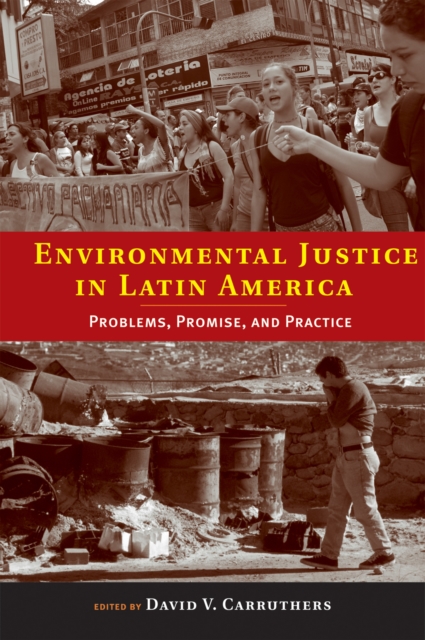
Environmental justice in Latin America : problems, promise, and practice
Scholars and activists investigate the emergence of a distinctively Latin American environmental justice movement, offering analysis and case studies that illustrate the connections between popular environmental mobilization and social justice in the region.
eBook