
Catalogue Search | MBRL


Are you sure you want to remove the book from the shelf?

{{itemTitle}}
60,934
result(s) for
"Environmental Adaptation"
Sort by:


Plasticity, Robustness, Development and Evolution
How do we understand and explain the apparent dichotomy between plasticity and robustness in the context of development? Can we identify these complex processes without resorting to 'either/or' solutions? Written by two leaders in the field, this is the first book to fully unravel the complexity of the subject, explaining that the epigenetic processes generating plasticity and robustness are in fact deeply intertwined. It identifies the different mechanisms that generate robustness and the various forms of plasticity, before considering the functional significance of the integrated mechanisms and how the component processes might have evolved. Finally, it highlights the ways in which epigenetic mechanisms could be instrumental in driving evolutionary change. Essential reading for biologists and psychologists interested in epigenetics and evolution, this book is also a valuable resource for biological anthropologists, sociobiologists, child psychologists and paediatricians.
eBook

Reproduction and adaptation
\"In the space of one generation major changes have begun to take place in the field of human reproduction. A rapid increase in the control of fertility and the understanding and treatment of sexual health issues have been accompanied by an emerging threat to reproductive function linked to increasing environmental pollution and dramatic changes in lifestyle. Organised around four key themes, this book provides a valuable review of some of the most important recent findings in human reproductive ecology. Major topics include the impact of the environment on reproduction, the role of physical activity and energetics in regulating reproduction, sexual maturation and ovulation assessment and demographic, health and family planning issues. Both theoretical and practical issues are covered, including the evolution and importance of the menopause and the various statistical methods by which researchers can analyse characteristics of the menstrual cycle in field studies\"-- Provided by publisher.
BOOK

Signals and Boundaries
Complex adaptive systems (cas), including ecosystems, governments, biological cells, and markets, are characterized by intricate hierarchical arrangements of boundaries and signals. In ecosystems, for example, niches act as semi-permeable boundaries, and smells and visual patterns serve as signals; governments have departmental hierarchies with memoranda acting as signals; and so it is with other cas. Despite a wealth of data and descriptions concerning different cas, there remain many unanswered questions about \"steering\" these systems. In Signals and Boundaries , John Holland argues that understanding the origin of the intricate signal/border hierarchies of these systems is the key to answering such questions. He develops an overarching framework for comparing and steering cas through the mechanisms that generate their signal/boundary hierarchies. Holland lays out a path for developing the framework that emphasizes agents, niches, theory, and mathematical models. He discusses, among other topics, theory construction; signal-processing agents; networks as representations of signal/boundary interaction; adaptation; recombination and reproduction; the use of tagged urn models (adapted from elementary probability theory) to represent boundary hierarchies; finitely generated systems as a way to tie the models examined into a single framework; the framework itself, illustrated by a simple finitely generated version of the development of a multi-celled organism; and Markov processes.
eBook


Dispersal ecology and evolution
Now that so many ecosystems face rapid and major environmental change, the ability of species to respond to these changes by dispersing or moving between different patches of habitat can be crucial to ensuring their survival. Understanding dispersal has become key to understanding how populations may persist. This book provides an overview of the fast expanding field of dispersal ecology, incorporating the very latest research. The causes, mechanisms, and consequences of dispersal at the individual, population, species, and community levels are considered. Perspectives and insights are offered from the fields of evolution, behavioural ecology, conservation biology, and genetics. Throughout the book theoretical approaches are combined with empirical data, and care has been taken to include examples from as wide a range of species as possible — both plant and animal.
eBook

The ecology of pastoralism
\"In The Ecology of Pastoralism, a diverse group of contributions from archaeologists and ethnographers address pastoralism's significant impact on humanity's basic subsistence and survival, focusing on the network of social, political, and religious institutions existing within various societies dependent on animal husbandry. Pastoral peoples, both past and present, have organized their relationship with certain animals to maximize their ability to survive and adapt to a wide range of conditions over time. Despite differences in landscape, environment, and administrative and political structures, contributors show these societies share a major similar characteristic--high flexibility. Based partially on the adaptability of various domestic animals to difficult environments and partially on the ability of people to establish networks allowing them to accommodate political, social, and economic needs, this flexibility is key to survival of complex pastoral systems and serves as the connection among the varied cultures in the volume. Using archaeological and contemporary data, the wide variety of cases from a broad geographic sampling in The Ecology of Pastoralism offer a new perspective on the study of pastoralism that makes this volume a valuable contribution to current research in the area\"-- Provided by publisher.
Book

Abrasion and Accretion Analysis in Demak, Indonesia Coastal for Mitigation and Environmental Adaptation
The purpose of this study was to analyze abrasion at the border of Sayung, Demak, Indonesia. Coastal abrasion data were obtained from high-resolution images from 2005-to 2017 by using ArcGIS 10.3, while data on environmental factors that affected abrasion, including tides from 2013-to 2017, was obtained from BMKG. Based on the analysis and calculations, the area of abrasion at the coast of Sayung, Demak was 262.74 hectares spread over four villages, namely Sri Wulan, Bedono, Timbulsloko, and Surodadi. Avifauna in the mangroves will be severely harmed by abrasion. As a result, abrasion prevention and evaluation, as well as the factors that cause abrasion, are required to reduce the impact of abrasion on the specified shore.
Journal Article
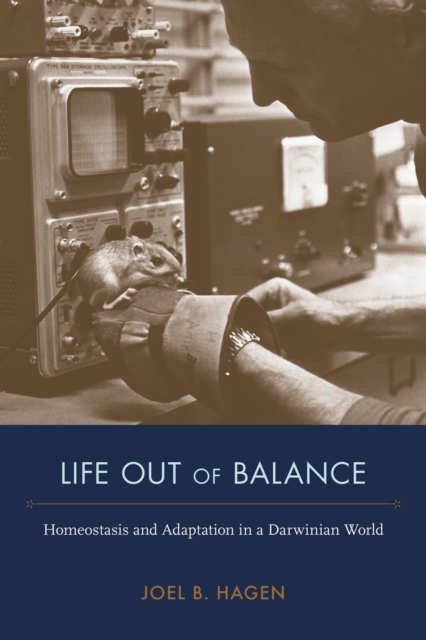
Life Out of Balance
Traces historical developments in scientific conceptions
of physiology, ecology, behavior, and evolutionary biology during
the mid-twentieth century
Life Out of Balance focuses on a period in history when
new ideas of self-regulation, adaptation, and fitness became
central to a variety of biological disciplines. During the
decades surrounding World War II, these ideas developed in
several quite different contexts and led to greater debates about
the merits of such models as applied to larger systems, including
society at large. Particularly in its later cybernetic form,
homeostasis seemed to provide new ways of discussing balance and
regulation that avoided discredited approaches of earlier
champions of vitalism and mechanism. It provided a common
perspective and terminology for discussing self-regulating
“systems,” whether biological, mechanical, or social.
Although enormously fruitful and influential, homeostatic
perspectives also generated numerous controversies when critics
questioned the degree to which biological systems are
characterized by balance and self-regulation. Resolving these
controversies continues to be a challenge in modern biology. If
natural selection constitutes the first law of biology,
scientists who champion homeostasis as a theoretical model claim
that it is a second law, equally important and closely related to
the first. Such claims notwithstanding, homeostasis has generated
a series of controversies since it was formalized by Walter
Cannon in the late 1920s. Critics contended that Cannon took a
too-optimistic view of life, not only ignoring pathological
deviations from normality but also failing to adequately explain
the ability of living things to respond adaptively to
environmental challenges. Underlying these controversies was the
unresolved problem of integrating physiology and other areas of
functional biology with the emerging evolutionary synthesis of
Mendelian genetics and Darwinian natural selection. The
physiological idea of homeostasis as the adaptive
“fit” between the organism and its environment and
the Darwinian idea of adaptation and fitness in terms of
reproductive success might seem to be complementary in an
unproblematic way, but historically they have had an uneasy
relationship.
eBook

The Colonization of Unfamiliar Landscapes
This innovative and important volume presents the archaeological and anthropological foundations of the landscape learning process. Contributions apply the related fields of ethnography, cognitive psychology, and historical archaeology to the issues of individual exploration, development of trail systems, folk knowledge, social identity, and the role of the frontier in the growth of the modern world.
A series of case studies examines the archaeological evidence for and interpretations of landscape learning from the movement of the first pre-modern humans into Europe, peoplings of the Old and New World at the end of the Ice Age, and colonization of the Pacific, to the English colonists at Jamestown.
The final chapters summarize the implications of the landscape learning idea for our understanding of human history and set out a framework for future research.
'Excellent ... Marcy Rockman and James Steele have done a good job.' - Landscape History
\"...this book makes important contributions to the continuing study of landscape, and the bridging interdisiplinary gaps between archaeology and anthropology.\" Joost Fontein, University of Edinburgh
Marcy Rockman is a Lecturer in the Department of Anthropology at the University of Arizona, Tucson. James Steele is a Lecturer in the Department of Archaeology at Southampton University.
List of Tables and Figures List of Contributors Foreword Acknowledgements Editors' Introduction Section One: Conceptual Frameworks 1. Knowledge and Learning in the Archaeology of Colonization 2. Human Wayfinding Behaviour 3. Colonization of New Land by Hunter-Gatherers: Expectations and Implications Based on Ethnographic Data 4. Tracking the Role of Pathways in the Evolution of a Human Landscape: the St. Croix Riverway in Ethnohistorical Perspective 5. Mining Rushes and Landscape Learning in the Modern World Section 2: Case Studies 6. Landscape Learning and the Earliest Peopling of Europe 7. The Social Context of Landscape Learning and the Lateglacial - Early Postglacial Recolonization of the British Isles 8. \"Where Do We Go From Here?\": Modelling the Decision-Making Process During Exploratory Dispersal 9. Deerslayers, Pathfinders and Icemen: Origins of the European Neolithic as Seen from the Frontier 10. Entering Uncharted Waters: Models of Initial Colonization in Polynesia 11. The Weather is Fine: Wish You Were Here, Because I'm the Last One Alive: 'Learning' the Environment in the English New World Colonies Section 3: Advances in Theory and Method 12. Colonizing New Landscapes: Archaeological Detectability of the First Phase 13. Lessons in Landscape Learning Index
eBook