
Catalogue Search | MBRL


Are you sure you want to remove the book from the shelf?

{{itemTitle}}
883,558
result(s) for
"Environmental Protection"
Sort by:

I love our land / Carol Greene
\"Find out why our land is important, and how people can protect it\"--Provided by publisher.
BOOK

Public participation in environmental assessment and decision making
Federal agencies have taken steps to include the public in a wide range of environmental decisions. Although some form of public participation is often required by law, agencies usually have broad discretion about the extent of that involvement. Approaches vary widely, from holding public information-gathering meetings to forming advisory groups to actively including citizens in making and implementing decisions.
Proponents of public participation argue that those who must live with the outcome of an environmental decision should have some influence on it. Critics maintain that public participation slows decision making and can lower its quality by including people unfamiliar with the science involved.
This book concludes that, when done correctly, public participation improves the quality of federal agencies' decisions about the environment. Well-managed public involvement also increases the legitimacy of decisions in the eyes of those affected by them, which makes it more likely that the decisions will be implemented effectively. This book recommends that agencies recognize public participation as valuable to their objectives, not just as a formality required by the law. It details principles and approaches agencies can use to successfully involve the public.
eBook
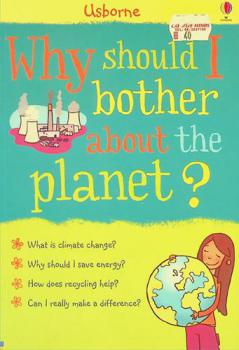
Why should I bother about the planet ?
Describes how the Earth's climate is being changed as a result of carbon emissions and offers a number of practical things that can be done every day to protect natural resources and conserve energy.
Book

Environmental decentralization, environmental protection investment, and green technology innovation
The reform of environmental management systems is key to improving environmental pollution treatment and green technology innovation. Based on panel data on 30 provincial administrative regions in China for 2008 to 2016, this paper analyzes the impacts of environmental decentralization and environmental protection investment on green technology innovation. It is first found that environmental decentralization promotes green technology innovation after inhibition. Similar effects are found for environmental administrative decentralization, environmental monitoring decentralization, and environmental supervision decentralization. Second, in the long run, environmental decentralization in developed and low-emission regions is more conducive to green technology innovation. Third, environmental pollution treatment investment has a significant inhibiting effect on green technology innovation under high levels of environmental decentralization, and the inhibiting effects of industrial pollution source treatment investment and “three simultaneous” construction project investments are particularly obvious. This paper explores green technology innovation as the goal of environmental decentralization, which is the driving force behind pollution control. From the perspective of environmental protection investment, the paper further analyzes the impact of environmental decentralization on green technology innovation. The study has important reference value for determining reasonable levels of environmental decentralization among different levels of governance and in formulating differentiated strategies of environmental decentralization.
Journal Article


The USA lags behind other agricultural nations in banning harmful pesticides
Background
The United States of America (USA), European Union (EU), Brazil and China are four of the largest agricultural producers and users of agricultural pesticides in the world. Comparing the inclination and ability of different regulatory agencies to ban or eliminate pesticides that have the most potential for harm to humans and the environment can provide a glimpse into the effectiveness of each nation’s pesticide regulatory laws and oversight.
Methods
The approval status of more than 500 agricultural pesticides was identified in the USA, EU, Brazil and China and compared between nations. The amount of pesticides that were used in the USA and banned in these other nations was compiled and linear regression was used to identify trends in use.
Results
There are 72, 17, and 11 pesticides approved for outdoor agricultural applications in the USA that are banned or in the process of complete phase out in the EU, Brazil, and China, respectively. Of the pesticides used in USA agriculture in 2016, 322 million pounds were of pesticides banned in the EU, 26 million pounds were of pesticides banned in Brazil and 40 million pounds were of pesticides banned in China. Pesticides banned in the EU account for more than a quarter of all agricultural pesticide use in the USA. The majority of pesticides banned in at least two of these three nations have not appreciably decreased in the USA over the last 25 years and almost all have stayed constant or increased over the last 10 years.
Conclusions
Many pesticides still widely used in the USA, at the level of tens to hundreds of millions of pounds annually, have been banned or are being phased out in the EU, China and Brazil. Of the pesticides banned in at least two of these nations, many have been implicated in acute pesticide poisonings in the USA and some are further restricted by individual states. The United States Environmental Protection Agency (US EPA) has all but abandoned its use of non-voluntary cancellations in recent years, making pesticide cancellation in the USA largely an exercise that requires consent by the regulated industry.
Journal Article


Salting our freshwater lakes
The highest densities of lakes on Earth are in north temperate ecosystems, where increasing urbanization and associated chloride runoff can salinize freshwaters and threaten lake water quality and the many ecosystem services lakes provide. However, the extent to which lake salinity may be changing at broad spatial scales remains unknown, leading us to first identify spatial patterns and then investigate the drivers of these patterns. Significant decadal trends in lake salinization were identified using a dataset of long-term chloride concentrations from 371 North American lakes. Landscape and climate metrics calculated for each site demonstrated that impervious land cover was a strong predictor of chloride trends in Northeast and Midwest North American lakes. As little as 1% impervious land cover surrounding a lake increased the likelihood of long-term salinization. Considering that 27% of large lakes in the United States have >1% impervious land cover around their perimeters, the potential for steady and long-term salinization of these aquatic systems is high. This study predicts that many lakes will exceed the aquatic life threshold criterion for chronic chloride exposure (230 mg L−1), stipulated by the US Environmental Protection Agency (EPA), in the next 50 y if current trends continue.
Journal Article
Laghukath�a me�m pary�avara�na
Selected short stories on environmental protection by various Hindi authors.

Improving the Human Hazard Characterization of Chemicals: A Tox21 Update
In 2008, the National Institute of Environmental Health Sciences/National Toxicology Program, the U.S. Environmental Protection Agency's National Center for Computational Toxicology, and the National Human Genome Research Institute/National Institutes of Health Chemical Genomics Center entered into an agreement on \"high throughput screening, toxicity pathway profiling, and biological interpretation of findings.\" In 2010, the U.S. Food and Drug Administration (FDA) joined the collaboration, known informally as Tox21.
The Tox21 partners agreed to develop a vision and devise an implementation strategy to shift the assessment of chemical hazards away from traditional experimental animal toxicology studies to one based on target-specific, mechanism-based, biological observations largely obtained using in vitro assays.
Here we outline the efforts of the Tox21 partners up to the time the FDA joined the collaboration, describe the approaches taken to develop the science and technologies that are currently being used, assess the current status, and identify problems that could impede further progress as well as suggest approaches to address those problems.
Tox21 faces some very difficult issues. However, we are making progress in integrating data from diverse technologies and end points into what is effectively a systems-biology approach to toxicology. This can be accomplished only when comprehensive knowledge is obtained with broad coverage of chemical and biological/toxicological space. The efforts thus far reflect the initial stage of an exceedingly complicated program, one that will likely take decades to fully achieve its goals. However, even at this stage, the information obtained has attracted the attention of the international scientific community, and we believe these efforts foretell the future of toxicology.
Journal Article