
Catalogue Search | MBRL


Are you sure you want to remove the book from the shelf?

{{itemTitle}}
853
result(s) for
"Environmental geotechnology."
Sort by:


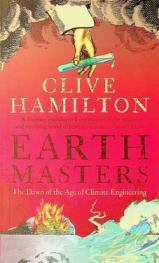
Earthmasters : the dawn of the age of climate engineering
This book goes to the heart of the unfolding reality of the twenty-first century: international efforts to reduce greenhouse gas emissions have all failed, and before the end of the century Earth is projected to be warmer than it has been for 15 million years. The question \"can the crisis be avoided?\" has been superseded by a more frightening one, \"what can be done to prevent the devastation of the living world?\" And the disturbing answer, now under wide discussion both within and outside the scientific community, is to seize control of the very climate of the Earth itself. Clive Hamilton begins by exploring the range of technologies now being developed in the field of geoengineering--the intentional, enduring, large-scale manipulation of Earth's climate system. He lays out the arguments for and against climate engineering, and reveals the extent of vested interests linking researchers, venture capitalists, and corporations. He then examines what it means for human beings to be making plans to control the planet's atmosphere, probes the uneasiness we feel with the notion of exercising technological mastery over nature, and challenges the ways we think about ourselves and our place in the natural world.
eBook

Hacking planet Earth : Technologies that can counteract climate change and create abetter future
\"An exploration of the cutting-edge technology that will enable us to confront the realities of climate change. For decades scientists and environmentalists have sounded the alarm about the effects of global warming. We are now past the tipping point. As floods, storms, and extreme temperatures become our daily reality, \"Reduce, Reuse, Recycle\" efforts aren't enough anymore. In Hacking Planet Earth, New York Times bestselling author Thomas Kostigen takes readers to the frontlines of geoengineering projects that scientists, entrepreneurs, engineers, and other visionaries around the world are developing to solve the problems associated with climate change. From giant parasols hovering above the Earth to shield us from an unforgiving sun, to lasers shooting up into clouds to coax out much-needed water, Kostigen introduces readers to this inspiring work and the people who are spearheading it. These futurist, far- thinking, world-changing ideas will save us, and Hacking Planet Earth offers readers their new vision for the future.\"-- Amazon.com.
Book

Theological and ethical perspectives on climate engineering
Calming the Storm presents diverse perspectives on some of the most vital questions raised by climate engineering: Who has the right to make decisions about such global technological efforts? What have we learned from the decisions that caused the climate to change that might shed light on efforts to reverse that change? What frameworks and metaphors are helpful in thinking about climate engineering, and which are counterproductive? What religious beliefs, practices, and rituals can help people to imagine and evaluate the prospect of engineering the climate?
eBook


Delimitation of Ecological Corridor Using Technological Tools
Ecological corridors are effective strategies to address the environmental consequences of forest fragmentation by connecting fragmented areas through various techniques. This study aims to propose the implementation of an ecological corridor in the Itapemirim River basin in Espírito Santo, Brazil. The specific objectives of this study are as follows: delimiting the Permanent Preservation Areas (APPs) in the Itapemirim River watershed and comparing land use and land cover within these areas. The MapBiomas platform and Landsat 8 satellite images were utilized to map land use and land cover, while the criteria set by Law No. 12.651 were followed to define the APP boundaries. The calculation of the landscape ecology indices and the identification of the forest fragments with the highest potential for ecological corridor implementation were conducted using the Fuzzy logic. The QGIS 3.26 application, along with the LecoS 3.0.1 plugin and Fragstats 4.2, were employed to characterize and quantify landscape ecology indices. The costs assessment and determination of the optimal route for implementing the ecological corridor were performed, considering bothdistance and physical impediments. The least cost path algorithm was utilized, taking into account land use and land cover, APP, fragment potential, slope, and subnormal clusters. Evaluating land costs and expropriation expenses required to define the ecological corridor in the study area. The identified forest fragments for inclusion in the ecological corridor were the Caparaó National Park, the Serra das Torres State Natural Monument, and other selected fragments based on the application of Fuzzy logic to landscape ecology indices. The corridor route was determined using the least cost path algorithm, considering various factors. This study revealed that the predominant land use and land cover class in the area is pasture, and a significant portion (68.58%) of the designated Permanent Preservation Areas were in conflict with legal regulations. The bare land value per hectare for pasture was the second highest among the land use and land cover categories, accounting for 64.28% of the total. The priority area analysis indicated that 31.86% of the region had high or very high importance for forest restoration, while 42.97% had low or very low priority. The findings demonstrate that the least cost path algorithm, coupled with a multi-criteria decision-making approach using the Analytic Hierarchy Process (AHP), is a valuable tool for planning and implementing ecological networks. These methods effectively consider critical factors in decision-making processes related to the optimal location of the ecological corridor. In conclusion, this study provides insights into the implementation of an ecological corridor in the Itapemirim River basin, emphasizing the importance of considering multiple factors and utilizing appropriate methodologies for effective decision-making in ecological planning.
Journal Article

Climate Intervention
The growing problem of changing environmental conditions caused by climate destabilization is well recognized as one of the defining issues of our time. The root problem is greenhouse gas emissions, and the fundamental solution is curbing those emissions. Climate geoengineering has often been considered to be a \"last-ditch\" response to climate change, to be used only if climate change damage should produce extreme hardship. Although the likelihood of eventually needing to resort to these efforts grows with every year of inaction on emissions control, there is a lack of information on these ways of potentially intervening in the climate system.
As one of a two-book report, this volume of Climate Intervention discusses albedo modification - changing the fraction of incoming solar radiation that reaches the surface. This approach would deliberately modify the energy budget of Earth to produce a cooling designed to compensate for some of the effects of warming associated with greenhouse gas increases. The prospect of large-scale albedo modification raises political and governance issues at national and global levels, as well as ethical concerns. Climate Intervention: Reflecting Sunlight to Cool Earth discusses some of the social, political, and legal issues surrounding these proposed techniques.
It is far easier to modify Earth's albedo than to determine whether it should be done or what the consequences might be of such an action. One serious concern is that such an action could be unilaterally undertaken by a small nation or smaller entity for its own benefit without international sanction and regardless of international consequences. Transparency in discussing this subject is critical. In the spirit of that transparency, Climate Intervention: Reflecting Sunlight to Cool Earth was based on peer-reviewed literature and the judgments of the authoring committee; no new research was done as part of this study and all data and information used are from entirely open sources. By helping to bring light to this topic area, this book will help leaders to be far more knowledgeable about the consequences of albedo modification approaches before they face a decision whether or not to use them.
eBook

Climate Intervention
The signals are everywhere that our planet is experiencing significant climate change. It is clear that we need to reduce the emissions of carbon dioxide and other greenhouse gases from our atmosphere if we want to avoid greatly increased risk of damage from climate change. Aggressively pursuing a program of emissions abatement or mitigation will show results over a timescale of many decades. How do we actively remove carbon dioxide from the atmosphere to make a bigger difference more quickly?
As one of a two-book report, this volume of Climate Intervention discusses CDR, the carbon dioxide removal of greenhouse gas emissions from the atmosphere and sequestration of it in perpetuity. Climate Intervention: Carbon Dioxide Removal and Reliable Sequestration introduces possible CDR approaches and then discusses them in depth. Land management practices, such as low-till agriculture, reforestation and afforestation, ocean iron fertilization, and land-and-ocean-based accelerated weathering, could amplify the rates of processes that are already occurring as part of the natural carbon cycle. Other CDR approaches, such as bioenergy with carbon capture and sequestration, direct air capture and sequestration, and traditional carbon capture and sequestration, seek to capture CO2 from the atmosphere and dispose of it by pumping it underground at high pressure. This book looks at the pros and cons of these options and estimates possible rates of removal and total amounts that might be removed via these methods.
With whatever portfolio of technologies the transition is achieved, eliminating the carbon dioxide emissions from the global energy and transportation systems will pose an enormous technical, economic, and social challenge that will likely take decades of concerted effort to achieve. Climate Intervention: Carbon Dioxide Removal and Reliable Sequestration will help to better understand the potential cost and performance of CDR strategies to inform debate and decision making as we work to stabilize and reduce atmospheric concentrations of carbon dioxide.
eBook