
Catalogue Search | MBRL


Are you sure you want to remove the book from the shelf?

{{itemTitle}}
5,924
result(s) for
"Environmental impact analysis Case studies."
Sort by:

The Olympic Games and the environment
Nowadays, sports Mega-events - with the Olympic Games leading the way, go to immense effort to showcase their environmental credentials. With that in mind, this book compares and contrasts the environmental credentials of four Olympic Host cities starting with Sydney 2000, the host of the first Green Summer Olympics, and culminating with London 2012. Setting out a comparative cross-national study that makes extensive use of perspectives offered by environmental sociology, this book showcases the scientific analytical vigour of this sociological sub-discipline. Since in most cases, the linkages between hosting the Games and the environment that are made by the general public and policy-makers are mostly in relation to the regeneration of the host city, this book engages with this type of environmental related contributions that can be made by Olympic Games hosting. Yet, inspired by the emphasis that the International Olympic Committee (IOC) gives on the environmental impact and legacy of Games in terms of the Ecological Modernization (EM) perspective, the book engages with the potential imbued by Olympic Games hosting for the EM of the host nation.
Book
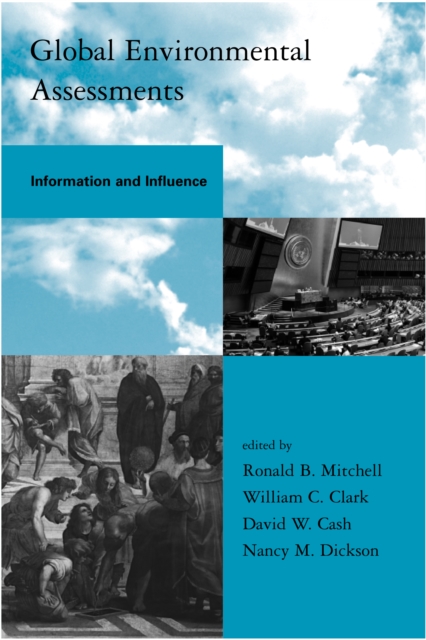
Global environmental assessments
Knowledge about environmental problems has expanded rapidly in recent decades, as have the number and variety of processes for making large-scale scientific assessments of those problems and their possible solutions. Yet too often scientific information has not been transformed into effective and appropriate policies to protect the global environment. In this book, scholars use a comparative analytic framework and supporting case studies to evaluate the impact of environmental assessments, looking at how, and under what conditions, global environmental assessments influence political and economic decision makers. They find that global environmental assessments are more likely to be influential if the process is perceived not only as scientifically credible but also as salient to policy concerns and as generated through legitimate means. The studies show that although the content of the assessment clearly matters, its influence is often determined more by the process that generated it and by external factors affecting the receptiveness of different audiences. Assessments that involve ongoing interactions among scientists, stakeholders, and policymakers prove particularly likely to influence behaviors.
The diverse case studies—ranging from global assessments of climate change and acid precipitation to assessments of sea-level rise in Maine and Hawai'i and climate forecasting in Zimbabwe—embed their findings in contemporary theoretical frameworks while remaining informed by pragmatic policy considerations.
Contributors
Liliana B. Andonova, Frank Biermann, David W. Cash, William C. Clark, Aarti Gupta, Ronald B. Mitchell, Susanne C. Moser, Anthony Patt, Noelle Eckley Selin, Wendy E. F. Torrance, Stacy D. VanDeveer
eBook


Life cycle assessment of opencast coal mine production: a case study in Yimin mining area in China
China has the largest coal production in the world due to abundant resource requirements for economic development. In recent years, the proportion of opencast coal mine production has increased significantly in China. Opencast coal mining can lead to a large number of environmental problems, including air pollution, water pollution, and solid waste occupation. The previous studies on the environmental impacts of opencast coal mine production were focused on a single production process. Moreover, mined land reclamation was an important process in opencast coal mine production; however, it was rarely considered in previous research. Therefore, this study attempted to perform a whole environmental impact analysis including land reclamation stage using life cycle assessment (LCA) method. The Yimin opencast coal mine was selected to conduct a case study. The production of 100 tons of coal was used as the functional unit to evaluate the environmental risks in the stages of stripping, mining, transportation, processing, and reclamation. A total of six environmental impact categories, i.e., resource consumption, acidification, global warming, solid waste, eutrophication, and dust, were selected to conduct this assessment. The contribution rates of different categories of environmental impacts were significantly different, and different stages exhibited different consumption and emissions that gave rise to different environmental effects. Dust was the most serious environmental impact category, and its contribution rate was 36.81%, followed by global warming and acidification with contribution rates of 29.43% and 22.58%, respectively. Both dust and global warming were mainly affected in mining stage in Yimin opencast coal mine based on comprehensive analysis of environmental impact. Some economic and feasible measures should be used to mitigate the environmental impacts of opencast coal mine production, such as water spraying, clean transportation, increasing processing efficiency, and improving mining technologies. This study can be considered as a useful reference for a deeper understanding of key environmental impacts related to the whole coal production in opencast coal mine.
Journal Article

Environmental life cycle assessment of rice production in northern Italy: a case study from Vercelli
Purpose
The study’s objective is to assess the environmental performance of rice production in Northern Italy, in particular in Piedmont, the first Italian and European district for the rice-growing area, and thus identify the most critical hotspots and agricultural processes. In particular, as a case study, a farm located in Vercelli (VC) has been chosen. Subsequently, the study results were compared with other different cultivation practices to evaluate the most sustainable choice.
Methods
The application of the LCA has been performed, highlighting the phases of rice production that have the most significant impact. Then, uncertainty and sensitivity analyses have been made to estimate the robustness of the results and assess the influence of changing some input variables on emission reduction. Finally, multivariate statistical, specifically a principal component analysis (PCA), was conducted to aid the interpretation of the output dataset of this case study. LCA, uncertainty analysis, and sensitivity analysis were performed with SimaPro 9.2.0, using ReCiPe 2016 Midpoint (H) methodology, and PCA with R software.
Results and discussions
The hotspot with the highest environmental load is irrigation, which compared to the other phases impacts more in 15 out of 18 categories, including 12 with impacts greater than + 75%. This is because irrigation causes direct impacts, related to the methanogenesis in rice fields, but also indirect impacts related mainly to the production of the energy mix required to move the large masses of irrigation water. Therefore, different water management systems were compared and results show that the irrigation systems based on intermittent paddy submergence (DSI) could result in − 40% lower impacts, resulting to be the preferable technique over the other irrigation systems analyzed, including the traditional one used in this study.
Conclusions
In order to reduce the environmental impacts related to the irrigation process, a water management system characterized by intermittent flooding of the paddy field (DSI) could be used as it reduces the environmental impacts the most (− 40%), while the least suitable system is one characterized by continuous flooding without drought periods, as it causes the highest impacts.
Journal Article
The impact of tourism and natural resources on the ecological footprint: a case study of ASEAN countries
This study examines the impacts of economic growth, energy consumption, tourism, and natural resources on the ecological footprint in the ASEAN countries for spanning from 1995 to 2016. For this purpose, the cross-sectional dependent test, the second-generation unit root test, and the Westerlund cointegration test have been applied. The Driscoll-Kraay panel regression model has been used to check the long-run relationship among the series. Also, the Dumitrescu-Hurlin panel causality test is used to determine the paths of causal interactions. These tests help to overcome the problem of cross-sectional dependence in panel data analysis. The results showed an inverted U-shaped EKC behavior in ASEAN countries, hence a negative relation between tourism and natural resources with the ecological footprint. This implies that tourism and natural resources help to improve the environmental quality in ASEAN countries.
Journal Article

How adaptive capacity shapes the Adapt, React, Cope response to climate impacts: insights from small-scale fisheries
As the impacts of climate change on human society accelerate, coastal communities are vulnerable to changing environmental conditions. The capacity of communities and households to respond to these changes (i.e., their adaptive capacity) will determine the impacts of climate and co-occurring stressors. To date, empirical evidence linking theoretical measures of adaptive capacity to community and household responses remains limited. Here, we conduct a global meta-analysis examining how metrics of adaptive capacity translate to human responses to change (Adapt, React, Cope response) in 22 small-scale fishing case studies from 20 countries (
n
= 191 responses). Using both thematic and qualitative comparative analysis, we evaluate how responses to climate, environmental, and social change were influenced by domains of adaptive capacity. Our findings show that adaptive responses at the community level only occurred in situations where the community had Access to Assets, in combination with other domains including Diversity and Flexibility, Learning and Knowledge, and Natural Capital. In contrast, Access to Assets was nonessential for adaptive responses at the household level. Adaptive households demonstrated Diversity and Flexibility when supported by strong Governance or Institutions and were often able to substitute Learning and Knowledge and Natural Capital with one another. Standardized metrics of adaptive capacity are essential to designing effective policies promoting resilience in natural resource-dependent communities and understanding how social and ecological aspects of communities interact to influence responses. Our framework describes how small-scale fishing communities and households respond to environmental changes and can inform policies that support vulnerable populations.
Journal Article
An environmental assessment model of construction and demolition waste based on system dynamics: a case study in Guangzhou
At present, China is in the rapid development stage of urbanization, and construction activities are becoming more frequent. This is accompanied by a large amount of construction and demolition waste (C&DW), which raises many problems with its governance, such as occupying valuable land resources, causing air pollution, and consuming raw materials. In this study, taking Guangzhou as an example, the system dynamics principle was used to establish an environmental assessment model of C&DW, and Vensim software was used to simulate and analyze the environmental, economic, and social impacts of various disposal methods of C&DW. The results showed that (1) among all waste disposal methods, landfill disposal had the highest greenhouse gas emissions. It was estimated that the greenhouse gas emissions from landfill disposal will account for 75% of the total emissions in 2030, while the greenhouse gas emissions from recycling disposal will only account for 0.5%. (2) The simulation results showed that, according to the current data, the land area occupied by waste landfills and illegal dumping in 2030 will be about 4.88 million m
2
, and the economic loss caused by land loss and global warming will account for 9.1% of Guangzhou’s GDP in 2030, which is equivalent to the national economy of a regional city with a less developed economy. (3) Enhanced supervision could significantly reduce the amount of illegal dumping, but its effect on landfill disposal and recycling would be very limited. According to the results of the simulation analysis, some suggestions were put forward to improve the environmental, economic, and social impact of C&DW disposal in Guangzhou.
Journal Article

An analysis of design strategies for circular economy through life cycle assessment
The goal of pursuing the circular economy (CE) is spreading more and more in industry, also driven by the introduction of new regulations, considerably affecting product design. However, a quantitative and rigorous evaluation of the environmental impacts of the results obtained by different design strategies used to implementing CE is missing in the literature. Those available only evaluate certain aspects of the life cycle of few products, belonging to specific application fields, in a qualitative way or they refer only to the global warming potential. This study provides a quantitative assessment of the environmental impacts reductions arising from the application of some common design strategies for implementing different CE options (e.g. reuse, waste to energy, remanufacturing), by using some standard indicators. The results were obtained by manually analysing 156 selected case studies of comparative life cycle assessment (LCA), extracted from 136 scientific articles. In them, the environmental impacts of design solutions for CE are compared with those of other solutions were wastes are not exploited. The obtained results have been used to evaluate the different design strategies for CE and to hierarchize them based on environmental sustainability of the solutions associated with them. In addition, an economic evaluation of the strategies, based on the life cycle costing methodology and exploiting the data available in the same articles, was also provided. Among the main achievements, it was found that the hierarchy of the CE options, pursued by the design strategies, to improve environmental sustainability is different from that provided by other studies. In addition, the environmental benefits associated with the different CE options strictly depend by the applied design strategies and the considered products.
Graphical abstract
Journal Article
Methods for global sensitivity analysis in life cycle assessment
Purpose
Input parameters required to quantify environmental impact in life cycle assessment (LCA) can be uncertain due to e.g. temporal variability or unknowns about the true value of emission factors. Uncertainty of environmental impact can be analysed by means of a global sensitivity analysis to gain more insight into output variance. This study aimed to (1) give insight into and (2) compare methods for global sensitivity analysis in life cycle assessment, with a focus on the inventory stage.
Methods
Five methods that quantify the contribution to output variance were evaluated: squared standardized regression coefficient, squared Spearman correlation coefficient, key issue analysis, Sobol’ indices and random balance design. To be able to compare the performance of global sensitivity methods, two case studies were constructed: one small hypothetical case study describing electricity production that is sensitive to a small change in the input parameters and a large case study describing a production system of a northeast Atlantic fishery. Input parameters with relative small and large input uncertainties were constructed. The comparison of the sensitivity methods was based on four aspects: (I) sampling design, (II) output variance, (III) explained variance and (IV) contribution to output variance of individual input parameters.
Results and discussion
The evaluation of the sampling design (I) relates to the computational effort of a sensitivity method. Key issue analysis does not make use of sampling and was fastest, whereas the Sobol’ method had to generate two sampling matrices and, therefore, was slowest. The total output variance (II) resulted in approximately the same output variance for each method, except for key issue analysis, which underestimated the variance especially for high input uncertainties. The explained variance (III) and contribution to variance (IV) for small input uncertainties were optimally quantified by the squared standardized regression coefficients and the main Sobol’ index. For large input uncertainties, Spearman correlation coefficients and the Sobol’ indices performed best. The comparison, however, was based on two case studies only.
Conclusions
Most methods for global sensitivity analysis performed equally well, especially for relatively small input uncertainties. When restricted to the assumptions that quantification of environmental impact in LCAs behaves linearly, squared standardized regression coefficients, squared Spearman correlation coefficients, Sobol’ indices or key issue analysis can be used for global sensitivity analysis. The choice for one of the methods depends on the available data, the magnitude of the uncertainties of data and the aim of the study.
Journal Article