
Catalogue Search | MBRL


Are you sure you want to remove the book from the shelf?

{{itemTitle}}
3,372
result(s) for
"Environmental protection Citizen participation"
Sort by:
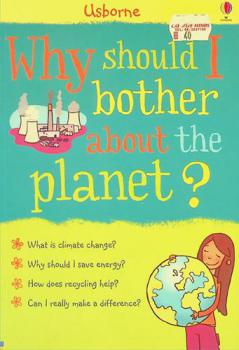
Why should I bother about the planet ?
Describes how the Earth's climate is being changed as a result of carbon emissions and offers a number of practical things that can be done every day to protect natural resources and conserve energy.
Book
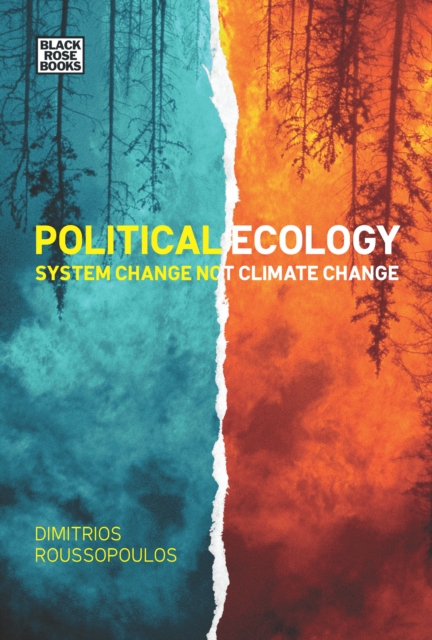
Political ecology : system change not climate change
\"System change not climate change!\" This cry reverberated throughout the streets of Paris during 2015's heated COP21 climate negotiations. It was as much a demand as it was an indictment of the failure of existing political institutions to respond adequately to our world's ecological crisis. In an era of slow motion apocalypse, with 3,500 international environmental agreements to date, where did everything go wrong? In this new and greatly expanded edition of his 1991 classic Political Ecology, Dimitri Roussopoulos delves into the history of environmentalism to explain the failure of the state management of the ecological crisis. He explores civil society's various past responses and the prospects for channeling environmentalist aspirations into political alternatives, emphasizing the ideas of social ecology and the central role of democratic neighborhoods and cities in developing alternatives. Ecologists, Roussopoulos argues, aim further than simply protecting the environment—they call for new communities, new lifestyles, and a new way of doing politics. This US edition also includes a new preface analyzing the implications of Trump's presidency for climate politics and an extensive new conclusion analyzing the Paris Accord. Revised, expanded, and updated, Political Ecology is a classic that provides an essential, timely history of the environmental movement now when we need it most.
eBook


Public participation in environmental assessment and decision making
Federal agencies have taken steps to include the public in a wide range of environmental decisions. Although some form of public participation is often required by law, agencies usually have broad discretion about the extent of that involvement. Approaches vary widely, from holding public information-gathering meetings to forming advisory groups to actively including citizens in making and implementing decisions.
Proponents of public participation argue that those who must live with the outcome of an environmental decision should have some influence on it. Critics maintain that public participation slows decision making and can lower its quality by including people unfamiliar with the science involved.
This book concludes that, when done correctly, public participation improves the quality of federal agencies' decisions about the environment. Well-managed public involvement also increases the legitimacy of decisions in the eyes of those affected by them, which makes it more likely that the decisions will be implemented effectively. This book recommends that agencies recognize public participation as valuable to their objectives, not just as a formality required by the law. It details principles and approaches agencies can use to successfully involve the public.
eBook


Grassroots to Global
Addressing participatory, transdisciplinary approaches to local
stewardship of the environment, Grassroots to Global
features scholars and stewards exploring the broad impacts of civic
engagement with the environment.
Chapters focus on questions that include: How might faith-based
institutions in Chicago expand the work of church-community
gardens? How do volunteer \"nature cleaners\" in Tehran attempt to
change Iranian social norms? How does an international community in
Baltimore engage local people in nature restoration while fostering
social equity? How does a child in an impoverished coal mining
region become a local and national leader in abandoned mine
restoration? And can a loose coalition that transforms blighted
areas in Indian cities into pocket parks become a social movement?
From the findings of the authors' diverse case studies, editor
Marianne Krasny provides a way to help readers understand the
greater implications of civic ecology practices through the lens of
multiple disciplines.
Contributors: Aniruddha Abhyankar, Martha Chaves, Louise Chawla,
Dennis Chestnut, Nancy Chikaraishi, Zahra Golshani, Lance
Gunderson, Keith E. Hedges, Robert E. Hughes, Rebecca Jordan,
Karim-Aly Kassam, Laurel Kearns, Marianne E. Krasny, Veronica Kyle,
David Maddox, Mila Kellen Marshall, Elizabeth Whiting Pierce,
Rosalba Lopez Ramirez, Michael Sarbanes, Philip Silva, Traci
Sooter, Erika S. Svendsen, Keith G. Tidball, Arjen E. J. Wals,
Rebecca Salminen Witt, Jill Wrigley
eBook


The Global Warming Combat Manual
The Global Warming Combat Manual describes the practical measures that readers can take to reduce their carbon footprints and shows how to link personal choices with international campaigns to combat global warming. Reviews \"Packed with recent examples of ways that individuals and corporations are working to reduce their carbon footprints, this book provides a helpful overview of current strategies for addressing global warming...this book may be a good starting point for students investigating practical solutions...good coverage of strategies used in other countries...Recommended. General readers and lower-division undergraduates.\" Choice Books on natural cataclysm, often climate-induced, are in vogue. Bruce Johansens The Global Warming Combat Manual seeks to make readers more environmentally aware. The Global Warming Combat Manual discusses climate-driven changes in US environmental policy and practice. By describing recent switchesthe increasing use of wind power in Texas, for exampleand emerging technologies and trends, Johansen lays out a range of solutions for minimizing climate change.
eBook

I love our land / Carol Greene
\"Find out why our land is important, and how people can protect it\"--Provided by publisher.
BOOK

Participation in Environmental Organizations
For decades, social scientists have searched for factors that shape pro-environmental behaviour. However, only a few studies have investigated the causes and consequences of participation in environmental organizations. This book fills the gap by analysing in detail the determinants of environmental participation and its consequences in different parts of the world.
Benno Torgler, María A. García-Valinas and Alison Macintyre seek the answer to several questions regarding who is working towards positive outcomes for our environment, what sort of social and institutional context will assist voluntary participation, what sort of attitudes are related to positive environmental behavior, and which countries are active on the intergovernmental stage. By focusing on voluntary participation in environmental organizations, we are able to determine the level of willingness to work towards a solution for environmental problems. This allows an insight into the motivations and attitudes of individuals and nations and how these factors can affect environmental cooperation.
Participation in Environmental Organizations sheds light on who is liable to participate and will help to see whose priorities and values are forwarded through voluntary activities and to what extent voluntary participation can become representative. Thus, the book provides a unique examination of citizens’ willingness to participate in environmental organizations. The book will be of interest to Economics students and researchers alike who seek a deeper understanding of the theory and practice of environmental participation.
Benno Torgler is Associate Professor at Queensland University of Technology, Australia.
María A.García-Valiñas is Associate Professor at the University of Oviedo, Spain.
Alison Macintyre studied at Queensland University of Technology, Australia.
1. Introduction 2. Social Capital and Institutions 3. Participation in Environmental Organization: What Matters? 4. Participation in Environmental Organizations: An Explorative Approach 5. The Determinants of Environmental Participation: An Empirical Analysis 6. Littering and Environmental Participation 7. Participation in Environmental Organizations: Environmental Motivation 8. Environmental Participation, Environmental Outcome and International Engagement: A Macroeconomic Perspective
eBook