
Catalogue Search | MBRL


Are you sure you want to remove the book from the shelf?

{{itemTitle}}
4,240
result(s) for
"Environmental quality History"
Sort by:

In the name of the great work
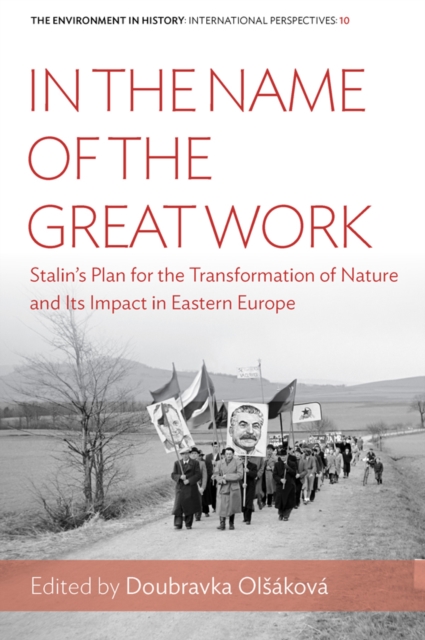
Beginning in 1948, the Soviet Union launched a series of wildly ambitious projects to implement Joseph Stalin's vision of a total \"transformation of nature.\" Intended to increase agricultural yields dramatically, this utopian impulse quickly spread to the newly communist states of Eastern Europe, captivating political elites and war-fatigued publics alike. By the time of Stalin's death, however, these attempts at \"transformation\"-which relied upon ideologically corrupted and pseudoscientific theories-had proven a spectacular failure. This richly detailed volume follows the history of such projects in three communist states-Poland, Hungary, and Czechoslovakia-and explores their varied, but largely disastrous, consequences.
eBook

Sustaining Lake Superior : an extraordinary lake in a changing world
A compelling exploration of Lake Superior's conservation recovery and what it can teach us in the face of climate change.
Book

Mercury, Mining, and Empire
On the basis of an examination of the colonial mercury and
silver production processes and related labor systems, Mercury,
Mining, and Empire explores the effects of mercury pollution in
colonial Huancavelica, Peru, and Potosí, in present-day Bolivia.
The book presents a multifaceted and interwoven tale of what
colonial exploitation of indigenous peoples and resources left in
its wake. It is a socio-ecological history that explores the toxic
interrelationships between mercury and silver production, urban
environments, and the people who lived and worked in them. Nicholas
A. Robins tells the story of how native peoples in the region were
conscripted into the noxious ranks of foot soldiers of
proto-globalism, and how their fate, and that of their communities,
was-and still is-chained to it.
eBook

A companion to global environmental history
The Companion to Global Environmental History offers multiple points of entry into the history and historiography of this dynamic and fast-growing field, to provide an essential road map to past developments, current controversies, and future developments for specialists and newcomers alike.
* Combines temporal, geographic, thematic and contextual approaches from prehistory to the present day
* Explores environmental thought and action around the world, to give readers a cultural, intellectual and political context for engagement with the environment in modern times
* Brings together environmental historians from around the world, including scholars from South Africa, Brazil, Germany, and China
eBook

Disrupted landscapes
The fall of the Soviet Union was a transformative event for the national political economies of Eastern Europe, leading not only to new regimes of ownership and development but to dramatic changes in the natural world itself. This painstakingly researched volume focuses on the emblematic case of postsocialist Romania, in which the transition from collectivization to privatization profoundly reshaped the nation's forests, farmlands, and rivers. From bureaucrats abetting illegal deforestation to peasants opposing government agricultural policies, it reveals the social and political mechanisms by which neoliberalism was introduced into the Romanian landscape.
eBook

Inescapable Ecologies
Among the most far-reaching effects of the modern environmental movement was the widespread acknowledgment that human beings were inescapably part of a larger ecosystem. With this book, Linda Nash gives us a wholly original and much longer history of \"ecological\" ideas of the body as that history unfolded in California's Central Valley. Taking us from nineteenth-century fears of miasmas and faith in wilderness cures to the recent era of chemical pollution and cancer clusters, Nash charts how Americans have connected their diseases to race and place as well as dirt and germs. In this account, the rise of germ theory and the pushing aside of an earlier environmental approach to illness constituted not a clear triumph of modern biomedicine but rather a brief period of modern amnesia. As Nash shows us, place-based accounts of illness re-emerged in the postwar decades, galvanizing environmental protest against smog and toxic chemicals. Carefully researched and richly conceptual, Inescapable Ecologies brings critically important insights to the histories of environment, culture, and public health, while offering a provocative commentary on the human relationship to the larger world.
eBook

Soil heavy metal pollution and risk assessment associated with the Zn-Pb mining region in Yunnan, Southwest China
The environmental assessment and identification of sources of heavy metals in Zn-Pb ore deposits are important steps for the effective prevention of subsequent contamination and for the development of corrective measures. The concentrations of eight heavy metals (As, Cd, Cr, Cu, Hg, Ni, Pb, and Zn) in soils from 40 sampling points around the Jinding Zn-Pb mine in Yunnan, China, were analyzed. An environmental quality assessment of the obtained data was performed using five different contamination and pollution indexes. Statistical analyses were performed to identify the relations among the heavy metals and the pH in soils and possible sources of pollution. The concentrations of As, Cd, Pb, and Zn were extremely high, and 23, 95, 25, and 35% of the samples, respectively, exceeded the heavy metal limits set in the Chinese Environmental Quality Standard for Soils (GB15618-1995, grade III). According to the contamination and pollution indexes, environmental risks in the area are high or extremely high. The highest risk is represented by Cd contamination, the median concentration of which exceeds the GB15618-1995 limit. Based on the combination of statistical analyses and geostatistical mapping, we identified three groups of heavy metals that originate from different sources. The main sources of As, Cd, Pb, Zn, and Cu are mining activities, airborne particulates from smelters, and the weathering of tailings. The main sources of Hg are dust fallout and gaseous emissions from smelters and tailing dams. Cr and Ni originate from lithogenic sources.
Journal Article

Everglades providence
No one did more than Marjory Stoneman Douglas to transform the Everglades from the country's most maligned swamp into its most beloved wetland. By the late twentieth century, her name and her classic The Everglades: River of Grass had become synonymous with Everglades protection. The crusading resolve and boundless energy of this implacable elder won the hearts of an admiring public while confounding her opponents—growth merchants intent on having their way with the Everglades. Douglas's efforts ultimately earned her a place among a mere handful of individuals honored as a namesake of a national wilderness area.
In the first comprehensive biography of Douglas, Jack E. Davis explores the 108-year life of this compelling woman. Douglas was more than an environmental activist. She was a suffragist, a lifetime feminist and supporter of the ERA, a champion of social justice, and an author of diverse literary talent. She came of age literally and professionally during the American environmental century, the century in which Americans mobilized an unprecedented popular movement to counter the equally unprecedented liberties they had taken in exploiting, polluting, and destroying the natural world.
The Everglades were a living barometer of America's often tentative shift toward greater environmental responsibility. Reconstructing this larger picture, Davis recounts the shifts in Douglas's own life and her instrumental role in four important developments that contributed to Everglades protection: the making of a positive wetland image, the creation of a national park, the expanding influence of ecological science, and the rise of the modern environmental movement. In the grand but beleaguered Everglades, which Douglas came to understand is a vast natural system that supports human life, she saw nature's providence.
eBook

Tainted Earth
Smelting is an industrial process involving the extraction of metal from ore. During this process, impurities in ore-including arsenic, lead, and cadmium-may be released from smoke stacks, contaminating air, water, and soil with toxic-heavy metals.
The problem of public health harm from smelter emissions received little official attention for much for the twentieth century. Though people living near smelters periodically complained that their health was impaired by both sulfur dioxide and heavy metals, for much of the century there was strong deference to industry claims that smelter operations were a nuisance and not a serious threat to health. It was only when the majority of children living near the El Paso, Texas, smelter were discovered to be lead-exposed in the early 1970s that systematic, independent investigation of exposure to heavy metals in smelting communities began. Following El Paso, an even more serious led poisoning epidemic was discovered around the Bunker Hill smelter in northern Idaho. In Tacoma, Washington, a copper smelter exposed children to arsenic-a carcinogenic threat.
Thoroughly grounded in extensive archival research,Tainted Earthtraces the rise of public health concerns about nonferrous smelting in the western United States, focusing on three major facilities: Tacoma, Washington; El Paso, Texas; and Bunker Hill, Idaho. Marianne Sullivan documents the response from community residents, public health scientists, the industry, and the government to pollution from smelters as well as the long road to protecting public health and the environment. Placing the environmental and public health aspects of smelting in historical context, the book connects local incidents to national stories on the regulation of airborne toxic metals.
The nonferrous smelting industry has left a toxic legacy in the United States and around the world. Unless these toxic metals are cleaned up, they will persist in the environment and may sicken people-children in particular-for generations to come. The twentieth-century struggle to control smelter pollution shares many similarities with public health battles with such industries as tobacco and asbestos where industry supported science created doubt about harm, and reluctant government regulators did not take decisive action to protect the public's health.
eBook