
Catalogue Search | MBRL


Are you sure you want to remove the book from the shelf?

{{itemTitle}}
33,564
result(s) for
"Environmental sciences -- Databases"
Sort by:
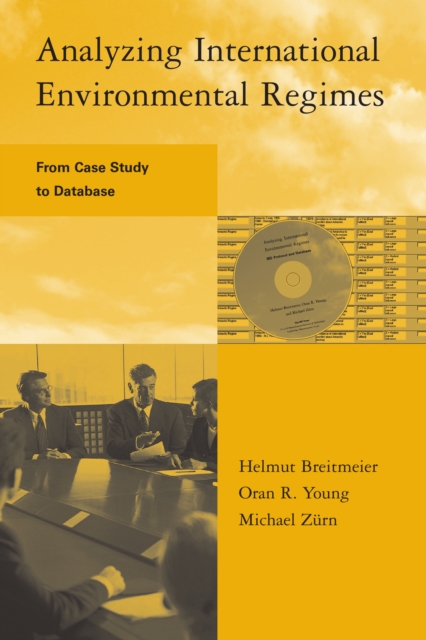
Analyzing international environmental regimes : from case study to database
Introducing the International Regimes Database (IRD) - an important methodological innovation that allows scholars to adopt a quantitative approach to the study of international regimes - this book describes the database and discusses methodological, technical, and architectural issues.
eBook

RESCRIPt: Reproducible sequence taxonomy reference database management
Nucleotide sequence and taxonomy reference databases are critical resources for widespread applications including marker-gene and metagenome sequencing for microbiome analysis, diet metabarcoding, and environmental DNA (eDNA) surveys. Reproducibly generating, managing, using, and evaluating nucleotide sequence and taxonomy reference databases creates a significant bottleneck for researchers aiming to generate custom sequence databases. Furthermore, database composition drastically influences results, and lack of standardization limits cross-study comparisons. To address these challenges, we developed RESCRIPt, a Python 3 software package and QIIME 2 plugin for reproducible generation and management of reference sequence taxonomy databases, including dedicated functions that streamline creating databases from popular sources, and functions for evaluating, comparing, and interactively exploring qualitative and quantitative characteristics across reference databases. To highlight the breadth and capabilities of RESCRIPt, we provide several examples for working with popular databases for microbiome profiling (SILVA, Greengenes, NCBI-RefSeq, GTDB), eDNA and diet metabarcoding surveys (BOLD, GenBank), as well as for genome comparison. We show that bigger is not always better, and reference databases with standardized taxonomies and those that focus on type strains have quantitative advantages, though may not be appropriate for all use cases. Most databases appear to benefit from some curation (quality filtering), though sequence clustering appears detrimental to database quality. Finally, we demonstrate the breadth and extensibility of RESCRIPt for reproducible workflows with a comparison of global hepatitis genomes. RESCRIPt provides tools to democratize the process of reference database acquisition and management, enabling researchers to reproducibly and transparently create reference materials for diverse research applications. RESCRIPt is released under a permissive BSD-3 license at https://github.com/bokulich-lab/RESCRIPt .
Journal Article

Toxicological Effects of Fine Particulate Matter (PM2.5): Health Risks and Associated Systemic Injuries—Systematic Review
Previous studies focused on investigating particulate matter with aerodynamic diameter ≤ 2.5 µm (PM2.5) have shown the risk of disease development, and association with increased morbidity and mortality rates. The current review investigate epidemiological and experimental findings from 2016 to 2021, which enabled the systemic overview of PM2.5’s toxic impacts on human health. The Web of Science database search used descriptive terms to investigate the interaction among PM2.5 exposure, systemic effects, and COVID-19 disease. Analyzed studies have indicated that cardiovascular and respiratory systems have been extensively investigated and indicated as the main air pollution targets. Nevertheless, PM2.5 reaches other organic systems and harms the renal, neurological, gastrointestinal, and reproductive systems. Pathologies onset and/or get worse due to toxicological effects associated with the exposure to this particle type, since it can trigger several reactions, such as inflammatory responses, oxidative stress generation and genotoxicity. These cellular dysfunctions lead to organ malfunctions, as shown in the current review. In addition, the correlation between COVID-19/Sars-CoV-2 and PM2.5 exposure was also assessed to help better understand the role of atmospheric pollution in the pathophysiology of this disease. Despite the significant number of studies about PM2.5's effects on organic functions, available in the literature, there are still gaps in knowledge about how this particulate matter can hinder human health. The current review aimed to approach the main findings about the effect of PM2.5 exposure on different systems, and demonstrate the likely interaction of COVID-19/Sars-CoV-2 and PM2.5.
Journal Article

Empirically based uncertainty factors for the pedigree matrix in ecoinvent
Purpose
Ecoinvent applies a method for estimation of default standard deviations for flow data from characteristics of these flows and the respective processes that are turned into uncertainty factors in a pedigree matrix, starting from qualitative assessments. The uncertainty factors are aggregated to the standard deviation. This approach allows calculating uncertainties for all flows in the ecoinvent database. In ecoinvent 2 the uncertainty factors were provided based on expert judgment, without (documented) empirical foundation. This paper presents (1) a procedure to obtain an empirical foundation for the uncertainty factors that are used in the pedigree approach and (2) a proposal for new uncertainty factors, received by applying the developed procedure. Both the factors and the procedure are a result of a first phase of an ecoinvent project to refine the pedigree matrix approach. A separate paper in the same edition, also the result of the aforementioned project, deals with extending the developed approach to other probability distributions than lognormal (Muller et al.).
Methods
Uncertainty is defined here simply as geometric standard deviation (GSD) of intermediate and elementary exchanges at the unit process level. This fits to the lognormal probability distribution that is assumed as default in ecoinvent 2, and helps to overcome scaling effects in the analysed data. In order to provide the required empirical basis, a broad portfolio of data sources is analysed; it is especially important to consider sources outside of the ecoinvent database to avoid circular reasoning. The ecoinvent pedigree matrix from version 2 is taken as a starting point, skipping the indicator “sample size” since it will not be used in ecoinvent 3. This leads to a pedigree matrix with five data quality indicators, each having five score values. The analysis is conducted as follows: for each matrix indicator and for each data source, indicator scores are set in relation to data sets, building groups of data sets that represent the different data quality indicator scores in the pedigree matrix. The uncertainty in each of the groups is calculated. The uncertainty obtained for the group with the ideal indicator score is set as a reference, and uncertainties for the other groups are set in relation to this reference uncertainty. The obtained ratio will be different from 1, it represents the unexplained uncertainty, additional uncertainty due to a lower data quality, and can be directly used as uncertainty factor candidates.
Results and discussion
The developed approach was able to derive empirically based uncertainty factor candidates for the pedigree matrix in ecoinvent. Uncertainty factors were obtained for all data quality indicators and for almost all indicator scores in the matrix. The factors are the result of the first analysis of several data sources, further analyses and discussions should be used to strengthen their empirical basis. As a consequence, the provided uncertainty factors can change in future. Finally, a few of the qualitative score descriptions in the pedigree matrix left room for interpretation, making their application not ambiguous.
Conclusions and perspectives
An empirical foundation for the uncertainty factors in the pedigree matrix overcomes one main argument against their use, which in turn strengthens the whole pedigree approach for quantitative uncertainty assessment in ecoinvent. This paper provides an approach to obtain an empirical basis for the uncertainty factors, and it provides also empirically based uncertainty factors, for indicator scores in the pedigree matrix. Basic uncertainty factors are not provided, it is recommended to use the factors from ecoinvent 2 for the time being. In the developed procedure, using GSD as the uncertainty measure is essential to overcome scaling effects; it should therefore also be used if the analysed data do not follow a lognormal distribution. As a consequence, uncertainty factors obtained as GSD ratios need to be translated to range estimators relevant for these other distributions. Formulas for this step are provided in a separate paper (Muller et al.). The work presented in this paper could be the starting point for a much broader study to provide a better basis for input uncertainty in LCA, not only in ecoinvent.
Journal Article

Ecological risk assessment and source apportionment of heavy metals contamination: an appraisal based on the Tellus soil survey
It is imperative to comprehend the level and spatial distribution of soil pollution with heavy metals to find sustainable management approaches for affected soils. Selected heavy metals (Mn, Zn, Pb, Cu, Cr, Ni, As, Co, and Cd) and physiochemical parameters were appraised for 620 samples from industrial, agricultural and urban sites in Northern Ireland using the Tellus database. The findings of this study showed that among the analyzed heavy metals, Mn content was the highest and Cd content the lowest. Pearson’s correlation analysis revealed that heavy metals were highly correlated with each other, signifying similar sources for the heavy metals. Mixed factors (anthropogenic and lithogenic) were responsible for the contribution of heavy metals as revealed by multivariate statistical analysis. The results of contamination factor and enrichment factor analyses suggest that As, Cd, and Pb showed very high risk for pollution in the study area. The geoaccumulation index revealed that with the exception of Cd, all analyzed heavy metals showed severe accumulation in the soils. The potential and modified ecological risk indices inferred that Cd, As, and Pb represented ecological threats in the soils of Northern Ireland. The findings of this study will aid in forming approaches to decrease the risks associated with heavy metals in industrial, urban and agricultural soils, and help create guidelines to protect the environment from long-term accumulation of heavy metals.
Journal Article

The impact of environmental regulation on enterprises’ green innovation under the constraint of external financing: evidence from China’s industrial firms
In recent years, the value of green innovation in achieving high-quality development in China has been increasingly recognized. However, studies on different types of green innovation under various environmental regulations have not established a systematic framework; especially, those considering external financing constraints are lacking. This study subdivides both environmental regulation and green innovation. Specifically, environmental regulation is divided into command-and-control regulation, market-incentive regulation, and public-participation regulation. Green technology innovation is divided into cleaner production technology innovation and end-of-pipe technology innovation. Moreover, this study explores whether and how environmental regulation affects green technology innovation, and investigates the moderating effect of external financing constraints, by matching the data from China Environmental Yearbook and China Industrial Enterprise Database. The results show that both command-and-control regulation and market-incentive regulation have the U-shaped relationship with cleaner production technology innovation. Meanwhile, public-participation environmental regulation significantly and positively affects cleaner production technology innovation, whereas market-incentive regulation and public-participation regulation have the inverted U-shaped relationship with end-of-pipe technology innovation. In addition, the external financing constraints have a moderating effect on the relationship between environmental regulation and cleaner production technology innovation.
Journal Article
Making the use of scenarios in LCA easier: the superstructure approach
PurposeMuch progress has recently been made in modelling future background systems for LCA by including future scenario data, e.g. from Integrated Assessment Models (IAMs), into life cycle inventory (LCI) databases. A key problem is, however, that this yields potentially dozens of scenario LCI databases (i.e. LCI databases that represent different scenarios and reference years), instead of a single background database, which is very impractical for LCA modelling purposes. This paper proposes an approach to overcome this problem.MethodsThe approach consists of transforming all scenario LCI databases into a single superstructure database and an associated scenario difference file. The superstructure database is also a regular LCI database, but is constructed to contain all unique exchanges (elementary and intermediate flows) and processes that exist across all scenario LCI databases. The scenario difference file stores the differences between all scenarios and can be used to turn the superstructure into a specific scenario LCI database. This is very fast as it can be done in memory during LCA calculations.Results and discussionA key advantage of the superstructure approach is that a single LCI database can be used to represent different background systems. Therefore, the practitioner does not need to re-link a foreground system to multiple LCI databases, which is work-intensive and invites modelling errors. LCA results for all scenarios and reference years can be calculated automatically. We also illustrate how the superstructure approach has been implemented in the Activity Browser open source LCA software. Although this paper introduces the superstructure approach for background scenarios, it can also be used to model foreground scenarios, and even, as implemented in the Activity Browser, combinations of background and foreground scenarios. Finally, we briefly discuss further challenges that need to be addressed for a more widespread use of background scenarios in LCA.ConclusionsThe superstructure approach presents a practical solution for making the use of future background scenarios more wide-spread and, therefore, to overcome the problem of performing prospective LCA with temporally inconsistent foreground and background systems. The implementation in the Activity Browser makes the approach available for anyone and may serve as inspiration for other LCA software to implement the superstructure approach or a similar concept. While this may be an important technical milestone, additional coordination between data providers, scenario generators, LCA practitioners, and software developers will be required to further facilitate the use of background scenarios in prospective LCA studies.
Journal Article
The ecoinvent database version 3 (part II): analyzing LCA results and comparison to version 2
Purpose
Version 3 of ecoinvent includes more data, new modeling principles, and, for the first time, several system models: the “Allocation, cut-off by classification” (Cut-off) system model, which replicates the modeling principles of version 2, and two newly introduced models called “Allocation at the point of substitution” (APOS) and “Consequential” (Wernet et al.
2016
). The aim of this paper is to analyze and explain the differences in life cycle impact assessment (LCIA) results of the v3.1 Cut-off system model in comparison to v2.2 as well as the APOS and Consequential system models.
Methods
In order to do this, functionally equivalent datasets were matched across database versions and LCIA results compared to each other. In addition, the contribution of specific sectors was analyzed. The importance of new and updated data as well as new modeling principles is illustrated through examples.
Results and discussion
Differences were observed in between all database versions using the impact assessment methods Global Warming Potential (GWP100a), ReCiPe Endpoint (H/A), and Ecological Scarcity 2006 (ES’06). The highest differences were found for the comparison of the v3.1 Cut-off and v2.2. At average, LCIA results increased by 6, 8, and 17 % and showed a median dataset deviation of 13, 13, and 21 % for GWP, ReCiPe, and ES’06, respectively. These changes are due to the simultaneous update and addition of new data as well as through the introduction of global coverage and spatially consistent linking of activities throughout the database. As a consequence, supply chains are now globally better represented than in version 2 and lead, e.g., in the electricity sector, to more realistic life cycle inventory (LCI) background data. LCIA results of the Cut-off and APOS models are similar and differ mainly for recycling materials and wastes. In contrast, LCIA results of the Consequential version differ notably from the attributional system models, which is to be expected due to fundamentally different modeling principles. The use of marginal instead of average suppliers in markets, i.e., consumption mixes, is the main driver for result differences.
Conclusions
LCIA results continue to change as LCI databases evolve, which is confirmed by a historical comparison of v1.3 and v2.2. Version 3 features more up-to-date background data as well as global supply chains and should, therefore, be used instead of previous versions. Continuous efforts will be required to decrease the contribution of Rest-of-the-World (RoW) productions and thereby improve the global coverage of supply chains.
Journal Article

An overview of research on natural resources and indigenous communities: a bibliometric analysis based on Scopus database (1979–2020)
Indigenous people constitute an important section of society in many countries. Despite being a numerically smaller section, they are culturally diverse and distributed mostly in valuable natural resources-rich regions worldwide. In the era of globalization, industrialization, and trade liberalization, indigenous communities have become more vulnerable to displacement, land alienation, cultural erosion, and social exclusion. During the last few decades, researchers have tried to evaluate and document their problems and prospects. The present study analyzes the trends and characteristics of research and development conducted about indigenous communities. The research hotspots based on keywords, productive researchers, and journals during 1979–2020 were mapped using the Scopus database. The analysis was carried out using the bibliometrix R-package and VOSviewer software tool. Consistent growth in the number of studies and citations on indigenous communities concerning environmental conservation, natural resources, and economic development was observed during the last four decades. The present findings reveal that research on the indigenous community has attracted the attention of the scientific community in recent years. Qualitative studies with methodological rigor, having potential for social and policy implications, are warranted to understand and respect ingrained cultural and socio-economic diversity among these communities.
Graphical abstract
Journal Article

The impact of environmental regulation on firm exports: evidence from environmental information disclosure policy in China
As an important environmental regulation tool, does the environmental information disclosure have the pollution haven effect and adversely affect Chinese export? Research on such topics can provide implications for Chinese policymakers to formulate realistic environmental policies and employ information disclosure environmental regulation tools to coordinate the economic-environmental development. Using the 2003–2013 Annual Survey of Industrial Firms Database and difference-in-difference identification, we examine the effect of environmental information disclosure policy on firm exports and its impacting mechanisms. The empirical results show that the Chinese environmental information disclosure policy has reduced the scale of industrial firms’ exports in the regulated regions, indicating the existence of the pollution heaven effect in China. And also, we find that this policy mainly inhibits export activities of enterprises in coastal areas. Considering enterprise heterogeneity, the policy plays an inhibitory role in the exports of the non-state-owned firms, large firms, and low-productivity firms. Furthermore, the impact mechanism test shows that corporate financing constraint and production costs are important channels for environmental information disclosure policy affecting corporate export activities. It implies that, in developing countries such as China, policymakers and enterprises need to adopt forward-looking strategies to reduce the negative influence of environmental constraints on corporate exports and coordinate environmental governance and sound development of enterprises.
Journal Article