
Catalogue Search | MBRL


Are you sure you want to remove the book from the shelf?

{{itemTitle}}
58
result(s) for
"Environmentalism -- History -- 21st century"
Sort by:

Rethinking the American environmental movement post-1945
\"Rethinking the American Environmental Movement post-1945 draws on new histories of local environmental activism to analyze actions of those who helped and those who hindered the movement. It provides a concise overview of the American environmental movement and is essential reading for both students or scholars\"-- Provided by publisher.
Book
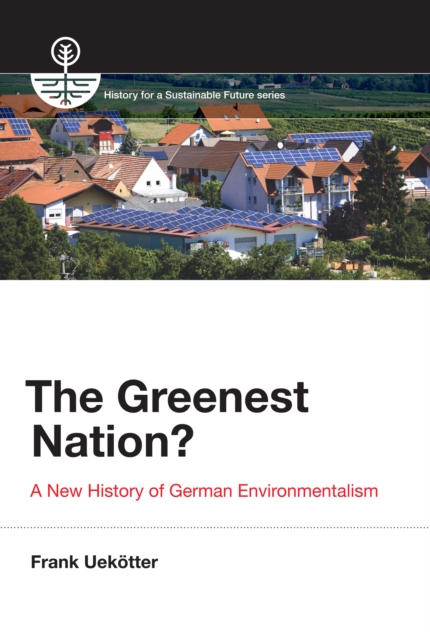
The Greenest Nation?
Germany enjoys an enviably green reputation. Environmentalists in other countries applaud its strict environmental laws, its world-class green technology firms, its phase-out of nuclear power, and its influential Green Party. Germans are proud of these achievements, and environmentalism has become part of the German national identity. InThe Greenest Nation?Frank Uekötter offers an overview of the evolution of German environmentalism since the late nineteenth century. He discusses, among other things, early efforts at nature protection and urban sanitation, the Nazi experience, and civic mobilization in the postwar years. He shows that much of Germany's green reputation rests on accomplishments of the 1980s, and emphasizes the mutually supportive roles of environmental nongovernmental organizations, corporations, and the state. Uekötter looks at environmentalism in terms of civic activism, government policy, and culture and life, eschewing the usual focus on politics, prophets, and NGOs. He also views German environmentalism in an international context, tracing transnational networks of environmental issues and actions and discussing German achievements in relation to global trends. Bringing his discussion up to the present, he shows the influence of the past on today's environmental decisions. As environmentalism is wrestling with the challenges of the twenty-first century, Germany could provide a laboratory for the rest of the world.
eBook


From Pink to Green
From the early 1980s, the U.S. environmental breast cancer movement has championed the goal of eradicating the disease by emphasizing the importance of reducing-even eliminating exposure to chemicals and toxins.From Pink to Greenchronicles the movement's disease prevention philosophy from the beginning.Challenging the broader cultural milieu of pink ribbon symbolism and breast cancer \"awareness\" campaigns, this movement has grown from a handful of community-based organizations into a national entity, shaping the cultural, political, and public health landscape. Much of the activists' everyday work revolves around describing how the so called \"cancer industry\" downplays possible environmental links to protect their political and economic interests and they demand that the public play a role in scientific, policy, and public health decision-making to build a new framework of breast cancer prevention.
From Pink to Greensuccessfully explores the intersection between breast cancer activism and the environmental health sciences, incorporating public and scientific debates as well as policy implications to public health and environmental agendas.
eBook

Climate change, literature, and environmental justice : poetics of dissent and repair
\"This book shows how the discourse of climate change emerges within histories of colonization, enslavement, and revolution. By placing climate change within the longer histories of enslavement and settler colonialism, Janet Fiskio reveals the connections between climate change activism and enslavement, genocide, imperialism, white supremacy, incarceration. Organized around three themes-speculative pasts and futures; practices of dissent, mourning, and repair; and everyday inhabitation and social care-Climate Change, Literature, and Environmental Justice shows the ways that frontline communities resist environmental racism and protect and repair the world. It provides anaylisis of expressive cultures, including literature, dance, protest movements, oral history, and cooking utilizing decolonial and reparative theories. It offers readings of key figures, such as Octavia Butler, Louise Erdrich, Winona LaDuke, Mark Nowak, Simon Ortiz, Jesmyn Ward, and Colson Whitehead\"-- Provided by publisher.
Book

Old Wine in New Bottles: The Technological Promise of Biorefinery In Historical Perspective
Biorefineries are often lauded as revolutionary, sustainable new sources of power. This article critically examines biorefineries from historical and environmentalist perspectives, highlighting flaws such narratives. It proposes an alternative to the biorefinery paradigm that draws on critical environmentalist scholarship, French political ecology and the German tradition of sanfte Chemie (soft chemistry). History, the article argues, is crucial for identifying technological dead ends.
Journal Article
Postcolonial environments : nature, culture and the contemporary Indian novel in English
Postcolonial Environments examines the relationship between contemporary environmental crises and culture by offering a series of provocative readings of key Indian novels in English, making an original and important contribution to the emerging theories of 'green postcolonialism'.
eBook

Schoolchildren’s activism is a lesson for health professionals
Like them, we must campaign relentlessly for carbon net zero by 2030
Journal Article