
Catalogue Search | MBRL


Are you sure you want to remove the book from the shelf?

{{itemTitle}}
53
result(s) for
"Environmentalism Moral and ethical aspects."
Sort by:

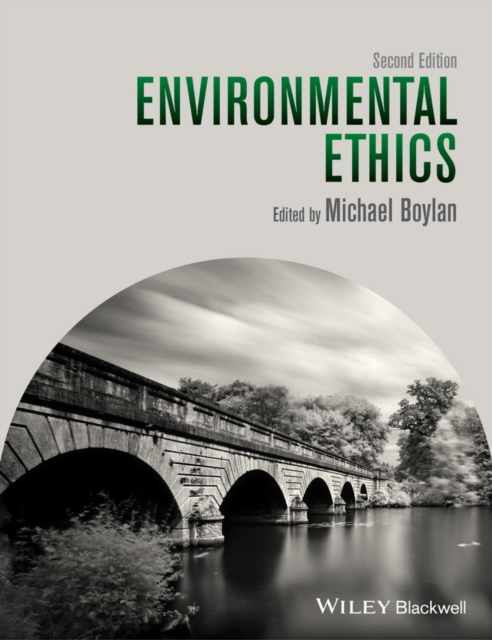
Environmental ethics
The second edition of Environmental Ethics combines a strong theoretical foundation with applications to some of the most pressing environmental problems. Through a mix of classic and new essays, it discusses applied issues such as pollution, climate change, animal rights, biodiversity, and sustainability. Roughly half of the selections are original essays new to this edition. Accessible introduction for beginners, including important established essays and new essays commissioned especially for the volume Roughly half of the selections are original essays new to this edition, including an entirely new chapter on Pollution and climate change and a new section on Sustainability Includes new material on ethical theory as a grounding for understanding the ethical dimensions of the environment, our interactions with it, and our place in it The text incorporates helpful pedagogy, including extensive editorial material, cases, and study questions Includes key information on recent developments in the field Presents a carefully selected set of readings designed to progressively move the reader to competency in subject comprehension and essay writing.
eBook

Resisting extractivism : Peruvian gold, everyday violence, and the politics of attention
\"Through an ethnographic and systematic comparison of four gold mining conflicts in Peru, Resisting Extractivism presents an account of subtle and routine forms of violence, analyzing how meaning making practices render certain types of damage and suffering noticeable while occluding others. The book thus builds a ground-up theory of violence-how it is framed, how it impacts people's lived experiences, and how it can be confronted\"-- Provided by publisher.
BOOK

Carbon criminals, climate crimes
Carbon Criminals, Climate Crimes analyzes the looming threats posed by climate change from a criminological perspective. It advances the field of green criminology through a examination of the criminal nature of catastrophic environmental harms resulting from the release of greenhouse gases. The book describes and explains what corporations in the fossil fuel industry, the U.S. government, and the international political community did, or failed to do, in relation to global warming. Carbon Criminals, Climate Crimes integrates research and theory from a wide variety of disciplines, to analyze four specific state-corporate climate crimes: continued extraction of fossil fuels and rising carbon emissions; political omission (failure) related to the mitigation of these emissions; socially organized climate change denial; and climate crimes of empire, which include militaristic forms of adaptation to climate disruption. The final chapter reviews policies that could mitigate greenhouse gas emissions, adapt to a warming world, and achieve climate justice.
eBook

Beyond Money
What would a world without money look like? This book is a lively thought experiment that deepens our understanding of how money is the driver of political power, environmental destruction and social inequality today, arguing that it has to be abolished rather than repurposed to achieve a postcapitalist future. Grounded in historical debates about money, Anitra Nelson draws on a spectrum of political and economic thought and activism, including feminism, ecoanarchism, degrowth, permaculture, autonomism, Marxism and ecosocialism. Looking to Indigenous rights activism and the defence of commons, an international network of activists engaged in a fight for a money-free society emerges. Beyond Money shows that, by organising around post-money versions of the future, activists have a hope of creating a world that embodies their radical values and visions.
eBook

Total Liberation
When in 2001 Earth Liberation Front activists drove metal spikes into hundreds of trees in Gifford Pinchot National Forest, they were protesting the sale of a section of the old-growth forest to a timber company. But ELF's communiqué on the action went beyond the radical group's customary brief. Drawing connections between the harms facing the myriad animals who make their home in the trees and the struggles for social justice among ordinary human beings resisting exclusion and marginalization, the dispatch declared, \"all oppression is linked, just as we are all linked,\" and decried the \"patriarchal nightmare\" in the form of \"techno-industrial global capitalism.\"
InTotal Liberation, David Naguib Pellow takes up this claim and makes sense of the often tense and violent relationships among humans, ecosystems, and nonhuman animal species, expanding our understanding of inequality and activists' uncompromising efforts to oppose it. Grounded in interviews with more than one hundred activists, on-the-spot fieldwork, and analyses of thousands of pages of documents, websites, journals, and zines,Total Liberationreveals the ways in which radical environmental and animal rights movements challenge inequity through a vision they call \"total liberation.\" In its encounters with such infamous activists as scott crow, Tre Arrow, Lauren Regan, Rod Coronado, and Gina Lynn, the book offers a close-up, insider's view of one of the most important-and feared-social movements of our day. At the same time, it shows how and why the U.S. justice system plays to that fear, applying to these movements measures generally reserved for \"jihadists\"-with disturbing implications for civil liberties and constitutional freedom.
How do the adherents of \"total liberation\" fight oppression and seek justice for humans, nonhumans, and ecosystems alike? And how is this pursuit shaped by the politics of anarchism and anticapitalism? In his answers, Pellow provides crucial in-depth insight into the origins and social significance of the earth and animal liberation movements and their increasingly common and compelling critique of inequality as a threat to life and a dream of a future characterized by social and ecological justice for all.
eBook

Designer biology
Advances in our scientific understanding and technological power in recent decades have dramatically amplified our capacity to intentionally manipulate complex ecological and biological systems. An implication of this is that biological and ecological problems are increasingly understood and approached from an engineering perspective. In environmental contexts, this is exemplified in the pursuits of geoengineering, designer ecosystems, and conservation cloning. In human health contexts, it is exemplified in the development of synthetic biology, bionanotechnology, and human enhancement technologies. Designer Biology: The Ethics of Intensively Engineering Biological and Ecological Systems consists of thirteen chapters (twelve of them original to the collection) that address the ethical issues raised by technological intervention and design across a broad range of biological and ecological systems. Among the technologies addressed are geoengineering, human enhancement, sex selection, genetic modification, and synthetic biology. This collection advances and enriches our understanding of the ethical issues raised by these technologies and identifies general lessons about the ethics of engineering complex biological and ecological systems that can be applied as new technologies and practices emerge. The insights that emerge will be especially valuable to students and scholars of environmental ethics, bioethics, or technology ethics.
eBook

Just Sustainabilities
Environmental activists and academics alike are realizing that a sustainable society must be a just one. Environmental degradation is almost always linked to questions of human equality and quality of life. Throughout the world, those segments of the population that have the least political power and are the most marginalized are selectively victimized by environmental crises. This book argues that social and environmental justice within and between nations should be an integral part of the policies and agreements that promote sustainable development. The book addresses the links between environmental quality and human equality and between sustainability and environmental justice.
eBook

The Impact of Ethical Leadership on Employee Green Behaviors: A Study of Academic Institutions in the UAE
This study explores the role of ethical leadership in fostering employee green behaviors (EGBs) within higher education institutions (HEIs) in the UAE. While environmental initiatives are increasingly being integrated into university operations, there has been limited empirical research examining how leadership styles influence pro-environmental behaviors among academic staff. Using a mixed-methods sequential explanatory design, our study surveyed 105 HEI employees and conducted in-depth interviews with 6 of the participants. The quantitative findings reveal a moderate but significant positive correlation between ethical leadership (EL) and EGB (ρ = 0.314, p < 0.001). The reliability scores for both EL (α = 0.888) and EGB (α = 0.754) confirmed the internal consistency of the measurement items used. The qualitative insights support the theoretical foundation drawn from Social Learning, Value–Belief–Norm, and Environmental Stewardship Theories. Employees reported modeling their green behaviors on observable leadership actions aligning with their shared moral values. A key distinction emerged between authentic and performative green behaviors, with employees responding more positively to leaders who modeled consistency and sincerity. This study concludes that ethical leadership significantly influences the environmental culture in HEIs by embedding sustainability into daily practices and institutional values. This research addresses a regional and theoretical gap, contextualizing ethical leadership in the Middle Eastern academic setting and offering practical implications for leadership development, policy alignment, and sustainable cultural transformation.
Journal Article
The moral weight of ecology
If the natural environment is in the precarious state to which many attest, what would this demand of us?What duties are suggested by the observation that our collective behavior threatens the planet, even if no particular individual intends harm?.
eBook