
Catalogue Search | MBRL


Are you sure you want to remove the book from the shelf?

{{itemTitle}}
1,326
result(s) for
"Environmentalist thought "
Sort by:

Greening citizenship : sustainable development, the state and ideology
The greening of citizenship, the state and ideology creates both opportunities and bottlenecks for progressive political movements seeking justice in sustainable development. Normative theories overlook the partial assimilation of hitherto critical ideological values to the post-industrial eco-modernizing state. Achieving ideals such as dissolving the nature/culture dualism, unifying the private and public spheres, fostering non-contractualism, non-territorialism and ethico-moral awareness of finite ecospace has not necessarily fostered justice. Indeed, the state implements these ideals by supporting corporate, social and environmental responsibility, dismantling the welfare state, embracing market-globalization, green consumerism and 'livability'. Rather, as Scerri argues, the greening of citizenship evokes a new grammar of justice that centers on a 'test of wellness'.
Book

Emancipatory Feminism in the Time of Covid-19
The Covid-19 pandemic threw into stark relief the multi-dimensional threats created by neoliberal capitalism. Government measures to alleviate the crisis were largely inadequate, leaving women – in particular working-class women – to carry the increased burden of care work while at the same time placing themselves in direct risk as frontline workers. Emancipatory Feminism in the Time of Covid-19, the seventh volume in the Democratic Marxism series, explores how many subaltern women – working class, peasant and indigenous – challenge hegemonic neoliberal feminism through their resistance to ordinary capitalist practices and ecological extractivism. Contributors cover women’s responses in a wide range of contexts: from women leading the defence of Rojava – the Kurdish region of Syria, to approaches to anti-capitalist ecology and building food secure pathways in communities across Africa, to championing climate justice in mining affected communities and transforming gender divisions in mining labour practices in South Africa, to contesting macro-economic policies affecting the working conditions of nurses. Their practices demonstrate a feminist understanding of the current systemic crises of capitalism and patriarchal oppression. What is offered in this collection is a subaltern women’s grassroots resistance focused on advancing and enabling solidarity-based political projects, deepening democracy, building capacities and alliances to advance new feminist alternatives.
eBook

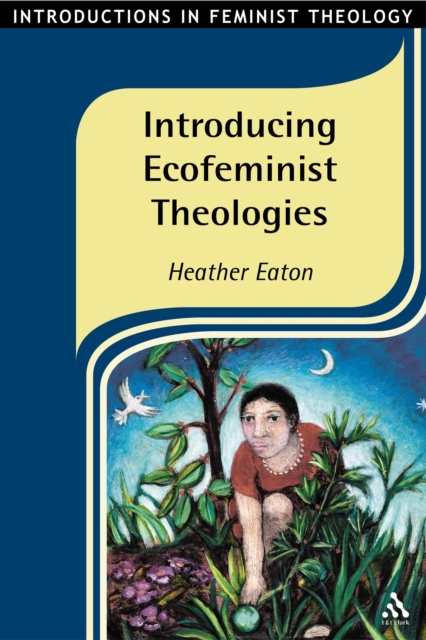
Introducing ecofeminist theologies
This book is about ecofeminism and its encounter with theology, predominantly that of Christian theology in Euro-western contexts. It introduces and explores ecofeminism and the encounter. The goal is to understand the significance and implications of ecofeminism and its contribution and challenge to theology. A further goal is to assist ecofeminist theology, or theologies, to be more effective in preventing ecological ruin, assisting women's struggles for freedom and supporting the flourishing of all life on earth. Ecofeminism represents ways of discerning associations of many kinds between the feminist and ecological movements, and between the oppression and domination of both women and the earth. Ecofeminism is an insight, referring to critical analyses, political actions, historical research, intuitions and ideals. The ecological crisis is creating a pivotal moral and religious challenge, and new contexts for theology. There is a renewed spiritual sensitivity towards the natural world. We are in a time of a spiritual awakening, wherein the earth and all life are experienced, as sacred, where it is possible to experience awe and wonder, and encounter the ineffable. Ecofeminist theologies are at the intersection of these ideas and experiences. They are the efforts of particular people who see and experience possibilities for greater life, more justice and freedom. They do not accept that injustice and ecological ruin are inevitable. Ecofeminist efforts are directed towards reducing further ecological and social devastation, and awakening consciousness to the immense beauty and elegance of all life on this fragile yet awesome blue-green planet.
eBook

Sustainagility
Sustainagility explores the way in which innovative and agile business ideas, processes and products have the ability to solve some of the world's most complex sustainability challenges. Examples and case studies will be used to demonstrate how real companies have successfully used innovative and agile methods to improve their businesses, make a profit and fight some of the greatest threats to the world's ecosystems.
eBook
Environmental Philosophy: The Art of Life in a World of Limits
Humankind has long considered the relationship it holds with nature to be both a blessing and a challenge. The onset of climate change has brought a new impetus to this relationship. This volume of Advances in Sustainability and Environmental Justice will examine environmental philosophy from a number of viewpoints. Each contributor has a unique perspective on the interaction and engagement between humanity and the rest of nature, from the technological to the philosophical. Environmental Philosophy: the Art of Life in a World of Limits provides a series of interesting studies on humanity's place in the world, and the impact this is having on the planet. The book poses the question as to whether life can be lived in harmony with nature, and what limits can be achieved in the impact such life has on the world around us.
eBook

Disability Studies and the Environmental Humanities
Although scholars in the environmental humanities have been exploring the dichotomy between \"wild\" and \"built\" environments for several years, few have focused on the field of disability studies, a discipline that enlists the contingency between environments and bodies as a foundation of its scholarship. On the other hand, scholars in disability studies have demonstrated the ways in which the built environment privileges some bodies and minds over others, yet they have rarely examined the ways in which toxic environments engender chronic illness and disability or how environmental illnesses disrupt dominant paradigms for scrutinizing \"disability.\"Designed as a reader for undergraduate and graduate courses,Disability Studies and the Environmental Humanitiesemploys interdisciplinary perspectives to examine such issues as slow violence, imperialism, race, toxicity, eco-sickness, the body in environmental justice, ableism, and other topics. With a historical scope spanning the seventeenth century to the present, this collection not only presents the foundational documents informing this intersection of fields but also showcases the most current work, making it an indispensable reference.
eBook

Shakespeare's Botanical Imagination
Writing on the cusp of modern botany and during the heyday of English herbals and garden manuals, Shakespeare references at least 180 plants in his works and makes countless allusions to horticultural and botanical practices. Shakespeare's Botanical Imagination moves plants to the foreground of analysis and brings together some of the rich and innovative ways that scholars are expanding the discussion of plants and botany in Shakespeare's writings. The essays gathered here all emphasize the interdependence and entanglement of plants with humans and human life, whether culturally, socially, or materially, and vividly illustrate the fundamental role plants play in human identity. As they attend to the affinities and shared materiality between plants and humans in Shakespeare's works, these essays complicate the comfortable Aristotelian hierarchy of human-animal-plant. And as they do, they often challenge the privileged position of humans in relation to non-human life.
eBook

The Logos of the Living World: Merleau-Ponty, Animals, and Language
Today we urgently need to reevaluate the human place in the world in relation to other animals. This book puts Maurice Merleau-Ponty's philosophy into dialogue with literature, evolutionary biology, and animal studies. In a radical departure from most critical animal studies, it argues for evolutionary continuity between human cultural and linguistic behaviors and the semiotic activities of other animals. In his late work, Derrida complained of philosophers who denied that animals possessed such faculties, but he never investigated the wealth of scientific studies of actual animal behavior. Most animal studies theorists still fail to do this. Yet more than fifty years ago, Merleau-Ponty carefully examined the philosophical consequences of scientific animal studies, with profound implications for human language and culture. For him, \"animality is the logos of the sensible world: an incorporated meaning.\" Human being is inseparable from animality. This book differs from other studies of Merleau-Ponty by emphasizing his lifelong attention to science. It shows how his attention to evolutionary biology and ethology anticipated recent studies of animal cognition, culture, and communication.
eBook

Handbook of Environmental History in Japan
Japan: a land plagued by volcanoes, earthquakes and typhoons, yet blessed with a climate suitable for all manner of agriculture and forestry, and positioned where ocean currents collide and bring an abundance of the ocean's resources to its people; a country which moved quickly from an agrarian pre-industrial society to become one of the world's great economic powerhouses in only a few decades, spoiling water, air and land in the process, bringing misery to many of its people; a country with expansionist desires, colonizing neighboring lands, leading to war, defeat, destruction and, for the first time in history, nuclear devastation and its aftermath; a land and its people which share a remarkable resilience and ability to evaluate and correct their mistakes and renew their trajectory towards a better future.
eBook