
Catalogue Search | MBRL


Are you sure you want to remove the book from the shelf?

{{itemTitle}}
130
result(s) for
"Enzensberger, Hans Magnus"
Sort by:
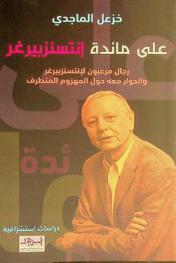
على مائدة إنتسنزبيرغر : رجال مرعبون لإنتسنزبيرغر والحوار معه حول المهزوم المتطرف
الشاعر والمفكر الألماني هانس ماغنوس إنتسبيرغير نشر كتيبا صغيرا اسمه (رجال مرعبون-محاولة لدراسة المهزوم المتطرف) حاول فيها دراسة ظاهرة الإرهابي باعتباره مهزوما متطرفا من خلال عوامل نفسية واجتماعية وسياسية وأرجع الظاهرة إلى الفشل والهزيمة التي يعاني منهما الآخر غير الغربي وكان يقصد به الشرقي المسلم على وجه التحديد ؛ وقد أثار الكتاب جدالا واسعا ؛ فهذا الكتاب بعد أن أدارت حوله حوارا متفرقا ساهم فيه المترجم (الدكتور عدنان عباس علي) والناقد الألماني (هيننغ ريتر) والشاعر (خزعل الماجدي) إضافة الى حوار منفصل مع الشاعر والمفكر العربي (أدونيس) حول الموضوع ذاته. الكتاب يحاول أن يعيد قراءة ظاهرة التطرف والإرهاب في عالمنا المعاصر ويحاول كذلك الإجابة عن بعض الأسئلة المتعلقة بأصول هذه الظاهرة حاضرها ومستقبلها إنه كتاب نموذجي للحوار الحضاري بين الشرق والغرب حول واحدة من أكثر الأمور سخونة وفاعلية في تاريخهما المعاصر.
Book

“Rising in speech we do not speak”: Lyric Survival in Three Books of German Poetry by Stevens et al
For Judith Butler, the act of translating reminds us that in a global world we need a “multilingual epistemology,” but also that all languages have foreignness built into them. A special issue on Wallace Stevens in relation to Germany offers the perfect occasion to investigate how his poetry survives in German. Of the seven book-length collections of Stevens’s verse that have appeared in German translation so far, three are retained for analysis: Der Mann mit der blauen Gitarre (1995), Hellwach, am Rande des Schlafs (2011), and Teile einer Welt (2014). After a consideration of the remarkably different ways in which these books present themselves to the reader, and what their respective selection mechanisms are, a discussion of five clustered features seeks to demonstrate how Stevens’s German translators combine “domesticating” and “foreignizing” approaches, respond to three formal aspects of his poetry (stanza formation, end rhyme, meter), deal with the sentence unit, arrange and rearrange line endings, and compose German varieties of heteroglossia.
Journal Article


Revolutionary Subjects
Revolutionary Subjects explores the literary and cultural significance of Cold War solidarities and offers insight into a substantial and under-analyzed body of German literature concerned with Latin American thought and action. It shows how literary interest in Latin America was vital for understanding oppositional agency and engaged literature in East and West Germany, where authors developed aesthetic solidarities that anticipated conceptual reorganizations of the world connoted by the transnational or the global. Through a combination of close readings, contextual analysis, and careful theoretical work, Revolutionary Subjects traces the historicity and contingency of aesthetic practices, as well as the geocultural grounds against which they unfolded, in case studies of Volker Braun, F.C. Delius, Hans Magnus Enzensberger and Heiner Müller. The book's cultural and comparative approach offers an antidote to imprecise engagements with the transnational, historicizing critical impulses that accompany the production of disciplinary boundaries. It paves the way for more reflexive debate on the content and method of German Studies as part of a broader landscape of world literature, comparative literature and Latin American Studies.
eBook

Revolutionary subjects : German literatures and the limits of aesthetic solidarity with Latin America
\"Revolutionary Subjects demonstrates that East and West German literary interests in Latin America coincided with debates about the political relevance of literature in the Cold War. Through a combination of close reading, contextual analysis, and careful theoretical work, Trnka examines textual instances of aesthetic solidarity, which, she argues, anticipated conceptual reorganizations of the world connoted by the transnational or the global\" -- Provided by publisher.
BOOK

“Macht das Ohr auf”: Anthropology and Functional Transformation of Sound Media in German Cosmic Music Between the 1960s and 1970s
This article highlights the importance of the discourse on sound media for the development of so-called “cosmic music” in Germany in the late 1960s and early 1970s. Already the slogan of the Ohr record label “Macht das Ohr auf” (Open up your ears) testifies to the awareness of Rolf-Ulrich Kaiser, the founder of the label, and the bands gathered around him about the impact of media on everyday practices and the reflection on the physiological effect of sound. In particular, this article focuses on the figure of Kaiser and his Buch der neuen Pop-Musik (1969), where the author stresses the emancipatory potential of popular music starting from the considerations put forward by H. Marcuse, T. W. Adorno and M. McLuhan. On the basis of these suggestions, Kaiser envisages the possibility of a ‘functional transformation’ of sound media, placing himself in a long German tradition of reflections on the relationship between man and technology, in which it is possible to identify a line that proposes a progressive and socialist use of technical reproduction apparatuses (Benjamin, Brecht, Enzensberger) and another line that questions the connection between media and mystical experience (Mann, Hesse). In this sense, this paper explores the intellectual and literary context of the media anthropology on which the sound aesthetics of German cosmic music was founded.
Journal Article
Stevens and Germany, Stevens in West and East Germany
This second of two special issues on Wallace Stevens and Germany expands the focus of the first issue to include the East German publication of a collection of his translated poems and features contributions on important translations in reunified Germany, Steven’s relevance to critical theory (specifically Adorno’s thinking), and his relation to wisdom literature and mysticism (here the reference is Rilke). Taken together, these paired special issues open up new fields of research on a poet who grew up speaking German; cultivated an interest in German poetry, art, and philosophy; researched his own German heritage (on his mother’s side) and the history of German-speaking communities near his birthplace; and used German words in his poetry and correspondence.
Journal Article
Introduction: Stevens and Germany, Stevens in (West) Germany
This first of two special issues on \"Stevens and Germany\" addresses a neglected topic. Five contributions by Philip McGowan, Gül Bilge Han, James Dowthwaite, George Kovalenko, and Christoph Irmscher explore the broad contours of Wallace Stevens's relation to Germany, spanning from youthful identification to tempered wartime and postwar reflections. The contributions also highlight moments in the poet's life and writing, including his visit to a German art exhibition in 1909 and his later genealogical research into the maternal, German side of the family. A related topic of scholarly neglect, at least in the United States, has been the postwar (West) German reception of Stevens. Not until the end of the Cold War and the fall of the Berlin Wall was his poetry able to slough its initial reputation as elitist and conformist. A series of new translations, most of them appearing in the twenty-first century, have helped revitalize German interest in the American poet.
Journal Article
Tourist Trap: Cuba as a Microcosm
Hans Magnus Enzensberger, who called tourism an industry “whose production is identical to its advertisement”, also wrote about the pitfalls of what he called the “tourism of the revolution” that flourished between the world wars in Soviet Russia. This essay combines both perspectives in a discussion of the experience of making a film about ecology in Cuba in 2019, Cuba: Living Between Hurricanes, which includes a section on the tourist industry. Informed by the perspectives of autoethnography and phenomenology, the author explores the cognitive dissonance of the filmmaker’s ambiguous relationship, as a professional tourist, to the contradictions of the tourist industry as refracted through the small coastal town of Caibarién on the north coast where Hurricane Irma made landfall in 2017.
Journal Article

Early Video Art, Educational Television, and the Positivity of Practice
In an essay examining the state of art education in 1993, the Belgian art critic THIERRY DE DUVE wrote that an emphasis on “practice” had replaced “medium” in art schools.1 The history of the art school, he claimed, developed in three major phases: first, the traditional academy, characterized by imitating the master artists; second, the Bauhaus model, which replaced imitation with invention and emphasized medium and form; and a third, post-Bauhaus paradigm according to which attitude replaced form, and practice replaced medium. An emphasis on practice (as situated knowledge) and the abandonment of the studio—as undertaken by conceptualized art schools such as the California Institute of the Arts in the early 1970s—was perhaps an epiphenomenon of a historical shift in global social structures and modes of production (i.e., a negative symptom as DE DUVE calls it). [...]Kaizen’s scholarship is just the latest examination of how artists worked “up against” the qualities of the medium, to use his phrase.5 Others, such as Yvonne Spielmann and Chris Meigh-Andrews, have examined video in the context of television even more narrowly, hewing toward a technology-oriented narrative and a residual attitude of resistance toward art world institutions.6 I follow Marita Sturken, however, in looking at how artists used video among other tools for making art, not necessarily for the medium’s inherent qualities. For Rosler, television was ruled by the consciousness industry, a term put forward by the German author Hans Magnus Enzensberger to denote the commodification of mass media and education alike; but Rosler, among others, saw how video art could be used to infiltrate this sphere of public consciousness.11 As I discuss in the final section of this essay, the artist William Wegman likewise experiments, quite playfully, with such infiltrations, not only in his early work from the 1970s but also in a number of segments produced for Sesame Street starting in 1989.
Journal Article