
Catalogue Search | MBRL


Are you sure you want to remove the book from the shelf?

{{itemTitle}}
21
result(s) for
"Epic poetry, Assyro-Babylonian -- History and criticism"
Sort by:

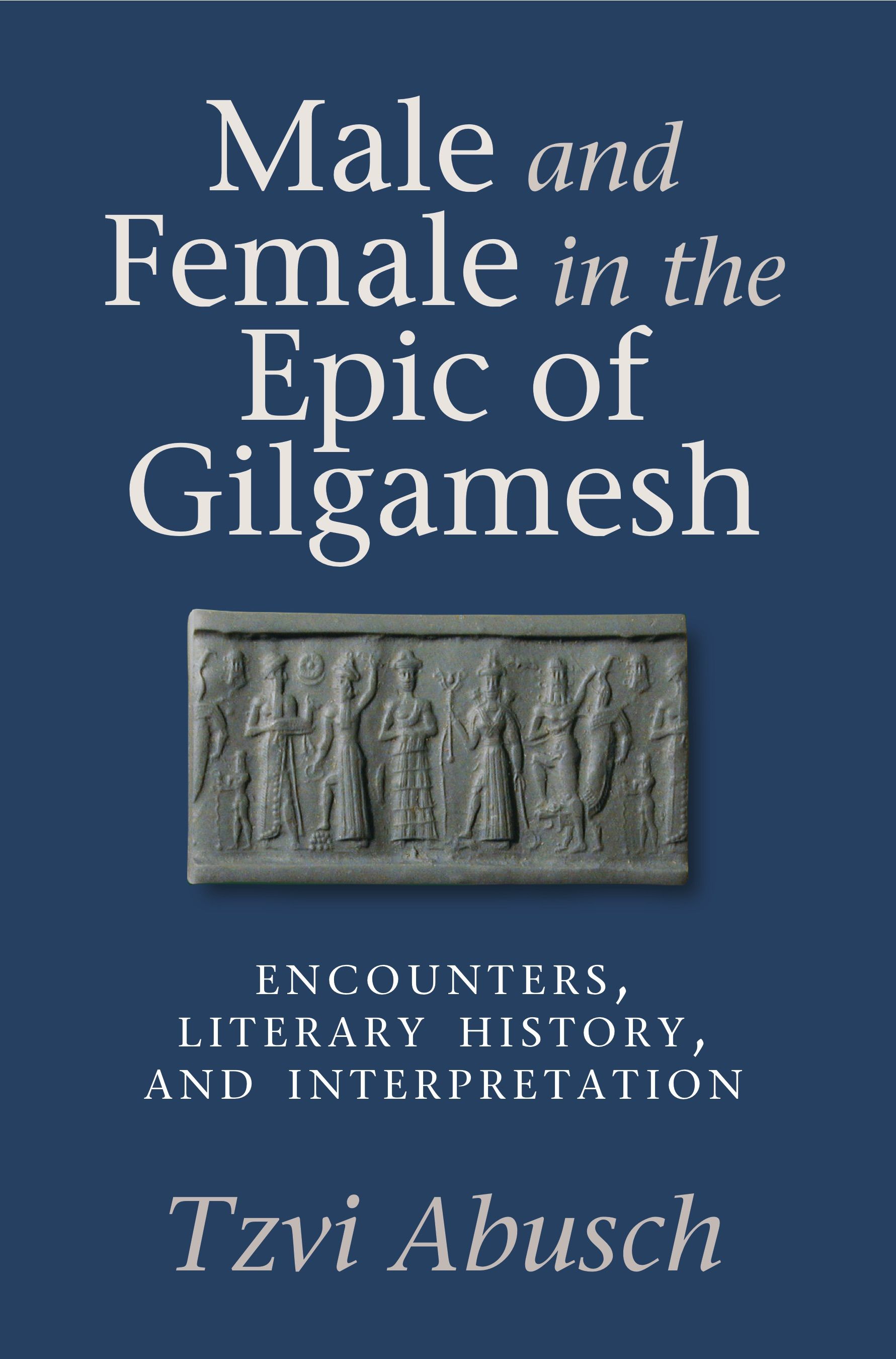
Male and female in the epic of Gilgamesh : encounters, literary history, and interpretation
The deeds and struggles of Gilgamesh, legendary king of the city-state Uruk in the land of Sumer, have fascinated readers for millennia. They are preserved primarily in the Epic of Gilgamesh, one of the most well-known pieces of Mesopotamian literature. Studying the text draws us into an orbit that is engaging and thrilling, for it is a work of fantasy and legend that addresses some of the very existential issues with which contemporary readers still grapple. We experience the excitement of trying to penetrate the mind-set of another civilization, an ancient one—in this instance, a civilization that ultimately gave rise to our own. The studies gathered here all demonstrate Tzvi Abusch's approach to ancient literature: to make use of the tools of literary, structural, and critical analysis in service of exploring the personal and psychological dimensions of the narration. The author focuses especially on the encounters between males and females in the story. The essays are not only instructive for understanding the Epic of Gilgamesh, they also serve as exemplary studies of ancient literature with a view to investigating streams of commonality between ancient times and ours
eBook

The Buried Foundation of the Gilgamesh Epic
Based on contrasting characterization and narrative logic between the central Huwawa episode and the remaining material for the earliest Akkadian Gilgamesh, this book challenges the accepted notion that the famous epic was composed without recourse to a previous Akkadian narrative.
eBook

Gilgamesh, Enkidu, and the Netherworld and the Sumerian Gilgamesh Cycle
In den Bänden der Reihe werden Themen aus der Philologie der Keilschriftsprachen (Sumerisch, Akkadisch, Hethitisch, Hurritisch, Elamisch u. a.), der altorientalischen Geschichte sowie der vorderasiatischen Archäologie und Kunstgeschichte behandelt. Der geographische Rahmen umfasst primär Mesopotamien, Nordsyrien, Anatolien, Altarmenien und Elam sowie sekundär weitere Gebiete, die in engem Kontakt mit den Keilschriftkulturen stehen. Im Zentrum steht der Zeitraum vom vierten bis zum ersten Jahrtausend v. Chr.
eBook

Weapons of Words: Intertextual Competition in Babylonian Poetry: A Study of Anzû, Enuma Elis, and Erra and Isum
In Weapons of Words: Intertextual Competition in Babylonian Poetry Selena Wisnom offers an in-depth literary study of three poems central to Babylonian culture: Anzû, Enuma elis, and Erra and Isum. Fundamentally interconnected, each poem strives to out-do its predecessors and competes to establish its protagonist, its ideals, and its poetics as superior to those that came before them. The first of its kind in Assyriology, Weapons of Words explores the rich nuances of these poems by unravelling complex networks of allusion. Through a sophisticated analysis of literary techniques, Selena Wisnom traces developments in the Akkadian poetic tradition and demonstrates that intertextual readings are essential for a deeper understanding of Mesopotamian literature.
eBook

Ea's duplicity in the Gilgamesh flood story
\"This volume opens up new perspectives on Babylonian and Assyrian literature, through the lens of a pivotal passage in the Gilgamesh Flood story. It shows how, using a nine-line message where not all was as it seemed, the god Ea inveigled humans into building the Ark. The volume argues that Ea used a 'bitextual' message: one which can be understood in different ways that sound the same. His message thus emerges as an ambivalent oracle in the tradition of 'folktale prophecy'. The argument is supported by interlocking investigations of lexicography, divination, diet, figurines, social history, and religion. There are also extended discussions of Babylonian word play and ancient literary interpretation. Besides arguing for Ea's duplicity, the book explores its implications - for narrative sophistication in Gilgamesh, for audiences and performance of the poem, and for the relation of the Gilgamesh Flood story to the versions in Atra-hasis, the Hellenistic historian Berossos, and the Biblical Book of Genesis. Ea's Duplicity in the Gilgamesh Flood Story will interest Assyriologists, Hebrew Bible scholars and Classicists, but also students and researchers in all areas concerned with Gilgamesh, word play, oracles, and traditions about the Flood\"-- Provided by publisher.
Book

Discovering Gilgamesh
In 1872, a young archaeologist at the British Museum made a tremendous discovery. While he was working his way through a Mesopotamian 'slush pile', George Smith, a self-taught expert in ancient languages, happened upon a Babylonian version of Noah's Flood. His research suggested this 'Deluge Tablet' pre-dated the writing of Genesis by a millennium or more. Smith went on to translate what later became 'The Epic of Gilgamesh', perhaps the oldest and most complete work of literature from any culture. Against the backdrop of innovative readings of a range of paintings, novels, histories and photographs, this work demonstrates the Gordian complexity of the Victorians' relationship with history, while also seeking to highlight the Epic's role in influencing models of time in late-Victorian geology.
eBook