
Catalogue Search | MBRL


Are you sure you want to remove the book from the shelf?

{{itemTitle}}
36
result(s) for
"Epic poetry, English (Old) -- History and criticism"
Sort by:

Beowulf : a translation and commentary
Presents the prose translation of the Old English epic that Tolkien created as a young man, along with selections from lectures on the poem he gave later in life and a story and poetry he wrote in the style of folklore on the poem's themes.
Book

Beowulf and the Grendel-Kin
n Beowulf and the Grendel-kin: Politics and Poetry in Eleventh-Century England, Helen Damico presents the first concentrated discussion of the initiatory two-thirds of Beowulf’s 3,182 lines in the context of the sociopolitically turbulent years that composed the first half of the eleventh century in Anglo-Danish England. Beowulf and the Grendel-Kin lays out the story of Beowulf, not as a monster narrative nor a folklorish nor solely a legendary tale, but rather as a poem of its time, a historical allegory coping with and reconfiguring sociopolitical events of the first half of eleventh-century Anglo-Saxon England.
eBook

\Beowulf\ and Other Old English Poems
The best-known literary achievement of Anglo-Saxon England,Beowulfis a poem concerned with monsters and heroes, treasure and transience, feuds and fidelity. Composed sometime between 500 and 1000 C.E. and surviving in a single manuscript, it is at once immediately accessible and forever mysterious. And in Craig Williamson's splendid new version, this often translated work may well have found its most compelling modern English interpreter. Williamson'sBeowulfappears alongside his translations of many of the major works written by Anglo-Saxon poets, including the elegies \"The Wanderer\" and \"The Seafarer,\" the heroic \"Battle of Maldon,\" the visionary \"Dream of the Rood,\" the mysterious and heart-breaking \"Wulf and Eadwacer,\" and a generous sampling of the Exeter Book riddles. Accompanied by a foreword by noted medievalist Tom Shippey on Anglo-Saxon history, culture, and archaeology, and Williamson's introductions to the individual poems as well as his essay on translating Old English, the texts transport us back to the medieval scriptorium or ancient mead hall to share an exile's lament or herdsman's recounting of the story of the world's creation. From the riddling song of a bawdy onion that moves between kitchen and bedroom, to the thrilling account of Beowulf's battle with a treasure-hoarding dragon, the world becomes a place of rare wonder in Williamson's lines. Were his idiom not so modern, we might almost think the Anglo-Saxon poets had taken up the lyre again and begun to sing after a silence of a thousand years.
eBook

The Nordic Beowulf
Cross-disciplinary study arguing that the material, geographical, historical, social, and ideological framework of Beowulf cannot be the independent literary product of an Old English Christian poet, but was in all essentials created orally in Scandinavia.
eBook

Narrative Pulse of Beowulf
John M. Hill discerns a distinctive 'narrative pulse' arising out of the poem's many scenes of arrival and departure. He argues that such scenes, far from being fixed or 'type' scenes, are socially dramatic and a key to understanding the structural density of the poem.
eBook

Landscape of Desire
The exhilarating journey of two female scholars is described in this book, which describes their travels as they follow Beowulf’s sea route and explore legendary sites from the Icelandic sagas.
eBook
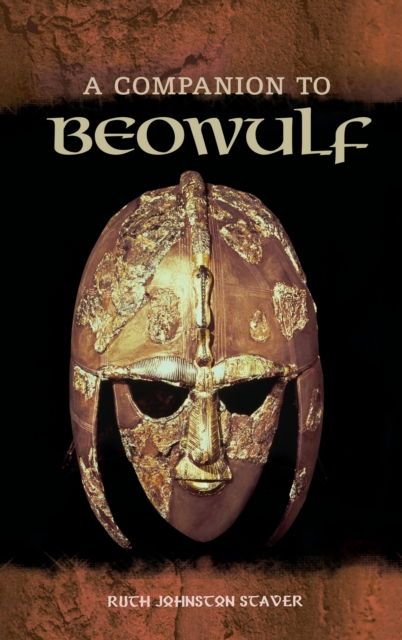
A Companion to Beowulf
Overviews the background, plot, themes, and language of Beowulf and discusses the poem's afterlife in contemporary popular culture. Perhaps the most important work written in Old English, Beowulf grew out of a culture very different from ours, and yet its story of war, violence, and heroism remains relevant to modern readers. Accessible to high school students, general readers, and undergraduates, this companion overviews the poem and its legacy. The initial chapters review the plot of Beowulf , while later chapters discuss its style and language, its cultural and historical contexts, and its afterlife in contemporary popular culture. The first part of the book provides information of interest to a wide range of readers, while the second covers more specialized topics. Thus the initial chapters review the merits of different translations and offer a detailed plot summary, while later chapters discuss the poem's language and style, its treatment of religion, its relation to Anglo-Saxon culture, and its legacy in popular culture. One of the greatest Beowulf scholars was J.R.R. Tolkien, and the book gives special attention to his use of the poem in his own fiction. High school students, undergraduates, and general readers will find this book a valuable guide to one of the most challenging yet enduring works of English literature.
eBook

Identifying Brúnanburh
In this study the author uses topographic references found in the manuscript of the poem 'Brúnanburh' to try and locate the 'site' of this momentous battle. The first references were maritime then latterly landscape leading to field-names which have a more stable base than the constantly changing place-names.
eBook
Heroic Identity in the World of Beowulf
In exploring the identities of foreign fighters seeking glory abroad, this revisionist book challenges the traditional view of Beowulf as a \"hero.\" Beowulf emphasizes the obligations attending excellence and the temptation of power, both personal and civic.
eBook

The Long Arm of Coincidence
Scholars in Old Norse and Old English studies have for years sought to find connections between Beowulf and Grettis saga, despite great differences in the composition, time period, and country of origin of the two works. Based on some striking surface similarities, the assumption of kinship, or genetically related analogues, has inspired scholars to make more and more daring conjectures regarding the actual relationship between the two works.
Magnús Fjalldal has written a lively challenge to those notions, carefully demonstrating how even tangential resemblances that at one point would have been considered questionable, have become progressively assimilated into mainstream Old English and Old Norse scholarship. The author?s refutations are closely tied to the primary texts, and he makes constructive and plausible suggestions of his own as to how the apparent parallels could have arisen in two texts so separated by time, culture, and geography.
Passionately and engagingly written, occasionally forceful, The Long Arm of Coincidence successfully reopens a classic argument in Old Norse and Old English studies, and will be sure to provoke strong reactions on both sides of this question.
eBook