
Catalogue Search | MBRL


Are you sure you want to remove the book from the shelf?

{{itemTitle}}
4,738
result(s) for
"Equal employment opportunity"
Sort by:

The accidental equalizer : how luck determines pay after college
\"Though equality is one of the most dearly cherished and proudly proclaimed ideals of our nation, you don't have to look far to see that we not only fall short of it, inequality often grows from one generation to the next. But what if I were to tell you that an egalitarian system has been hiding in plain sight? In this project, Duke sociologist Jessi Streib puts forward a new and bold conclusion: a college degree is the greatest economic equalizer because graduates enter a job market in which success is based on luck. Streib shows that among students who meet a low bar of employability-in particular business majors at a non-elite public university-people from different class backgrounds receive equal pay because luck determines who earns how much. So how do employers for these middle-class jobs manage to short-circuit our unequal system? They do it above all through a strategic use of ignorance: the sector and jobs Streib studied offer very little information to applicants. For instance, some employers pay significantly better than others, but job applicants have no way of knowing which ones offer higher salaries. What's more, evaluation criteria for jobs are not advertised and are incredibly variable. While some hiring managers prefer bubbly, chatty candidates, some prefer candidates who are circumspect and serious. Even seemingly objective criteria didn't get candidates ahead: Streib found that mid-tier employers focused on who could do the job, not on who completed the most internships or where they developed their skills. Even class background seemed to have little influence over a candidate's likelihood of getting a job-hiring managers didn't care whether a candidate's leisure activities were expensive or free. The advantages that applicants access once they're hired extend beyond their salaries: they receive equal access to mentoring and professional growth opportunities, and these advantages carry through into subsequent jobs. Streib's deep dive into the luckocracy uncovers its many faults and advantages, all while suggesting how we can create better and fairer opportunities for everyone\"-- Provided by publisher.
Book

Inventing equal opportunity
Equal opportunity in the workplace is thought to be the direct legacy of the civil rights and feminist movements and the landmark Civil Rights Act of 1964. Yet, as Frank Dobbin demonstrates, corporate personnel experts--not Congress or the courts--were the ones who determined what equal opportunity meant in practice, designing changes in how employers hire, promote, and fire workers, and ultimately defining what discrimination is, and is not, in the American imagination.
Dobbin shows how Congress and the courts merely endorsed programs devised by corporate personnel. He traces how the first measures were adopted by military contractors worried that the Kennedy administration would cancel their contracts if they didn't take \"affirmative action\" to end discrimination. These measures built on existing personnel programs, many designed to prevent bias against unionists. Dobbin follows the changes in the law as personnel experts invented one wave after another of equal opportunity programs. He examines how corporate personnel formalized hiring and promotion practices in the 1970s to eradicate bias by managers; how in the 1980s they answered Ronald Reagan's threat to end affirmative action by recasting their efforts as diversity-management programs; and how the growing presence of women in the newly named human resources profession has contributed to a focus on sexual harassment and work/life issues.
Inventing Equal Opportunityreveals how the personnel profession devised--and ultimately transformed--our understanding of discrimination.
eBook


American Scenic Design and Freelance Professionalism
An inclusive history of the professionalization of American scenic design The figure of the American theatrical scenic designer first emerged in the early twentieth century.As productions moved away from standardized, painted scenery and toward individualized scenic design, the demand for talented new designers grew.
eBook
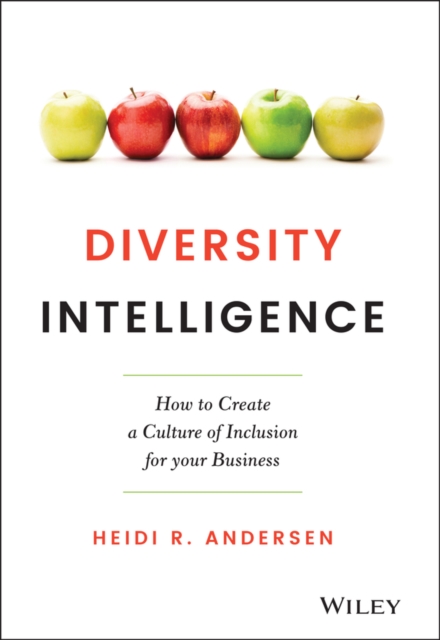
Diversity intelligence : how to create a culture of inclusion for your business
A practical roadmap to building a diverse and inclusive work culture
In Diversity Intelligence: How to Create a Culture of Inclusion for your Business, keynote speaker and diversity and inclusion expert HeidiR.Andersendelivers a step-by-step walkthroughof how to create an inclusiveculture, andbreak down the barriers to achieving diversity.
You'llfind practical advice for creating the necessary cultural transformationthat results in diversity intelligence, reaching well beneath the surface until it's embedded in the foundation of your organization.The author describes the tools, methods, concepts, and goals that are essential to this transformation.
In this important book, you'll also:
* Learnhow to properly define \"diversity\"and makea strong business case forcreating a culture of inclusion
* Explore case studies of companies who successfullymanaged to implement diversity, inclusion, and sustainable governance initiatives
* Discover why so many diversity and inclusion programs fail despite the best of managerial intentions
Perfect for business owners and founders, board members, executives, managers, change agents, CHRO'sand other business leadersseeking to transform their firm's culture for the better, Diversity Intelligence is a must-readguide for supporting and driving positive organizational change.
eBook

We Could Not Fail
The Space Age began just as the struggle for civil rights forced Americans to confront the long and bitter legacy of slavery, discrimination, and violence against African Americans. Presidents John F. Kennedy and Lyndon Johnson utilized the space program as an agent for social change, using federal equal employment opportunity laws to open workplaces at NASA and NASA contractors to African Americans while creating thousands of research and technology jobs in the Deep South to ameliorate poverty. We Could Not Fail tells the inspiring, largely unknown story of how shooting for the stars helped to overcome segregation on earth. Richard Paul and Steven Moss profile ten pioneer African American space workers whose stories illustrate the role NASA and the space program played in promoting civil rights. They recount how these technicians, mathematicians, engineers, and an astronaut candidate surmounted barriers to move, in some cases literally, from the cotton fields to the launching pad. The authors vividly describe what it was like to be the sole African American in a NASA work group and how these brave and determined men also helped to transform Southern society by integrating colleges, patenting new inventions, holding elective office, and reviving and governing defunct towns. Adding new names to the roster of civil rights heroes and a new chapter to the story of space exploration, We Could Not Fail demonstrates how African Americans broke the color barrier by competing successfully at the highest level of American intellectual and technological achievement.
eBook

The other women’s movement
American feminism has always been about more than the struggle for individual rights and equal treatment with men. There's also a vital and continuing tradition of women's reform that sought social as well as individual rights and argued for the dismantling of the masculine standard. In this much anticipated book, Dorothy Sue Cobble retrieves the forgotten feminism of the previous generations of working women, illuminating the ideas that inspired them and the reforms they secured from employers and the state.
eBook


Affirmative Action Around the World
This book moves the discussion of affirmative action beyond the United States to other countries that have had similar policies, often for a longer time than Americans have. It also moves the discussion beyond the theories, principles, and laws that have been so often debated to the actual empirical consequences of affirmative action in the United States and in India, Nigeria, Malaysia, Sri Lanka, and other countries. Both common patterns and national differences are examined. Much of what emerges from a factual examination of these policies flatly contradicts much of what was expected and much of what has been claimed.
eBook

Knocking on the door
Knocking on the Dooris the first book-length work to analyze federal involvement in residential segregation from Reconstruction to the present. Providing a particularly detailed analysis of the period 1968 to 1973, the book examines how the U.S. Department of Housing and Urban Development (HUD) attempted to forge elementary changes in segregated residential patterns by opening up the suburbs to groups historically excluded for racial or economic reasons. The door did not shut completely on this possibility until President Richard Nixon took the drastic step of freezing all federal housing funds in January 1973.Knocking on the Doorassesses this near-miss in political history, exploring how HUD came surprisingly close to implementing rigorous antidiscrimination policies, and why the agency's efforts were derailed by Nixon.
Christopher Bonastia shows how the Nixon years were ripe for federal action to foster residential desegregation. The period was marked by new legislative protections against housing discrimination, unprecedented federal involvement in housing construction, and frequent judicial backing for the actions of civil rights agencies.
By comparing housing desegregation policies to civil rights enforcement in employment and education, Bonastia offers an unrivaled account of why civil rights policies diverge so sharply in their ambition and effectiveness.
eBook