
Catalogue Search | MBRL


Are you sure you want to remove the book from the shelf?

{{itemTitle}}
870
result(s) for
"Equality -- South Africa"
Sort by:

Constitutional triumphs, constitutional disappointments : a critical assessment of the 1996 South African Constitution's local and international influence
\"The 1996 South African Constitution was promulgated on 18th December 1996 and came into effect on 4th February 1997. Its aspirational provisions promised to transform South Africa's economy and society along non-racial and egalitarian lines. Following the twentieth anniversary of its enactment, this book, co-edited by Rosalind Dixon and Theunis Roux, examines the triumphs and disappointments of the Constitution. It explains the arguments in favor of the Constitution being replaced with a more authentically African document, untainted by the necessity to compromise with ruling interests predominant at the end of apartheid. Others believe it remains a landmark attempt to create a society based on social, economic, and political rights for all citizens, and that its true implementation has yet to be achieved. This volume considers whether the problems South Africa now faces are of constitutional design or implementation, and analyses the Constitution's external influence on constitutionalism in other parts of the world\"-- Provided by publisher.
Book

Love in the Time of AIDS
In some parts of South Africa, more than one in three people are HIV positive. Love in the Time of AIDS explores transformations in notions of gender and intimacy to try to understand the roots of this virulent epidemic. By living in an informal settlement and collecting love letters, cell phone text messages, oral histories, and archival materials, Mark Hunter details the everyday social inequalities that have resulted in untimely deaths. Hunter shows how first apartheid and then chronic unemployment have become entangled with ideas about femininity, masculinity, love, and sex and have created an economy of exchange that perpetuates the transmission of HIV/AIDS. This sobering ethnography challenges conventional understandings of HIV/AIDS in South Africa.
eBook


Rethinking the South African Crisis
Since the end of apartheid, South Africa has become an extreme yet unexceptional embodiment of forces at play in many other regions of the world: intensifying inequality alongside \"wageless life,\" proliferating forms of protest and populist politics that move in different directions, and official efforts at containment ranging from liberal interventions targeting specific populations to increasingly common police brutality.
Rethinking the South African Crisisrevisits long-standing debates to shed new light on the transition from apartheid. Drawing on nearly twenty years of ethnographic research, Hart argues that local government has become the key site of contradictions. Local practices, conflicts, and struggles in the arenas of everyday life feed into and are shaped by simultaneous processes of de-nationalization and re-nationalization. Together they are key to understanding the erosion of African National Congress hegemony and the proliferation of populist politics.
This book provides an innovative analysis of the ongoing, unstable, and unresolved crisis in South Africa today. It also suggests how Antonio Gramsci's concept of passive revolution, adapted and translated for present circumstances with the help of philosopher and liberation activist Frantz Fanon, can do useful analytical and political work in South Africa and beyond.
eBook


Between the rainbows and the rain : Marikana, migration, mining and the crisis of modern South Africa
ìRainbowsî dissects the South African ìmiracleî across a vast landscape from the shack settlements of Marikana to the highest levels of government and corporate behaviour in the South Africa mining industry. It sets out what we know about the Markana massacre against the background of hazardous work conditions in the mines two decades after ì liberationî. Going well beyond the Farlam Commission of Inquiry it also examines, for the first time, the nightmare world of labour broking-cum-human trafficking. It evaluates the prospects for improving life in the near-mine communities that magnetise the poor and jobless in a society ranked among the most unequal, in the world. The book is essential reading for anyone interested in a country of iconic proportions whose political and economic leadership is fast losing capacity to service basic human needs and disappointed popular aspirations. This includes readers in the mining sector, in ethical investment circles across the globe, labour activists, academics, opinion-makers, government and anyone else with an interest in human rights and social justice.
eBook

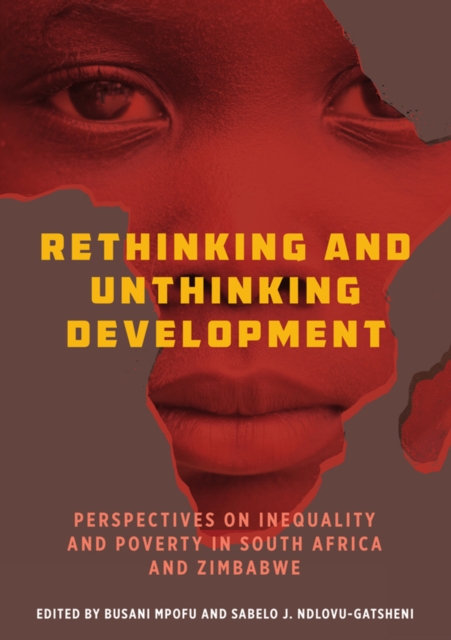
Rethinking and unthinking development: perspectives on inequality and poverty in South Africa and Zimbabwe
The last three decades have witnessed a period of growing archaeological activity in Greece that have enhanced our awareness of the diversity and variability of ancient communities. New sites offer rich datasets from many aspects of material culture that challenge traditional perceptions and suggest complex interpretations of the past. This volume provides a synthetic overview of recent developments in the study of Neolithic Greece and reconsiders the dynamics of human-environment interactions while recording the growing diversity in layers of social organization.
eBook

Bulletproof
In 1856 and 1857, in response to a prophet’s command, the Xhosa people of southern Africa killed their cattle and ceased planting crops; the resulting famine cost tens of thousands of lives. Much like other millenarian, anticolonial movements—such as the Ghost Dance in North America and the Birsa Munda uprising in India—these actions were meant to transform the world and liberate the Xhosa from oppression. Despite the movement’s momentous failure to achieve that goal, the event has continued to exert a powerful pull on the South African imagination ever since. It is these afterlives of the prophecy that Jennifer Wenzel explores in Bulletproof. Wenzel examines literary and historical texts to show how writers have manipulated images and ideas associated with the cattle killing—harvest, sacrifice, rebirth, devastation—to speak to their contemporary predicaments. Widening her lens, Wenzel also looks at how past failure can both inspire and constrain movements for justice in the present, and her brilliant insights into the cultural implications of prophecy will fascinate readers across a wide variety of disciplines.
eBook