
Catalogue Search | MBRL


Are you sure you want to remove the book from the shelf?

{{itemTitle}}
60
result(s) for
"Erotic stories"
Sort by:
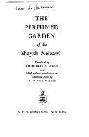
The perfumed garden of the Shaykh Nefzawi
This scarce antiquarian book is a facsimile reprint of the original. Due to its age, it may contain imperfections such as marks, notations, marginalia and flawed pages. Because we believe this work is culturally important, we have made it available as part of our commitment for protecting, preserving, and promoting the world's literature in affordable, high quality, modern editions that are true to the original work.

Foxboy
Once there was a Quechua folktale. It begins with a trickster fox's penis with a will of its own and ends with a daughter returning to parents who cannot recognize her until she recounts the uncanny adventures that have befallen her since she ran away from home. Following the strange twists and turnings of this tale, Catherine J. Allen weaves a narrative of Quechua storytelling and story listening that links these arts to others—fabric weaving, in particular—and thereby illuminates enduring Andean strategies for communicating deeply felt cultural values. In this masterful work of literary nonfiction, Allen draws out the connections between two prominent markers of ethnic identity in Andean nations—indigenous language and woven cloth—and makes a convincing case that the connection between language and cloth affects virtually all aspects of expressive culture, including the performing arts. As she explores how a skilled storyteller interweaves traditional tales and stock characters into new stories, just as a skilled weaver combines traditional motifs and colors into new patterns, she demonstrates how Andean storytelling and weaving both embody the same kinds of relationships, the same ideas about how opposites should meet up with each other. By identifying these pervasive patterns, Allen opens up the Quechua cultural world that unites story tellers and listeners, as listeners hear echoes and traces of other stories, layering over each other in a kind of aural palimpsest.
eBook

Mirage
\"The young son of the head of the Chinese traders' association, the men licensed to deal with foreign merchants in the port of Guangzhou, is suddenly burdened with responsibility for his powerful family upon his father's sudden death. A latter-day Baoyu, but with far stronger sexual impulses, the son learns both to tame his own libido to some degree and to conduct himself prudently in the Guangzhou society of his time. All of this appears in a comparatively little-known and little-studied novel called Shenlou zhi,which is here translated for the first time.The novel was actually first published in 1804, several decades before opium became a factor in the China trade. It is not only by far the earliest novel to deal with that trade, but also one of the earliest accounts of it. Furthermore, it has been found to be closely connected to events that occurred in Guangzhou and Huizhou in the years just before the time of its publication--the arrival of a new Superintendent of Customs in Guangzhou and the outbreak of rebellion in Huizhou. This strikingly original work develops the culture of adolescence that was first described in Honglou meng and also relishes,in its account of the rebellion,the romantic conventions of Shuihu zhuan.\"--Publisher's description.
Book

Eco's Chaosmos
While Umberto Eco's intellectual itinerary was marked by his early studies of post-Crocean aesthetics and his spectacular concentration on linguistics, information theory, structuralism, semiotics, cognitive science, and media studies, what constitutes the peculiarity of his critical and fiction writing is the tension between a typically medieval search for a code and the hermeneutic representative of deconstructive tendencies. This tension betweencosmosandchaos, order and disorder, is reflected in the wordchaosmos.
In this brilliant assessment of the philosophical basis of Eco's critical and fictional writing, Cristina Farronato explores the other distinctive aspect of Eco's thought - the struggle for a composition of opposites, the outcome deriving from his ability to elicit similar contrasts from the past and re-play them in modern terms. Focusing principally on how Eco's scholarly background influenced his study of semiotics, Farronato analyzesThe Name of the Rosein relation to William of Ockham's epistemology, C.S. Peirce's work on abduction, and Wittgenstein's theory of language. She discussesFoucault's Pendulumas an explicit comment on the modern debate on interpretation through a direct reference to Early Modern hermetic thought, correlatesThe Island of the Day Beforeas a postmodern mixture of science and superstition, and reviewsBaudolinoas an historical/fantastic novel that once again situates the Middle Ages in a postmodern context.Eco's Chaosmosdemonstrates how Eco's use of semiotic theory is important for an understanding of the postmodern aspects of today's literature and culture.
eBook


Homoerotismos en el cuento mexicano
Los estudiosos del cuento han afirmado continuamente que éste es un género prolífico en la literatura mexicana, el cual ha rendido cuentas de las diversas transformaciones estéticas, políticas y culturales que ha tenido el país. En este sentido, las variadas representaciones del homoerotismo no están exentas de circular en abundancia por las páginas de los incontables relatos que abordan este tópico: desde las apariciones furtivas de un travesti en el siglo XIX hasta las manifestaciones de personajes queer que desestabilizan los estereotipos de género en el siglo XXI.
El presente volumen ofrece entonces un recorrido por los homoerotismos masculinas que han aparecido en el cuento mexicano, ello a partir de una separación cronológica que permite observar los vericuetos de la disidencia sexual y de género con base en los espacios, las identidades, los deseos y los dispositivos de poder que legitiman las corporalidades. Este recorrido permite también establecer un diálogo con las estrategias narrativas usadas por los autores para mostrar el tema ya sea desde una mirada que se acerca a un tema tabú o desde un discurso que critica tanto los patrones estéticos como la heteronormatividad. Desde \"Manolito el pisaverde\" de Ignacio Rodríguez Galván hasta \"¿Te gusta el látex, cielo?\" de Nadia Villafuerte, desfilan personajes y experiencias que nos recuerdan cómo el deseo fuera de la norma es vivido con intensidad. [Texto de la editorial]
eBook

With this man
Life is good for Jesse Ward. Perfect, actually. He still has the charm, he's in great shape, and he still reduces his wife, Ava, to a pool of desire with a mere look. But Jesse's perfect world falls apart when a terrible accident lands Ava in the hospital with a life-threatening head injury. Devastated and angry, he feels like his entire existence hangs in the balance. He cannot survive without this woman's love. So when she finally comes around, his shaking world begins to level out. But his nightmare doesn't end there. It's only just begun. Because his wife can't remember the last sixteen years of her life. That's all of him. All of their time together. He is a stranger to her. Now Jesse must do whatever it takes to find her memories ... and help her fall madly, passionately in love with him all over again.
Book

Mirage
The young son of the head of the Chinese traders’ association, the men licensed to deal with foreign merchants in the port of Guangzhou, is suddenly burdened with responsibility for his powerful family upon his father’s sudden death. A latterday Baoyu, but with far stronger sexual impulses, the son learns both to tame his own libido to some degree and to conduct himself prudently in the Guangzhou society of his time. All of this appears in a comparatively littleknown and littlestudied novel called Shenlou zhi 蜃樓志, which is here translated for the first time. The novel was actually first published in 1804, several decades before opium became a factor in the China trade. It is not only by far the earliest novel to deal with that trade, but also one of the earliest accounts of it. Furthermore, it has been found to be closely connected to events that occurred in Guangzhou and Huizhou in the years just before the time of its publication—the arrival of a new Superintendent of Customs in Guangzhou and the outbreak of rebellion in Huizhou. This strikingly original work develops the culture of adolescence that was first described in Honglou meng 紅樓夢 and also relishes, in its account of the rebellion, the romantic conventions of Shuihu zhuan 水滸傳.
eBook

Hello stranger
Dr. Garrett Gibson, England's only female physician, and Ethan Ransom, a former Scotland Yard detective with mysterious loyalties, share a one-night stand before becoming embroiled in a dangerous mission that is complicated by their growing feelings for one another.
Book

Key Features and Parameters in Arabic Grammar
In light of recent generative minimalism, and comparative parametric theory of language variation, the book investigates key features and parameters of Arabic grammar. Part I addresses morpho-syntactic and semantic interfaces in temporality, aspectuality, and actionality, including the Past/Perfect/Perfective ambiguity akin to the very synthetic temporal morphology, collocating time adverb construal, and interpretability of verbal Number as pluractional. Part II is dedicated to nominal architecture, the behaviour of bare nouns as true indefinites, the count/mass dichotomy (re-examined in light of general, collective, and singulative DP properties), the mirror image ordering of serialized adjectives, and N-to-D Move in synthetic possession, proper names, and individuated vocatives. Part III examines the role of CP in time and space anchoring, double access reading (in a DAR language such as Arabic), sequence of tense (SOT), silent pronominal categories in consistent null subject languages (including referential and generic pro), and the interpretability of inflection. Semantic and formal parameters are set out, within a mixed macro/micro-parametric model of language variation. The book is of particular interest to students, researchers, and teachers of Arabic, Semitic, comparative, typological, or general linguistics.
eBook