
Catalogue Search | MBRL


Are you sure you want to remove the book from the shelf?

{{itemTitle}}
229
result(s) for
"Erudition"
Sort by:
Policing higher education
On the essential role of higher education and academic freedom in thriving democracies. Higher education is facing an existential crisis. Students and staff are surveilled with cameras and facial recognition software. Police zip-tie and arrest students during protests. As universities across the United States become epicenters of ideological warfare, Policing Higher Education contextualizes these skirmishes within a broader global framework. From the contentious debates surrounding free speech and curriculum control to the denial of tenure for outspoken faculty, Eve Darian-Smith examines the myriad ways higher education has become a battleground. Darian-Smith highlights the intersecting global trends of rising authoritarianism and declining academic freedom, revealing how the United States is part of a larger pattern seen in democracies worldwide, including in Brazil, Hungary, Germany, India, and the Philippines. This book challenges readers to view educational conflicts not merely as culture wars but as intense and connected struggles over economic, political, and social power. Drawing from extensive scholarship, Darian-Smith humanizes the impacts of these attacks on scholars and students, offering poignant stories of persecution and resilience. With a critical eye on the historical and structural drivers of antidemocracy, this book pushes for new, meaningful conversations about academic freedom that transcend national borders. It emphasizes the vital role of universities in fostering social responsibility and combating the global drift toward authoritarianism. (HRK / Abstract übernommen).
eBook
Nicolae Oprea, Printre Optzecişti. După Școala De La Târgovişte, Editura Bibliotheca, Târgovişte, 2018
Nicolae Oprea’s books remark themselves through rigour, the reverberations of erudition and expressivity of his critical phrase. In these books, and especially in Provinciile imaginare, Nicolae Oprea expresses his predilection towards a segment of the Romanian prose characterised through the “pre-eminence of the space in connection with the character or the event”, through a synthetic vision which combines the existential openness and the deepness of ideas. His critical endeavour therefore highlights a reference horizon of fiction on the border of the imaginary with reality. Refusing an inflamed tonality and rhetoric, being a promoter of the neutral observation, albeit not entirely lacking in affectivity, Nicolae Oprea knows how to highlight the allure of the works’ shades and details, the point of his critical thinking being the balance between the critical concept, refined, essential, and the actual image of the work, the example which would justify the demonstration.
Journal Article

UNA GENEALOGÍA ANTIERUDITA: LA ESFINGE, DE UNAMUNO A BERGAMÍN Y A ZAMBRANO
Dada la importancia que adquiere la Esfinge en la detracción de la hegemonía erudita durante los comienzos del siglo xx español, este artículo piensa cómo esa metáfora funciona especialmente dentro del ensayismo unamuniano y cómo su legado resuena también en José Bergamín y María Zambrano. De este modo, la objeción al historicismo superficial y al academicismo filosófico dará lugar a propuestas variadas sobre la necesidad de fundar un nuevo saber ligado a la subjetividad y a la experiencia, en una continuidad intelectual antierudita, cuya clave cohesiva suele remitir a la metáfora de la Esfinge. Given the importance that the Sphinx acquires in attacking the erudite hegemony during the beginning of the Spanish twentieth century, this article thinks about the way in which this metaphor works especially within Unamuno’s essayism, and how its legacy also resonates in José Bergamín and María Zambrano. In this way, the objection to superficial historicism and philosophical academicism will provide a variety of proposals on the need to found a new knowledge linked to subjectivity and experience, in an anti-erudite intellectual continuity that usually refers to the metaphor of Sphinx.
Journal Article

From Empire to Eurasia
The Eurasianist movement was launched in the 1920s by a group of young Russian émigrés who had recently emerged from years of fighting and destruction. Drawing on the cultural fermentation of Russian modernism in the arts and literature, as well as in politics and scholarship, the movement sought to reimagine the former imperial space in the wake of Europe's Great War. The Eurasianists argued that as an heir to the nomadic empires of the steppes, Russia should follow a non-European path of development. In the context of rising Nazi and Soviet powers, the Eurasianists rejected liberal democracy and sought alternatives to Communism and capitalism. Deeply connected to the Russian cultural and scholarly milieus, Eurasianism played a role in the articulation of the structuralist paradigm in interwar Europe. However, the movement was not as homogenous as its name may suggest. Its founders disagreed on a range of issues and argued bitterly about what weight should be accorded to one or another idea in their overall conception of Eurasia. In this first English language history of the Eurasianist movement based on extensive archival research, Sergey Glebov offers a historically grounded critique of the concept of Eurasia by interrogating the context in which it was first used to describe the former Russian Empire. This definitive study will appeal to students and scholars of Russian and European history and culture.
eBook

An Interview with Alastair Hamilton
Alastair Hamilton has transformed the study of how early modern Europe came to know—and misread—the Christian East and Islam. After influential work on the Radical Reformation, he turned to European Arabic learning and to the Christian communities of the Arabic-speaking world, tracing the traffic of ideas between Europe and the Middle East through translation, confessional polemic, and collecting. His books, including The Copts and the West, 1439–1822 (2006) and Arabs and Arabists (2021), reconstruct the worlds of Arabists and Eastern Christians where scholarship, devotion, and rivalry were entangled. Across these studies he examines how sources are weighed, apocrypha and forgeries sifted, and enduring illusions produced. Hamilton has taught at Urbino, Leiden, Amsterdam, London and Cairo, spent many years at the Warburg Institute, and edits Brill’s series ‘The History of Oriental Studies’. He is currently completing a book on Western Christians and mosques.
Journal Article

Public Scholarship in Communication Studies
Prometheus brought the gift of enlightenment to humanity and
suffered for his benevolence. This collection takes on scholars'
Promethean view of themselves as selfless bringers of light and
instead offers a new vision of public scholarship as service to
society.
Thomas J Billard and Silvio Waisbord curate essays from a wide
range of specialties within the study of communication. Aimed at
scholars and students alike, the contributors use approaches from
critical meditations to case studies to how-to guides as they
explore the possibilities of seeing shared knowledge not as a gift
to be granted but as an imperative urging readers to address the
problems of the world. Throughout the volume, the works show that a
pivot to ideas of scholarship as public service is already underway
in corners of communication studies across the country.
Visionary and provocative, Public Scholarship in
Communication Studies proposes a needed reconsideration of
knowledge and a roadmap to its integration with community.
Contributors: Elaine Almeida, Becca Beets,
Thomas J Billard, Danielle K. Brown, Aymar Jean Christian, Stacey
L. Connaughton, Paula Gardner, Larry Gross, Amy Jordan, Daniel
Kreiss, Rachel Kuo, Susan Mancino, Shannon C. McGregor, Philip M.
Napoli, Todd P. Newman, Srividya Ramasubramanian, Chad Raphael, Sue
Robinson, Silvio Waisbord, Yidong Wang, and Holley Wilkin
eBook
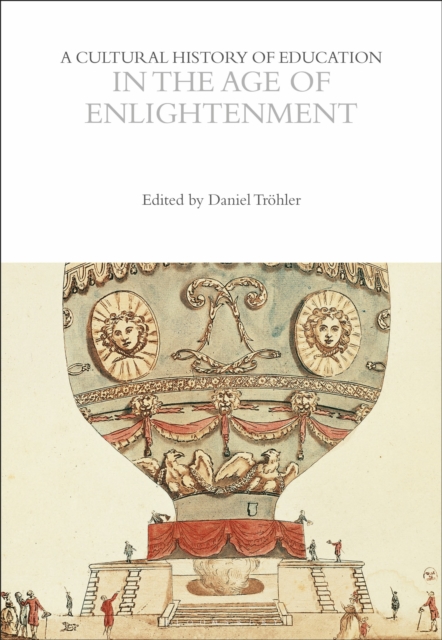
A cultural history of education in the age of Enlightenment
A Cultural History of Education in the Age of Enlightenment presents essays that examine the following key themes of the period: church, religion and morality; knowledge, media and communications; children and childhood; family, community and sociability; learners and learning; teachers and teaching; literacies; and life histories. The Age of Enlightenment is characterized by a growing belief in the human capacity to change the world. This volume shows how the educational endeavors of the period contributed in their diversity to a thoroughly educationalized culture around 1800, the very foundation of the modern nation state, which then developed into the long 19th century. An essential resource for researchers, scholars, and students in history, literature, culture, and education.
eBook

Building the Field of Higher Education Engagement
This book contributes to the ever-under-construction edifice by presenting a scaffolding of the scholarship that has been part of the building process, documenting and analyzing the past, speculating about the future, and framing a continuing conversation about and for the field.
eBook

Global Debates in the Digital Humanities
A necessary volume of essays working to decolonize the
digital humanities
Often conceived of as an all-inclusive \"big tent,\" digital
humanities has in fact been troubled by a lack of perspectives
beyond Westernized and Anglophone contexts and assumptions. This
latest collection in the Debates in the Digital Humanities series
seeks to address this deficit in the field. Focused on thought and
work that has been underappreciated for linguistic, cultural, or
geopolitical reasons, contributors showcase alternative histories
and perspectives that detail the rise of the digital humanities in
the Global South and other \"invisible\" contexts and explore the
implications of a globally diverse digital humanities.
Advancing a vision of the digital humanities as a space where we
can reimagine basic questions about our cultural and historical
development, this volume challenges the field to undertake
innovation and reform.
Contributors: Maria José Afanador-Llach, U de los Andes, Bogotá;
Maira E. Álvarez, U of Houston; Purbasha Auddy, Jadavpur U; Diana
Barreto Ávila, U of British Columbia; Deepti Bharthur, IT for
Change; Sayan Bhattacharyya, Singapore U of Technology and Design;
Anastasia Bonch-Osmolovskaya, National Research U Higher School of
Economics; Jing Chen, Nanjing U; Carlton Clark, Kazimieras
Simonavičius U, Vilnius; Carolina Dalla Chiesa, Erasmus U,
Rotterdam; Gimena del Rio Riande, Institute of Bibliographic
Research and Textual Criticism; Leonardo Foletto, U of São Paulo;
Rahul K. Gairola, Murdoch U; Sofia Gavrilova, Leibniz Institute for
Regional Geography; Andre Goodrich, North-West U; Anita Gurumurthy,
IT for Change; Aliz Horvath, Eötvös Loránd U; Igor Kim, Russian
Academy of Sciences; Inna Kizhner, Siberian Federal U; Cédric
Leterme, Tricontinental Center; Andres Lombana-Bermudez,
Pontificia, U Javeriana, Bogotá; Lev Manovich, City U of New York;
Itay Marienberg-Milikowsky, Ben-Gurion U of the Negev; Maciej
Maryl, Polish Academy of Sciences; Nirmala Menon, Indian Institute
of Technology, Indore; Boris Orekhov, National Research U Higher
School of Economics; Ernesto Priego, U of London; Sylvia Fernández
Quintanilla, U of Kansas; Nuria Rodríguez-Ortega, U of Málaga;
Steffen Roth, U of Turku; Dibyadyuti Roy, Indian Institute of
Technology, Jodhpur; Maxim Rumyantsev, Siberian Federal U; Puthiya
Purayil Sneha, Centre for Internet and Society, Bengaluru; Juan
Steyn, South African Centre for Digital Language Resources; Melissa
Terras, U of Edinburgh; Ernesto Miranda Trigueros, U of the
Cloister of Sor Juana; Lik Hang Tsui, City U of Hong Kong; Tim
Unwin, U of London; Lei Zhang, U of Wisconsin-La Crosse.
eBook

The Medieval Culture of Disputation
Scholastic disputation, the formalized procedure of debate in the medieval university, is one of the hallmarks of intellectual life in premodern Europe. Modeled on Socratic and Aristotelian methods of argumentation, this rhetorical style was refined in the monasteries of the early Middle Ages and rose to prominence during the twelfth-century Renaissance. Strict rules governed disputation, and it became the preferred method of teaching within the university curriculum and beyond. In The Medieval Culture of Disputation, Alex J. Novikoff has written the first sustained and comprehensive study of the practice of scholastic disputation and of its formative influence in multiple spheres of cultural life.Using hundreds of published and unpublished sources as his guide, Novikoff traces the evolution of disputation from its ancient origins to its broader impact on the scholastic culture and public sphere of the High Middle Ages. Many examples of medieval disputation are rooted in religious discourse and monastic pedagogy: Augustine's inner spiritual dialogues and Anselm of Bec's use of rational investigation in speculative theology laid the foundations for the medieval contemplative world. The polemical value of disputation was especially exploited in the context of competing Jewish and Christian interpretations of the Bible. Disputation became the hallmark of Christian intellectual attacks against Jews and Judaism, first as a literary genre and then in public debates such as the Talmud Trial of 1240 and the Barcelona Disputation of 1263. As disputation filtered into the public sphere, it also became a key element in iconography, liturgical drama, epistolary writing, debate poetry, musical counterpoint, and polemic. The Medieval Culture of Disputation places the practice and performance of disputation at the nexus of this broader literary and cultural context.
eBook