
Catalogue Search | MBRL


Are you sure you want to remove the book from the shelf?

{{itemTitle}}
342
result(s) for
"Erziehungsziel"
Sort by:


The Economics of Parenting
Parenting decisions are among the most consequential choices that people make throughout their lives. Starting with the work of pioneers such as Gary Becker, economists have used the tool set of their discipline to understand what parents do and how parents' actions affect their children. In recent years, the literature on parenting within economics has increasingly leveraged findings and concepts from related disciplines that also deal with parent-child interactions. For example, economists have developed models to understand the choice among various parenting styles that were first explored in the developmental psychology literature and have estimated detailed empirical models of children's accumulation of cognitive and noncognitive skills in response to parental and other inputs. In this review, we survey the economic literature on parenting and point out promising directions for future research.
Journal Article
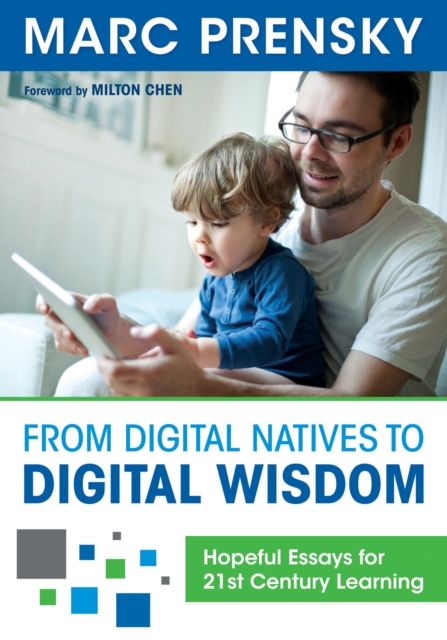
From digital natives to digital wisdom
An expert perspective on 21st century educationWhat can you learn on a cell phone? Almost anything! How does that concept fit with our traditional system of education? It doesn't. Best-selling author and futurist Marc Prensky's book of essays challenges educators to “reboot” and make the changes necessary to prepare students for 21st century careers. His “bottom-up” vision is based on interviews with young people and includes their ideas about what they need from teachers, schools, and education. Also featured are easy-to-do, high-impact classroom strategies that help what he calls “digital natives” acquire “digital wisdom.” This thought-provoking text is organized into two sections that address: Rethinking education; 21st century learning and technology in the classroom (including games, YouTube, and more)In addition to valuable knowledge, this compelling collection offers inspiration, new perspectives, and ideas that work. Our educational context has changed, and a new context demands new thinking. This book will broaden your mind, spark new insights regarding how and what you teach, and reshape your vision of 21st century education.
eBook

Development and validation of an instrument for measuring student sustainability competencies
The importance of education, and ESD in particular, for achieving sustainable development is highlighted in the formulation of the Sustainable Development Goals (SDGs). Since the Brundtland Report (1987) and the Agenda 21 conference in Rio in 1992, many measures and programs have been launched. However, no widely accepted and validated assessment instruments are currently available to examine the output levels of ESD on the student side as a means to contribute to monitoring the effects of ESD initiatives. Furthermore, connections to the results of empirical educational research are often lacking. Indeed, operationalization is necessary in order to evaluate actions of fostering ESD. Taking concepts of empirical educational and other relevant research findings (for example, psychology for sustainability) into account, this study develops a reliable and valid approach to measuring sustainability competencies. In this paper, novel data of a first school assessment is presented. One thousand six hundred and twenty-two students (aged from 9 to 16) participated in the survey. The paper-pencil questionnaire covers general (socio-demographic) as well as cognitive, affective, behavioral, application- and curriculum-orientated aspects of sustainability competencies. The evidence for the validity and reliability of the instrument indicates that the presented assessment tool constitutes a suitable instrument by which to measure sustainability competencies in secondary schools. The gathered insights show a path towards the operationalization of sustainability competencies to clarify the needs and achievements of ESD implementation in schools. (ZPID).
Journal Article

Prophets, saviours and saints: Symbolic governance and the rise of a transnational metrological field
Through their collaborative practices of quantification and standardisation in largescale comparative literacy and numeracy surveys, international organisations (IOs) are both constituting new realities and being reconstituted themselves. This article aims to substantiate how the dominance of global measurement regimes has had profound implications for the ways in which IOs such as the United Nations Educational, Scientific and Cultural Organization (UNESCO), the Organisation for Economic Co-operation and Development (OECD) and the World Bank interact, and for the environments these new interrelationships generate. How is one to make sense of this emerging reality? The author of this article examines the interplay of large IOs in their effort to achieve the targets of the United Nations’ fourth Sustainable Development Goal (the education-focused SDG 4). She argues that the SDGs are not a stand-alone performance measurement exercise, but are rather organised under the rubric of a much larger monitoring programme with its own internal logic, structure and hierarchies. She demonstrates that SDG 4 represents a significant case of transnational governance of education, and more specifically of the infrastructures and interdependencies of IOs in the construction of education data within the SDGs. Her purpose is to offer insights into the labour and infrastructure involved in the joint production of metrics. Drawing on declarations, agreements and reports as well as empirical findings from a series of interviews she conducted with key actors from all the major IOs and civil society, the author uses Bourdieusian theory to suggest that quantification has facilitated symbolic governance of the education policy field. As a result, the joint effort towards achieving the targets of SDG 4 represents the rise, and to a large degree the dominance, of the influence of the transnational field of measurement in education.
Des prophètes, des sauveurs et des saints: la gouvernance symbolique et l’essor de la métrologie transnationale – Par les pratiques collaboratives de quantification et de standardisation qu’elles emploient dans des études comparatives menées à vaste échelle sur l’alphabétisation et la numératie, les organisations internationales composent de nouvelles réalités tout en se trouvant elles-mêmes recomposées. Cet article vise à étayer comment la dominance des modes de mesure mondiaux a eu des conséquences profondes sur les façons dont les organisations internationales comme l’Organisation des Nations Unies pour l’éducation, les sciences et la culture (UNESCO), l’Organisation de coopération et de développement économiques (OCDE) et la Banque mondiale interagissent, et sur les environnements qui naissent de ces interactions. Comment pouvons-nous saisir le sens de cette réalité émergente? L’auteure de cet article examine les rapports entre les grandes organisations dans les efforts qu’elles mettent en œuvre pour atteindre les cibles du quatrième Objectif de développement durable des Nations Unies (l’ODD 4 axé sur l’éducation). Elle affirme que les ODD ne sont pas un exercice individuel de mesure de performances mais qu’ils entrent plutôt dans la catégorie d’un programme de suivi beaucoup plus large disposant d’une logique, d’une structure et de hiérarchies qui lui sont propres. Elle démontre que l’ODD 4 illustre un cas important de gouvernance internationale de l’éducation et, plus précisément, d’infrastructures des organisations internationales et d’interdépendance entre celles-ci quant à la constitution des données de l’éducation dans le cadre des ODD. Elle entend fournir un aperçu du travail et de l’infrastructure associés à la production conjointe de mesures. En s’appuyant sur des déclarations, des accords et des rapports ainsi que sur les résultats empiriques d’un ensemble d’interviews qu’elle a menées avec des acteurs clés de toutes les grandes organisations et de la société civile, l’auteure puise dans la théorie bourdieusienne pour indiquer que la quantification a facilité la gouvernance symbolique du secteur de la politique de l’éducation. Par conséquent, l’effort conjoint pour atteindre les cibles de l’ODD 4 illustre l’essor et, en grande partie, la dominance de l’influence du secteur transnational de mesure de l’éducation.
Journal Article

The integration of the Sustainable Development Goals into curricula, research and partnerships in higher education
In 2015, the United Nations proposed the 2030 Agenda for Sustainable Development. Its 17 Sustainable Development Goals (SDGs), broken down into 169 targets, chart out a collective effort to address the global challenges humanity is facing. Following the adoption of the agenda, the SDGs needed to be incorporated into curricula, research and partnerships to foster the competencies needed by future decision-makers. The objective of the research presented here was to explore how higher education institutions (HEIs) work to integrate the SDGs into their curricula, research and partnerships. The authors analysed 37 Sharing Information on Progress (SIP) reports prepared by business schools/HEIs, signatories of the United Nations Principles of Responsible Management Education (UNPRME), the largest voluntary engagement platform for academic institutions to transform their teaching, research and thought leadership in support of universal values of sustainability, responsibility and ethics. Their findings reveal that curricula feature new courses, modules and disciplines, created and implemented to address the SDGs with multidisciplinary and interdisciplinary involvement. Research and partnerships demonstrate cooperative behaviour between HEIs, companies, society and governmental and non-governmental institutions, contributing to sustainable economic development locally, regionally and globally. The authors hope that this study will contribute to discussions on how to further improve the incorporation of the SDGs in curricula, research and partnerships, and that it will provide insights into the status quo and recommendations for policy and practice.
Journal Article


The role of adult learning and education in the Sustainable Development Goals
The Sustainable Development Goals (SDGs), launched by the United Nations in 2015, established ambitious targets to be achieved by 2030, including in education. SDG 4, which focuses on ensuring “inclusive and equitable quality education and promot[ing] lifelong learning opportunities for all”, attracted attention from the adult education sector for the role that adult learning and education (ALE) can play in its realisation, and the potential for the SDGs to boost the visibility and support of ALE. This article reports on a study that explored the role of ALE in lifelong learning in eight case study countries (Australia, Brazil, India, Jordan, Kyrgyzstan, South Africa, Thailand and Ukraine). It explores the literature and examines the supports for and challenges of ALE to better understand its potential in helping to realise SDG 4, using a mega-, macro-, meso- and micro-level theoretical framework. Twenty-seven experts in ALE from across the eight countries were interviewed, and data analysis was undertaken using a grounded theory approach. The findings indicate that while SDG 4 was not a strong driver for ALE activities in these countries, initiatives were focused on the same issues targeted by SDG 4. The analysis also points to the unequal policy support given to formal and non-formal ALE activities, and the critical role that ALE networks and associations can play in addressing some of the most ambitious SDG 4 targets.
Journal Article
Exploring the potential of mindful compassion pedagogies for effective global citizenship education and education for sustainable development
Effective Global Citizenship Education (GCED) and Education for Sustainable Development (ESD) benefit from three interrelated dimensions of learning identified by UNESCO: cognitive, social-emotional and behavioural. The latter two of these are especially relevant to mindful compassion pedagogies, and the purpose of the literature review presented here was to ascertain how well such pedagogies could cultivate GCED and ESD social and emotional behavioural competencies in preschool to secondary-level education, tertiary-level education and professional development programmes for educators. The research team analysed 37 relevant peer-reviewed research articles and reports published between 1956 and 2021. Their findings point to many possibilities for how mindful compassion practices could serve as building blocks for desired GCED and ESD competencies. However, this requires a great deal of intentionality on the part of those responsible for the design, implementation and evaluation of mindful compassion-based programmes seeking to cultivate GCED- and ESD-related behavioural competencies. In essence, curriculum designers need to provide opportunities for students to practise mindful compassion as a microskill that leads to the attainment of behavioural competencies conducive to global citizenship and sustainable development. This article summarises the researchers’ findings and posits guiding questions for educators and researchers to consider as they design and evaluate social-emotional competencies of the kind needed for GCED and ESD to be effective.
Journal Article