
Catalogue Search | MBRL


Are you sure you want to remove the book from the shelf?

{{itemTitle}}
6
result(s) for
"Esclaves -- Commerce -- États-Unis -- Histoire"
Sort by:
American Slavers
BThe first telling of the unknown story of America's two-hundred-year history as a slave-trading nation/BBR / BR / A total of 305,000 enslaved Africans arrived in the New World aboard American vessels over a span of two hundred years as American merchants and mariners sailed to Africa and to the Caribbean to acquire and sell captives. Using exhaustive archival research, including many collections that have never been used before, historian Sean M. Kelley argues that slave trading needs to be seen as integral to the larger story of American slavery.BR / BR / Engaging with both African and American history and addressing the trade over time, Kelley examines the experience of captivity, drawing on more than a hundred African narratives to offer a portrait of enslavement in the regions of Africa frequented by American ships. Kelley also provides a social history of the two American ports where slave trading was most intensive, Newport and Bristol, Rhode Island.BR / BR / In telling this tragic, brutal, and largely unknown story, Kelley corrects many misconceptions while leaving no doubt that Americans were a nation of slave traders.
eBook
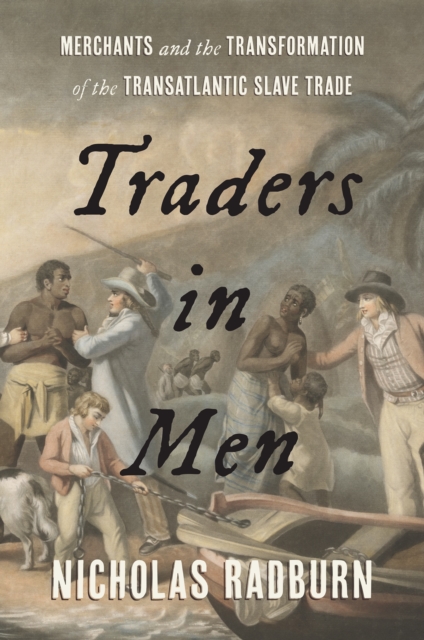
Traders in Men
BA sweeping new history that reveals how British, African, and American merchants developed the transatlantic slave trade/BBR / BR /B\"This is a landmark study given its clear status as easily the best researched and most comprehensive book on the British slave trade to date.\"-David Eltis, coauthor of IAtlas of the Transatlantic Slave Trade/I/BBR / BR /B\"A masterful account of one of the most brutal moments in the history of capitalist modernity. Radburn brilliantly details all aspects of the process of commodification of human beings in the Liverpool slave trade, vividly depicting the long journeys endured by Africans in Africa, across the Atlantic, and in the Americas.\"-Leonardo Marques, Universidade Federal Fluminense/BBR / BR / During the eighteenth century, Britain's slave trade exploded in size. Formerly a small and geographically constricted business, the trade had, by the eve of the American Revolution, grown into a transatlantic system through which fifty thousand men, women, and children were enslaved every year.BR / BR / In this wide-ranging history, Nicholas Radburn explains how thousands of merchants collectively transformed the slave trade by devising highly efficient but violent new business methods. African brokers developed commercial infrastructure that facilitated the enslavement and sale of millions of people. Britons invented shipping methods that quelled enslaved people's constant resistance on the Middle Passage. And American slave traders formulated brutal techniques through which shiploads of people could be quickly sold to colonial buyers. Truly Atlantic-wide in its vision, this study shows how the slave trade dragged millions of people into its terrible vortex and became one of the most important phenomena in world history.
eBook

Brethren by Nature
InBrethren by Nature, Margaret Ellen Newell reveals a little-known aspect of American history: English colonists in New England enslaved thousands of Indians. Massachusetts became the first English colony to legalize slavery in 1641, and the colonists' desire for slaves shaped the major New England Indian wars, including the Pequot War of 1637, King Philip's War of 1675-76, and the northeastern Wabanaki conflicts of 1676-1749. When the wartime conquest of Indians ceased, New Englanders turned to the courts to get control of their labor, or imported Indians from Florida and the Carolinas, or simply claimed free Indians as slaves.Drawing on letters, diaries, newspapers, and court records, Newell recovers the slaves' own stories and shows how they influenced New England society in crucial ways. Indians lived in English homes, raised English children, and manned colonial armies, farms, and fleets, exposing their captors to Native religion, foods, and technology. Some achieved freedom and power in this new colonial culture, but others experienced violence, surveillance, and family separations. Newell also explains how slavery linked the fate of Africans and Indians. The trade in Indian captives connected New England to Caribbean and Atlantic slave economies. Indians labored on sugar plantations in Jamaica, tended fields in the Azores, and rowed English naval galleys in Tangier. Indian slaves outnumbered Africans within New England before 1700, but the balance soon shifted. Fearful of the growing African population, local governments stripped Indian and African servants and slaves of legal rights and personal freedoms. Nevertheless, because Indians remained a significant part of the slave population, the New England colonies did not adopt all of the rigid racial laws typical of slave societies in Virginia and Barbados. Newell finds that second- and third-generation Indian slaves fought their enslavement and claimed citizenship in cases that had implications for all enslaved peoples in eighteenth-century America.
InBrethren by Nature, Margaret Ellen Newell reveals a little-known aspect of American history: English colonists in New England enslaved thousands of Indians. Massachusetts became the first English colony to legalize slavery in 1641, and the colonists' desire for slaves shaped the major New England Indian wars, including the Pequot War of 1637, King Philip's War of 1675-76, and the northeastern Wabanaki conflicts of 1676-1749. When the wartime conquest of Indians ceased, New Englanders turned to the courts to get control of their labor, or imported Indians from Florida and the Carolinas, or simply claimed free Indians as slaves.
Drawing on letters, diaries, newspapers, and court records, Newell recovers the slaves' own stories and shows how they influenced New England society in crucial ways. Indians lived in English homes, raised English children, and manned colonial armies, farms, and fleets, exposing their captors to Native religion, foods, and technology. Some achieved freedom and power in this new colonial culture, but others experienced violence, surveillance, and family separations.
Newell also explains how slavery linked the fate of Africans and Indians. The trade in Indian captives connected New England to Caribbean and Atlantic slave economies. Indians labored on sugar plantations in Jamaica, tended fields in the Azores, and rowed English naval galleys in Tangier. Indian slaves outnumbered Africans within New England before 1700, but the balance soon shifted. Fearful of the growing African population, local governments stripped Indian and African servants and slaves of legal rights and personal freedoms. Nevertheless, because Indians remained a significant part of the slave population, the New England colonies did not adopt all of the rigid racial laws typical of slave societies in Virginia and Barbados. Newell finds that second- and third-generation Indian slaves fought their enslavement and claimed citizenship in cases that had implications for all enslaved peoples in eighteenth-century America.
eBook

In the Eye of All Trade
In an exploration of the oceanic connections of the Atlantic world, Michael J. Jarvis recovers a mariner's view of early America as seen through the eyes of Bermuda's seafarers. The first social history of eighteenth-century Bermuda, this book profiles how one especially intensive maritime community capitalized on its position \"in the eye of all trade.\"Jarvis takes readers aboard small Bermudian sloops and follows white and enslaved sailors as they shuttled cargoes between ports, raked salt, harvested timber, salvaged shipwrecks, hunted whales, captured prizes, and smuggled contraband in an expansive maritime sphere spanning Great Britain's North American and Caribbean colonies. In doing so, he shows how humble sailors and seafaring slaves operating small family-owned vessels were significant but underappreciated agents of Atlantic integration.The American Revolution starkly revealed the extent of British America's integration before 1775 as it shattered interregional links that Bermudians had helped to forge. Reliant on North America for food and customers, Bermudians faced disaster at the conflict's start. A bold act of treason enabled islanders to continue trade with their rebellious neighbors and helped them to survive and even prosper in an Atlantic world at war. Ultimately, however, the creation of the United States ended Bermuda's economic independence and doomed the island's maritime economy.
eBook
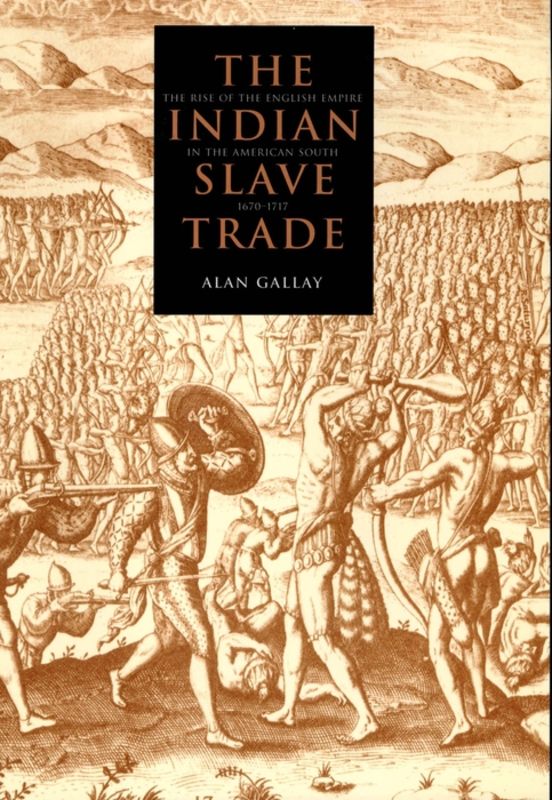
The Indian Slave Trade
This absorbing book is the first ever to focus on the traffic in Indian slaves during the early years of the American South. The Indian slave trade was of central importance from the Carolina coast to the Mississippi Valley for nearly fifty years, linking southern lives and creating a whirlwind of violence and profit-making, argues Alan Gallay. He documents in vivid detail how the trade operated, the processes by which Europeans and Native Americans became participants, and the profound consequences for the South and its peoples.The author places Native Americans at the center of the story of European colonization and the evolution of plantation slavery in America. He explores the impact of such contemporary forces as the African slave trade, the unification of England and Scotland, and the competition among European empires as well as political and religious divisions in England and in South Carolina. Gallay also analyzes how Native American societies approached warfare, diplomacy, and decisions about allying and trading with Europeans. His wide-ranging research not only illuminates a crucial crossroad of European and Native American history but also establishes a new context for understanding racism, colonialism, and the meaning of ethnicity in early America.
eBook
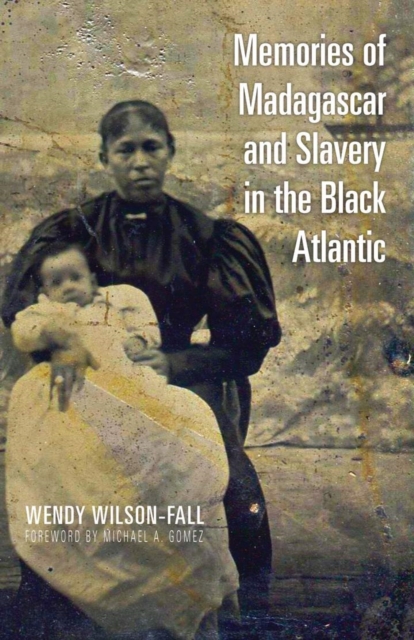
Memories of Madagascar and Slavery in the Black Atlantic
From the seventeenth century into the nineteenth, thousands of Madagascar's people were brought to American ports as slaves. In Memories of Madagascar and Slavery in the Black Atlantic, Wendy Wilson-Fall shows that the descendants of these Malagasy slaves in the United States maintained an ethnic identity in ways that those from the areas more commonly feeding the Atlantic slave trade did not. Generations later, hundreds, if not thousands, of African Americans maintain strong identities as Malagasy descendants, yet the histories of Malagasy slaves, sailors, and their descendants have been little explored. Wilson-Fall examines how and why the stories that underlie this identity have been handed down through families—and what this says about broader issues of ethnicity and meaning-making for those whose family origins, if documented at all, have been willfully obscured by history. By analyzing contemporary oral histories as well as historical records and examining the conflicts between the two, Wilson-Fall carefully probes the tensions between the official and the personal, the written and the lived. She suggests that historically, the black community has been a melting pot to which generations of immigrants—enslaved and free—have been socially assigned, often in spite of their wish to retain far more complex identities. Innovative in its methodology and poetic in its articulation, this book bridges history and ethnography to take studies of diaspora, ethnicity, and identity into new territory.
eBook