
Catalogue Search | MBRL


Are you sure you want to remove the book from the shelf?

{{itemTitle}}
1,663
result(s) for
"Estuarine oceanography."
Sort by:


Salinity and Tides in Alluvial Estuaries
The book describes an integrated theory that links estuary shape to tidal hydraulics, tidal mixing and salt intrusion.The shape of an alluvial estuary is characterised by exponentially varying width and the absence of bottom slope.
eBook

Estuaries : dynamics, mixing, sedimentation, and morphology / David Prandle
\"This volume provides researchers, students, practising engineers and managers access to state-of-the-art knowledge, practical formulae and new hypotheses for the dynamics, mixing, sediment regimes and morphological evolution in estuaries. The objectives are to explain the underlying governing processes and synthesise these into descriptive formulae which can be used to guide the future development of any estuary. Each chapter focuses on different physical aspects of the estuarine system - identifying key research questions, outlining theoretical, modeling and observational approaches, and highlighting the essential quantitative results. This allows readers to compare and interpret different estuaries around the world, and develop monitoring and modeling strategies for short-term management issues and for longer-term problems, such as global climate change. The book is written for researchers and students in physical oceanography and estuarine engineering, and serves as a valuable reference and source of ideas for professional research, engineering and management communities concerned with estuaries.\"--Publisher's website
eBook

Geology and engineering
Estuarine Research, Volume II: Geology and Engineering contains the papers presented at the 1973 Second International Estuarine Research Conference, held by the Federation at Myrtle Beach, South Carolina.This volume is organized into two parts encompassing 35 chapters.
eBook
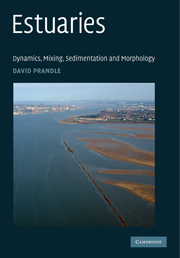
Estuaries
This volume provides researchers, students, practising engineers and managers access to knowledge, practical formulae and new hypotheses for the dynamics, mixing, sediment regimes and morphological evolution in estuaries. The objectives are to explain the underlying governing processes and synthesise these into descriptive formulae which can be used to guide the future development of any estuary. Each chapter focuses on different physical aspects of the estuarine system - identifying key research questions, outlining theoretical, modeling and observational approaches, and highlighting the essential quantitative results. This allows readers to compare and interpret different estuaries around the world, and develop monitoring and modeling strategies for short-term management issues and for longer-term problems, such as global climate change. The book is written for researchers and students in physical oceanography and estuarine engineering, and serves as a valuable reference and source of ideas for professional research, engineering and management communities concerned with estuaries.
eBook

One-dimensional numerical model for tidal waves on estuaries
Flooding has claimed millions of lives. Therefore, minimizing the affect needs to be taken into consideration and one way of dealing with this is by looking at the propagation of tidal wave. As in many parts of the world, this disaster can be simply due to tidal surges enhanced by adverse weather conditions particularly in the area along the river banks. For example, barrages are built on River Thames hoping to protect the Central London from such incidents happening. In this paper, how the tidal waves propagate on estuaries using the one-dimensional wave equation is studied based on a taut spring. The importance of geometry throughout the propagation is also discussed. Model results in this study show that water depth and coastal geometry has a significant role on wave velocity and wave height and these results could be useful as a tool in developing early warning system that minimizes loss of life and property near the coastal belts.
Conference Proceeding

Web-Based Spatial Decision Support Systems to Monitor and Manage Coastal Environments
This paper aims to describe a Web Spatial Decision Support System (Web SDSS) for Integrated Coastal Zone Management (ICZM). Geographic Information System (GIS) is one of the most common tools used to monitor and analyze the territorial and morphologic changes of coastal and marine ecosystems. Decision Support System (DSS) is a computer-based tools developed to support decision analysis and participatory processes. A Web SDSS is a DSS using Geographic Information System (GIS) as engine for storing and analyzing data and Internet technologies to disseminate data and analyses allowing their use by experts and laymen. The issue of aging of GIS data can be solved using satellite imagery as data source. In this framework, the Italian Space Agency (ASI) and the Department of Astronautical, Electrical and Energy Engineering (DIAEE) of Sapienza, University of Rome, propose a scientific collaboration to create and develop an innovative Web SDSS in order to support ICZM policies. Furthermore, the flexibility of the developed Web SDSS will allow to easily modify and adapt the system to different case, developing suitable environmental and land analyses that can be shared through the Internet to a wide number of potential users.
Conference Proceeding

Analysis of SAR monitoring capabilities in coastal areas
Microwave signals emitted by SAR are not able to penetrate sea surface and to reach seabed. Nonetheless bathymetric measurements can be retrieved from SAR images and potentially used to support the monitoring of geomorphological risks in coastal areas and marine pollution. This paper presents the preliminary results of SAR4BAT project, aimed at the development of SAR-based products for coastal area bathymetry. (6 pages)
Conference Proceeding

Drivers of change in estuarine-coastal ecosystems: Discoveries from four decades of study in San Francisco Bay
Poised at the interface of rivers, ocean, atmosphere and dense human settlement, estuaries are driven by a large array of natural and anthropogenic forces. San Francisco Bay exemplifies the fast-paced change occurring in many of the world's estuaries, bays, and inland seas in response to these diverse forces. We use observations from this particularly well-studied estuary to illustrate responses to six drivers that are common agents of change where land and sea meet: water consumption and diversion, human modification of sediment supply, introduction of nonnative species, sewage input, environmental policy, and climate shifts. In San Francisco Bay, responses to these drivers include, respectively, shifts in the timing and extent of freshwater inflow and salinity intrusion, decreasing turbidity, restructuring of plankton communities, nutrient enrichment, elimination of hypoxia and reduced metal contamination of biota, and food web changes that decrease resistance of the estuary to nutrient pollution. Detection of these changes and discovery of their causes through environmental monitoring have been essential for establishing and measuring outcomes of environmental policies that aim to maintain high water quality and sustain services provided by estuarine-coastal ecosystems. The many time scales of variability and the multiplicity of interacting drivers place heavy demands on estuarine monitoring programs, but the San Francisco Bay case study illustrates why the imperative for monitoring has never been greater.
Journal Article