
Catalogue Search | MBRL


Are you sure you want to remove the book from the shelf?

{{itemTitle}}
3,034
result(s) for
"Ethical problems."
Sort by:


Morality's Muddy Waters
In the face of an uncertain and dangerous world, Americans yearn for a firm moral compass, a clear set of ethical guidelines. But as history shows, by reducing complex situations to simple cases of right or wrong we often go astray. InMorality's Muddy Waters, historian George Cotkin offers a clarion call on behalf of moral complexity. Revisiting several defining moments in the twentieth century-the American bombing of civilians during World War II, the My Lai massacre, racism in the South, capital punishment, the invasion of Iraq-Cotkin chronicles how historical figures have grappled with the problem of evil and moral responsibility-sometimes successfully, oftentimes not. In the process, he offers a wide-ranging tour of modern American history. Taken together, Cotkin maintains, these episodes reveal that the central concepts of morality-evil, empathy, and virtue-are both necessary and troubling. Without empathy, for example, we fail to inhabit the world of others; with it, we sometimes elevate individual suffering over political complexities. For Cotkin, close historical analysis may help reenergize these concepts for ethical thinking and acting.Morality's Muddy Watersargues for a moral turn in the way we study and think about history, maintaining that even when answers to ethical dilemmas prove elusive, the act of grappling with them is invaluable.
eBook

Moral dilemmas in medieval thought : from Gratian to Aquinas
\"The history of moral dilemma theory often ignores the medieval period, overlooking the sophisticated theorizing by several thinkers who debated the existence of moral dilemmas from 1150 to 1450. In this book Michael V. Dougherty offers a rich and fascinating overview of the debates which were pursued by medieval philosophers, theologians and canon lawyers, illustrating his discussion with a diverse range of examples of the moral dilemmas which they considered. He shows that much of what seems particular to twentieth-century moral theory was well-known long ago - especially the view of some medieval thinkers that some forms of wrongdoing are inescapable, and their emphasis on the principle 'choose the lesser of two evils'. His book will be valuable not only to advanced students and specialists of medieval thought, but also to those interested in the history of ethics.\"-- Provided by publisher.
Book

Ethics education to support ethical competence learning in healthcare: an integrative systematic review
Background
Ethical problems in everyday healthcare work emerge for many reasons and constitute threats to ethical values. If these threats are not managed appropriately, there is a risk that the patient may be inflicted with moral harm or injury, while healthcare professionals are at risk of feeling moral distress. Therefore, it is essential to support the learning and development of ethical competencies among healthcare professionals and students. The aim of this study was to explore the available literature regarding ethics education that promotes ethical competence learning for healthcare professionals and students undergoing training in healthcare professions.
Methods
In this integrative systematic review, literature was searched within the PubMed, CINAHL, and PsycInfo databases using the search terms ‘health personnel’, ‘students’, ‘ethics’, ‘moral’, ‘simulation’, and ‘teaching’. In total, 40 articles were selected for review. These articles included professionals from various healthcare professions and students who trained in these professions as subjects. The articles described participation in various forms of ethics education. Data were extracted and synthesised using thematic analysis.
Results
The review identified the need for support to make ethical competence learning possible, which in the long run was considered to promote the ability to manage ethical problems. Ethical competence learning was found to be helpful to healthcare professionals and students in drawing attention to ethical problems that they were not previously aware of. Dealing with ethical problems is primarily about reasoning about what is right and in the patient’s best interests, along with making decisions about what needs to be done in a specific situation.
Conclusions
The review identified different designs and course content for ethics education to support ethical competence learning. The findings could be used to develop healthcare professionals’ and students’ readiness and capabilities to recognise as well as to respond appropriately to ethically problematic work situations.
Journal Article

What would Nietzsche do? : philosophical solutions to everyday problems
\"The greatest minds of every generation advise on relationships, identity, life events, art and aesthetics, and politics. Everyday questions are answered from a number of philosophical points of view.\"-- Provided by publisher.
Book

The new frontline: exploring the links between moral distress, moral resilience and mental health in healthcare workers during the COVID-19 pandemic
Background
Global health crises, such as the COVID-19 pandemic, confront healthcare workers (HCW) with increased exposure to potentially morally distressing events. The pandemic has provided an opportunity to explore the links between moral distress, moral resilience, and emergence of mental health symptoms in HCWs.
Methods
A total of 962 Canadian healthcare workers (88.4% female, 44.6 + 12.8 years old) completed an online survey during the first COVID-19 wave in Canada (between April 3rd and September 3rd, 2020). Respondents completed a series of validated scales assessing moral distress, perceived stress, anxiety, and depression symptoms, and moral resilience. Respondents were grouped based on exposure to patients who tested positive for COVID-19. In addition to descriptive statistics and analyses of covariance, multiple linear regression was used to evaluate if moral resilience moderates the association between exposure to morally distressing events and moral distress. Factors associated with moral resilience were also assessed.
Findings
Respondents working with patients with COVID-19 showed significantly more severe moral distress, anxiety, and depression symptoms (F
>
5.5,
p
<
.020), and a higher proportion screened positive for mental disorders (Chi-squared > 9.1,
p
= .002), compared to healthcare workers who were not. Moral resilience moderated the relationship between exposure to potentially morally distressing events and moral distress (
p
< .001); compared to those with higher moral resilience, the subgroup with the lowest moral resilience had a steeper cross-sectional worsening in moral distress as the frequency of potentially morally distressing events increased. Moral resilience also correlated with lower stress, anxiety, and depression symptoms (
r
>
.27,
p
< .001). Factors independently associated with stronger moral resilience included: being male, older age, no mental disorder diagnosis, sleeping more, and higher support from employers and colleagues (B [0.02, |-0.26|].
Interpretation
Elevated moral distress and mental health symptoms in healthcare workers facing a global crisis such as the COVID-19 pandemic call for the development of interventions promoting moral resilience as a protective measure against moral adversities.
Journal Article

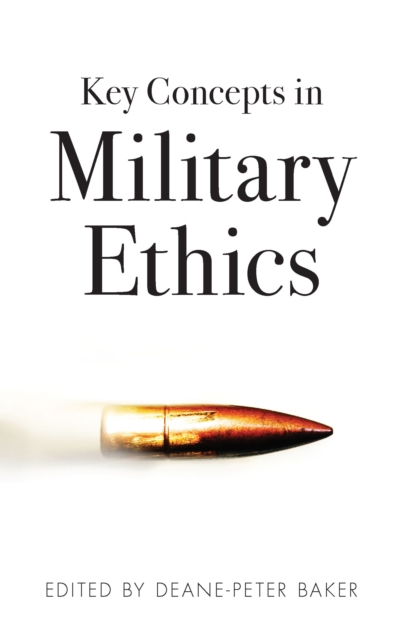
Key Concepts in Military Ethics
Can war be morally justified? What is the philosophy behind armed conflict? How do you conduct an ethical war? And what guides military action as the nature of conflict changes over time? Based on a MOOC (Massive Open Online Course) designed for both military personnel and non-specialists across the globe, Key Concepts in Military Ethics is structured as a series of 'mini-chapters' that cover a huge range of topics and issues: moral dilemmas, military and civilian interactions, freedom of the press, peacekeeping, terrorism, and humanitarian intervention. Written by a team of academic experts, many with military experience, the book contains scenarios and case studies, including the Gulf War, the Falklands War, 'Ground Zero' in New York City and more conventional theatres of war through history, as well as cyber-terrorism, the role of military contractors and unmanned weapons systems.
eBook

The prize : a novel
\"Talented, successful, blessed with a loving wife and daughter, Edward Darby has everything a man should hope for. With a rising career as a partner at an esteemed gallery he strives not to let ambition, money, power, and his dark past corrode the sanctuary of his domestic and private life. Influenced by his father, a brilliant Romantics scholar, Edward has always been more of a purist than an opportunist. But when a celebrated artist controlled by her insecurities betrays him, and another very different artist awakens his heart and stirs up secrets from his past, Edward will find himself unmoored from his marriage, his work, and the memory of his beloved father\"-- Provided by publisher.
Book

Sin No More
Sin No More offers a vivid examination of some of the most morally and politically disputed issues of our time: abortion, gay rights, assisted suicide, stem cell research, and legalized gambling. These are moral values issues, all of which are hotly, sometimes violently, contested in America. The authors cover these issues in depth, looking at the nature of efforts to initiate reforms, to define constituencies, to mobilize resources, to frame debates, and to shape public opinion - all in an effort to achieve social change, create, or re-write legislation. Of the issues under scrutiny only legalized gambling has managed to achieve widespread acceptance despite moral qualms from some.Sin No More seeks to show what these laws and attitudes tell us about Americans' approach to law and morality, and about our changing conceptions of sin, crime and illegality. Running through each chapter is a central tension: that American attitudes and laws toward these victimless crimes are going through a process of normalization. Despite conservative rhetoric the authors argue that the tide is turning on each of these issues, with all moving toward acceptance, or decriminalization, in society. Each issue is at a different point in terms of this acceptance, and each has traveled different roads to achieve their current status.
eBook