
Catalogue Search | MBRL


Are you sure you want to remove the book from the shelf?

{{itemTitle}}
182
result(s) for
"Ethics, Modern -- 19th century"
Sort by:

Nietzsche's on the genealogy of morality : a critical guide
\"This volume brings together a broad range of prominent philosophers writing in English, from both sides of the Atlantic and beyond, so giving a sense for the current state of English-speaking scholarship in the field. Most do not limit themselves to close textual exegesis, but rather treat fundamental themes and aims of the work as a whole, freely discussing their philosophical importance\"-- Provided by publisher.
Book
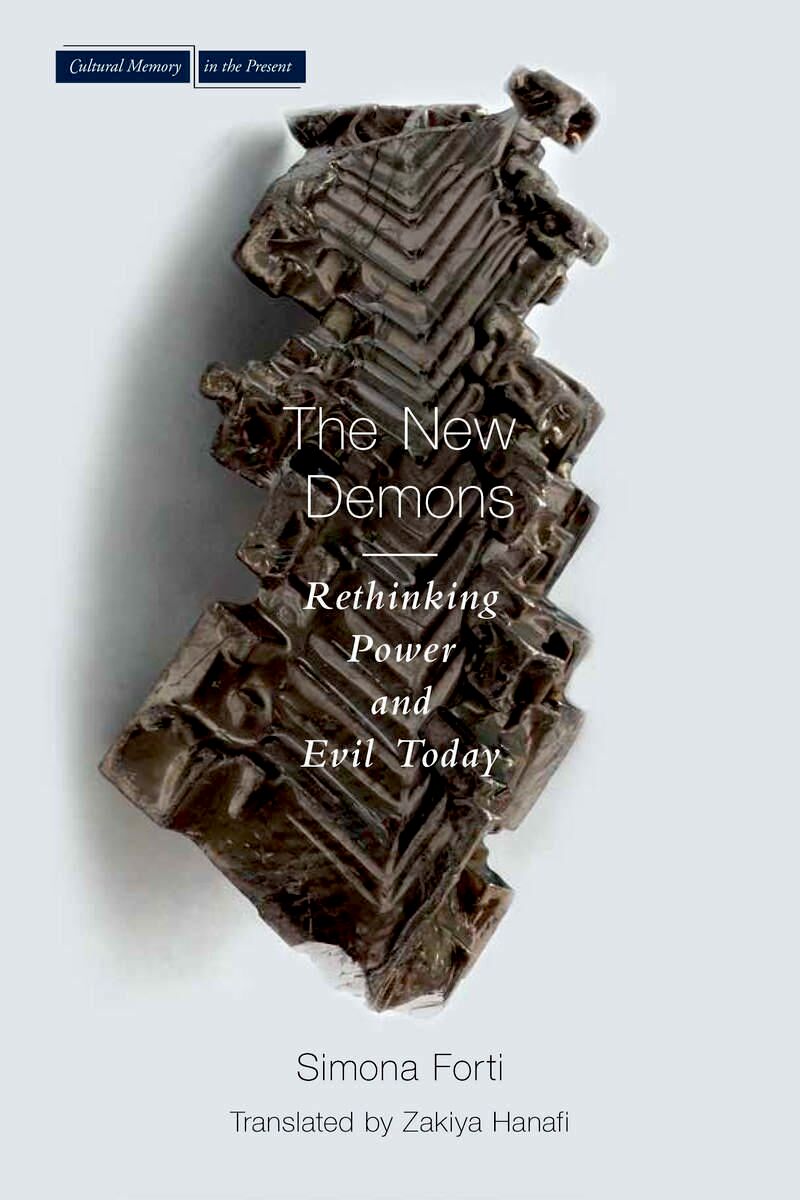
New demons : rethinking power and evil today
As long as we care about suffering in the world, says political philosopher Simona Forti, we are compelled to inquire into the question of evil. But is the concept of evil still useful in a postmodern landscape where absolute values have been leveled and relativized by a historicist perspective? Given our current unwillingness to judge others, what signposts remain to guide our ethical behavior? Surveying the nineteenth- and twentieth-century Western philosophical debates on evil, Forti concludes that it is time to leave behind what she calls \"the Dostoevsky paradigm\": the dualistic vision of an omnipotent monster pitted against absolute, helpless victims. No longer capable of grasping the normalization of evil in today's world—whose structures of power have been transformed—this paradigm has exhausted its explanatory force. In its place, Forti offers a different genealogy of the relationship between evil and power, one that finally calls into question power's recurrent link to transgression. At the center of contemporary evil she posits the passive attitude towards rule-following, the need for normalcy, and the desire for obedience nurtured by our contemporary mass democracies. In our times, she contends, evil must be explored in tandem with our stubborn desire to stay alive at all costs as much as with our deep need for recognition: the new modern absolutes. A courageous book, New Demons extends an original, inspiring call to ethical living in a biopolitical age.
eBook
An Introduction to Mill's Utilitarian Ethics
John Stuart Mill was the leading British philosopher of the nineteenth century and his famous essay Utilitarianism is the most influential statement of the philosophy of utilitarianism: that actions, laws, policies and institutions are to be evaluated by their utility or contribution to good or bad consequences. Henry West has written the most up-to-date and user-friendly introduction to utilitarianism available. The book serves as both a commentary to and interpretation of the text. It also defends Mill against his critics. An appendix reviews in detail the structure and arguments of Utilitarianism. This book is primarily intended as a textbook for students in philosophy assigned to read Utilitarianism but it should also prove helpful to students and professionals in other fields such as political science, history and economics.
eBook
Hegel's theory of recognition : from oppression to ethical liberal modernity
Since the 1960s 'New Left' emancipatory movements have claimed that women, ethnic minorities, gays and lesbians, and other groups are oppressed.Some liberal theorists have treated their demands for equality as matters of toleration, of securing by law the equal treatment of cultures and conceptions of the good.However, much more is involved.
eBook


Nietzsche
Once regarded as a conservative critic of culture, then enlisted by
the court theoreticians of Nazism, Nietzsche has come to be revered
by postmodern thinkers as one of their founding fathers, a prophet
of human liberation who revealed the perspectival character of all
knowledge and broke radically with traditional forms of morality
and philosophy. In Nietzsche: The Ethics of an Immoralist ,
Peter Berkowitz challenges this new orthodoxy,
asserting that it produces a one-dimensional picture of Nietzsche's
philosophical explorations and passes by much of what is
provocative and problematic in his thought. Berkowitz argues that
Nietzsche's thought is rooted in extreme and conflicting opinions
about metaphysics and human nature. Discovering a deep unity in
Nietzsche's work by exploring the structure and argumentative
movement of a wide range of his books, Berkowitz shows that
Nietzsche is a moral and political philosopher in the Socratic
sense whose governing question is, \"What is the best life?\"
Nietzsche, Berkowitz argues, puts forward a severe and aristocratic
ethics, an ethics of creativity, that demands that the few human
beings who are capable acquire a fundamental understanding of and
attain total mastery over the world. Following the path of
Nietzsche's thought, Berkowitz shows that this mastery, which
represents a suprapolitical form of rule and entails a radical
denigration of political life, is, from Nietzsche's own
perspective, neither desirable nor attainable. Out of the colorful
and richly textured fabric of Nietzsche's books, Peter Berkowitz
weaves an interpretation of Nietzsche's achievement that is at once
respectful and skeptical, an interpretation that brings out the
love of truth, the courage, and the yearning for the good that mark
Nietzsche's magisterial effort to live an examined life by giving
an account of the best life.
eBook

W. K. Clifford and \The Ethics of Belief\
W. K. Clifford (1845-1879) was a noted mathematician and popularizer of science in the Victorian era. Although he made major contributions in the field of geometry, he is perhaps best known for a short essay he wrote in 1876, entitled \"The Ethics of Belief\", in which he argued that \"It is wrong always, everywhere, and for any one, to believe anything upon insufficient evidence.\" Delivered initially as an address to the august Metaphysical Society (whose members included such luminaries as Alf.
eBook
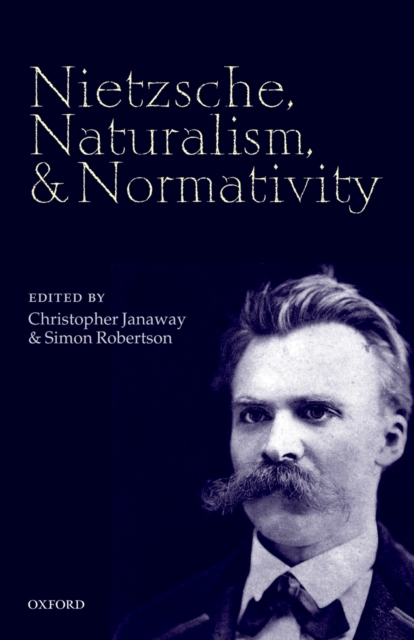
Nietzsche, naturalism, and normativity
This book comprises a collection of original chapters on Nietzsche's ethics. The chapters examine Nietzsche's naturalism, his critique of morality, and his entitlement to a normative-evaluative ideal in light of that critique. Topics addressed include: the concept of selflessness that characterizes one of Nietzsche's critical targets; the ‘morality of compassion’; the aesthetic or quasi-aesthetic nature of Nietzsche's own normative commitments; the question of what meta-ethical position can be attributed to him; how Nietzsche construes the self; and what constitutes the greatness which he tends to equate with human excellence.
eBook

Peirce and Value Theory
Most of the essays collected in this book were presented at the Charles S. Peirce Sesquicentennial Congress (Harvard University, September 1989). The volume is devoted to themes within Peirce's value theory and offers a comprehensive view of less known aspects of his influential philosophy, in particular Peirce's work on ethics and aesthetics.The book is divided in four sections. Section I discusses the status of ethics as a normative science and its relation with logic; some applications are presented, e.g. in the field of bioethics. Section II investigates the specific position of Peircean aesthetics with regard to classical American philosophy, especially Buchler, to Husserlian phenomenology, and to European structuralism (Saussure, Jakobson). Section III contains papers on internal aspects of Peirce's aesthetics and its place in his thought. The final section presents applications of Peirce's aesthetic theory: analyses of visual art (mainly paintings), of literary texts and of musical meaning.
eBook
Hegel on Ethics and Politics
This series makes available in English some important work by German philosophers on major figures in the German philosophical tradition. The volumes will provide critical perspectives on philosophers of great significance to the Anglo-American philosophical community, perspectives that have been largely ignored except by a handful of writers on German philosophy. The dissemination of this work will be of enormous value to Anglophone students and scholars of the history of German philosophy. This collection brings together in translation the finest post-war German language scholarship on Hegel's social and political philosophy, concentrating on the Elements of the Philosophy of Right. Many of the essays appear in English here for the first time; all are translated anew.
eBook